

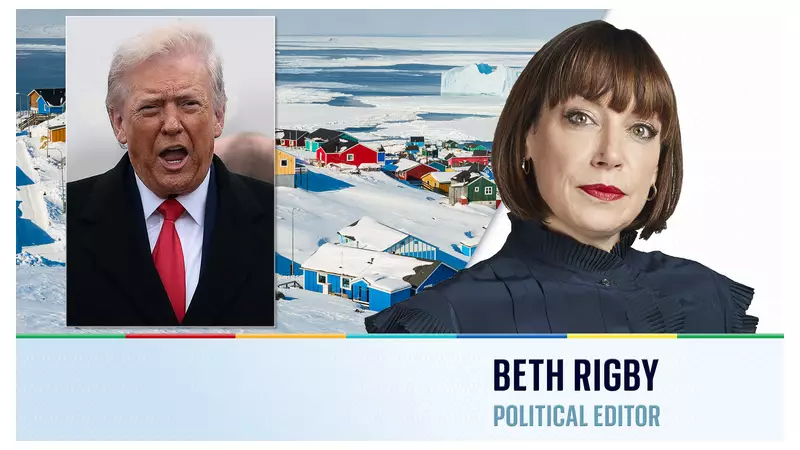
Prime Minister Sir Keir Starmer has delivered his most sobering public assessment to date, warning the nation it faces the most severe crisis in transatlantic relations for decades. The emergency stems from former US President Donald Trump's renewed threats to impose punitive tariffs on the UK and his persistent ambition to acquire Greenland.
A Prime Minister Levels with the Public
In an urgent Downing Street briefing on Monday 19 January 2026, a visibly grave Sir Keir broke with President Trump, strongly criticising the proposed tariffs as "completely wrong". He insisted the UK would not bend on the matter of Greenland, reminding the US that alliances are built on partnership, "not pressure".
While forthright in his criticism, the Prime Minister also sought to de-escalate, stressing the importance of the US-UK relationship and pointedly avoiding any announcement of immediate retaliatory tariffs. This contrasts with the European Union, which is preparing its own tariff package potentially for release on Thursday.

The Roots of the Greenland Dispute
The unprecedented rift was triggered by Trump's desire to annex the Arctic island, which is an autonomous territory of Denmark, a fellow NATO member. Citing security concerns about Russian and Chinese influence, Trump has not ruled out seizing Greenland by force, offering only a guarded "no comment" to NBC News on that possibility.
In a bid to address these fears, several European nations, including the UK, contributed troops to a NATO reconnaissance mission in Greenland. Trump, however, interpreted this as a hostile message and retaliated by threatening to slap eight European countries, including the UK, with 10% tariffs from 1 February, rising to 25% from 1 June, unless the US is allowed to buy the territory.
Danish Foreign Minister Lars Rasmussen revealed the depth of the crisis, recounting a meeting in Washington with Vice President JD Vance and Secretary of State Marco Rubio. "The meeting... left me with the clear impression that the president, honestly and full-heartedly, wants to acquire Greenland. But we also made it crystal clear that this is a red line," he stated.
Broader Consequences and a Path Forward
The stakes are extraordinarily high. Analysts warn that escalation could rupture the NATO alliance, trigger a damaging global trade war, and potentially lead to a US withdrawal from Ukraine, emboldening Russian aggression.
With the Prime Minister "very unlikely" to attend the World Economic Forum in Davos, the UK's strategy will focus on intense behind-the-scenes diplomacy. The best hope for European allies may now lie in persuading Republican lawmakers in Congress, such as House Speaker Mike Johnson who met with Sir Keir in London, to act as a restraining influence on the President.
As stock markets in affected nations already feel the economic impact, the coming days will be critical. The enduring transatlantic relationship, built over decades, now faces its most severe test, with the world watching to see if diplomacy can prevail over confrontation.






