

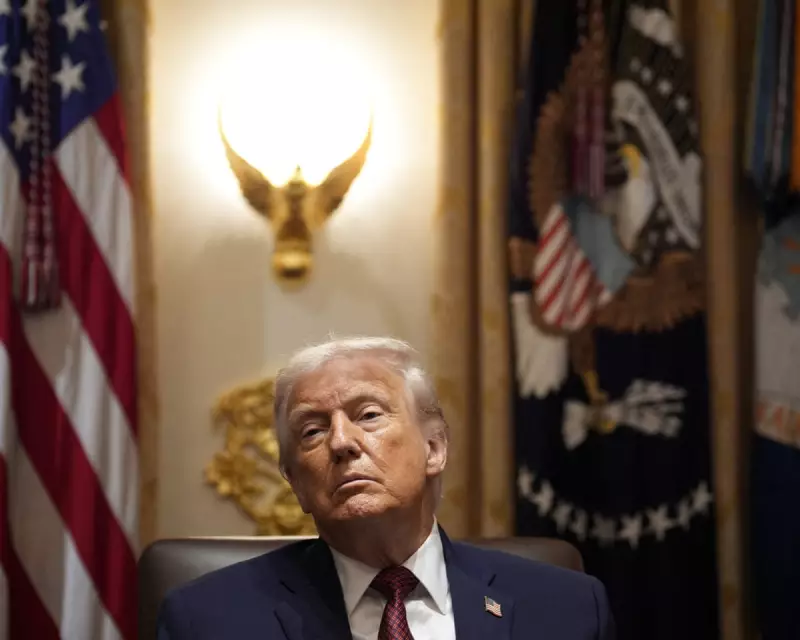
Donald Trump is not known as a historian, but his administration's dramatic shift in foreign policy is resurrecting a strategy nearly two centuries old. The 47th President of the United States has decisively reoriented American focus towards Latin America and the Caribbean, reviving and aggressively expanding the principles of the 1823 Monroe Doctrine for a new era.
The 'Trump Corollary': From Doctrine to 'Big Stick' Dominance
What the White House now terms the 'Trump Corollary' is a direct nod to the 'Roosevelt Corollary' of the early 20th century, which transformed President James Monroe's original defensive warning to Europe into a justification for US hegemony. Under Mr Trump, this has evolved into a forceful and often erratic policy driven by multiple factors: a fixation on halting drug trafficking and mass migration, a hunger for trade advantages and critical minerals, and a desire for headline-grabbing symbols of power.
His administration's actions have been stark. Mr Trump has refused to rule out military action to seize Greenland and has repeatedly suggested annexing Canada. He has threatened to take control of the Panama Canal and imposed severe tariffs on key regional partners. The US has positioned its largest naval presence in the Caribbean for decades off the coast of Venezuela, seizing oil tankers and reportedly launching drone strikes. A $50 million bounty has been placed on Venezuelan President Nicolás Maduro's head, following an ultimatum for him to quit.

This gunboat diplomacy extends to meddling in sovereign affairs. The administration has interfered in elections in Honduras and Argentina, sought to influence Brazilian justice, and imposed sanctions on Colombia's president. It has conducted deadly extrajudicial attacks on alleged drug boats in international waters, designating traffickers as terrorists to legitimise the strikes.
China's Shadow and Regional Repercussions
A core driver of this aggressive posture is China's rapidly expanding economic and diplomatic influence across Latin America, where it is now the largest trading partner. The new US national security strategy explicitly states the aim is to "reassert and enforce the Monroe doctrine to restore American preeminence." However, Mr Trump's approach appears less about countering Beijing and more about carving out a personal domain to match those of Xi Jinping and Vladimir Putin. He seems unperturbed by stronger Russian and Chinese spheres of influence elsewhere.
The strategy is fraught with risk and already showing signs of backfiring. An attack on Venezuela would likely fuel a major regional backlash and prompt a surge of refugees towards the US. While the administration claims some successes, such as influencing Argentina's elections with a $40 billion bailout promise that helped Javier Milei's far-right party, other tactics have failed. Sanctions meant to aid Brazil's Jair Bolsonaro saw him receive a 27-year sentence, boosting his rival President Lula's popularity.
Furthermore, Mr Trump's bullying has unintended consequences. His complaints about China "controlling" the Panama Canal led a Hong Kong-based port owner to sell its holdings to a US-led consortium. Beijing blocked the deal, only approving it once the Chinese state-owned shipping giant Cosco was added, granting it a potential global stake.
Internal Divisions and a Worried World
The so-called "Donroe Doctrine" is subject to the President's whims, personal grudges, and inconsistent relations with foreign leaders. Clear divisions exist within his foreign policy team, notably on Venezuela, where envoy Richard Grenell has promoted talks with Maduro while Secretary of State Marco Rubio remains hawkish.

Anxiety is growing far beyond the Americas. Allies in Asia and Europe are concerned by both US bullying and its withdrawal from other global theatres. The long-awaited EU-Mercosur trade deal has stalled again, and Europe is being urged to prioritise better ties with Latin America. Within the region, sharp political divides limit cohesive opposition, but Mr Trump's reckless behaviour is spurring changes the US may come to regret. The revival of 19th-century gunboat diplomacy under a 21st-century president is creating a volatile and dangerous new chapter for the Western Hemisphere.





