

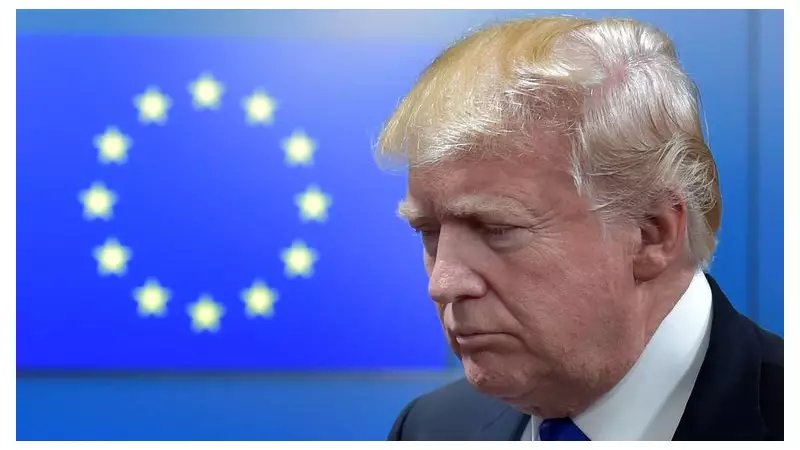
The diplomatic atmosphere between the United States and its European allies has reached a critical point, centred on the future of the vast, icy territory of Greenland. According to senior European officials, the situation is now described as "critical" and "unprecedented" as President Donald Trump pursues his ambition to bring Greenland under American sovereignty.
A Fundamental Clash of Positions
Following high-level talks in Washington this past week, a stark reality has emerged: there is no compatibility whatsoever between the stance of President Trump and the united position of the European Union, Denmark, and Greenland itself. The Danish government, while emphasising its flexibility and openness to dialogue on issues like military presence and mineral access, has drawn a firm red line: any discussion of ceding territory or sovereignty is off the table.
Despite this, sources indicate the American position, mirroring Trump's public rhetoric, is uncompromising. The US administration reportedly believes that the only way to secure Greenland from perceived Russian and Chinese threats is for it to become American territory, dismissing offers of enhanced cooperation under Danish sovereignty. This fundamental disconnect makes finding a compromise exceptionally difficult.

Strategic Stakes in the High North
The intensity of this standoff is fuelled by Greenland's immense strategic value in an era of climate change and great power competition. As Arctic ice recedes, new shipping routes and access to critical minerals are opening up, transforming the "High North" into a new geopolitical frontier. Both European and American strategists recognise this, but their proposed solutions are diametrically opposed.
European nations argue that the US can achieve all necessary security and economic objectives through close partnership, without annexation. They point to NATO's Article 5 mutual defence clause as a robust guarantee of Greenland's security. President Trump, however, contends that only full American sovereignty can deter future aggression, a stance that sidelines the alliance's foundational principles and places immense pressure on Denmark.
Consequences for Europe and an Awkward UK
The crisis presents a severe test of European resolve. Having frequently acceded to Trump's demands in the past, particularly on trade, European capitals now face a demand many consider unthinkable: the coerced transfer of European territory. The sense from diplomatic circles is that fatigue with Trump's tactics may finally lead to a firmer stance, even in the face of threatened sweeping tariffs on eight European nations, including the UK.
This places the United Kingdom in a particularly awkward position. Prime Minister Sir Keir Starmer's government has maintained that it possesses a unique understanding of how to manage the Trump administration, a claim underpinned by its touted trade deal. Trump's escalation on Greenland severely undermines this narrative, exposing the UK to the same coercive pressures as its continental neighbours and challenging its post-Brexit diplomatic strategy.
Ultimately, beyond the geopolitics, the debate often overlooks the 82,000 people of Greenland themselves, for whom the situation feels existential. As protests in Nuuk and Copenhagen demonstrate, the narrative is not solely about territory, but about the future of a distinct nation and culture caught in a global power struggle.






