

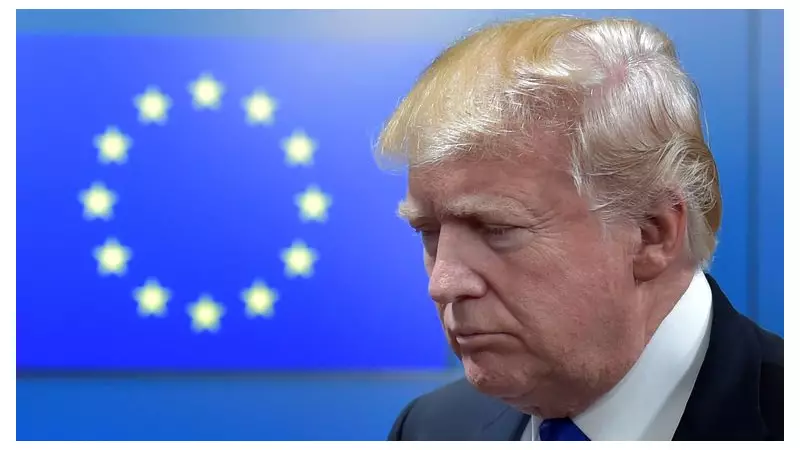
The diplomatic atmosphere between the United States and Europe has reached a critical point, centred on an unprecedented demand from President Donald Trump: the acquisition of Greenland. According to high-level European sources, the situation is now described as "critical," "urgent," and "extraordinary." This push has created a seemingly unbridgeable gap between Washington and its European allies, with profound implications for the people of Greenland and the future of Arctic geopolitics.
No Room for Compromise in Sovereignty Standoff
Contrary to any speculation about negotiation tactics, European diplomats are convinced that President Trump is not bluffing. Following a high-level meeting between Danish and American officials in mid-January 2026, the Danish government's assessment is that the US President is entirely serious in his ambition to secure ownership of the vast Arctic island. The challenge, as one diplomat framed it, is to find a middle ground—if one even exists.
The core of the crisis lies in a total lack of compatibility between the two sides. The Danish government, representing Greenland's foreign affairs, has reiterated its openness to dialogue and flexibility on numerous issues. Denmark's sole non-negotiable red line is any discussion of ceding territory or sovereignty. Offers have included expanded US military presence, renaming rights for bases, and access to Greenland's critical minerals. However, the American position, mirroring Trump's public statements, is reportedly unequivocal: only full territorial transfer can secure Greenland from perceived Russian and Chinese threats.

This fundamental clash makes meaningful dialogue exceptionally difficult. While there may be external pressure on Denmark to broker a deal, the nature of any potential compromise remains entirely unclear. Within Washington, there is reported to be unease about the strategy, but as one source noted, the president ultimately calls the shots.
European Resolve and Greenland's Existential Moment
A key question now is whether Europe will capitulate to this pressure. Historically, European nations have often acceded to Trump's demands, fearing the economic impact of his tariff threats. This time, however, the mood appears different. There is a growing weariness with what is seen as political gamesmanship, and the principle of ceding European territory under duress is viewed as unthinkable. The stakes were visibly underscored by a 'Hands Off Greenland' protest in Copenhagen on Saturday 17th January 2026.
For the 56,000 inhabitants of Greenland, this is not a distant geopolitical debate but an existential issue concerning their nation, culture, and right to self-determination. The strategic importance of Greenland is undeniable. As Arctic ice melts, the region is becoming a new frontier for great power competition. Both Europe and the US acknowledge this, but their solutions diverge radically. The European argument maintains that the US can achieve close strategic alignment with Greenland without annexation, a point reinforced by NATO's Article 5 security guarantee.
President Trump dismisses this, arguing that only American sovereignty can deter future encroachment by Russia or China, a stance that deliberately overlooks the existing NATO framework.
Awkward Reckoning for the UK and Global Fallout
The crisis presents a particularly awkward dilemma for the United Kingdom. Prime Minister Keir Starmer's government has consistently portrayed itself as having a unique understanding of and rapport with President Trump, citing this as key to securing a favourable post-Brexit trade deal. Trump's aggressive posture on Greenland severely tests this narrative, forcing London into a difficult position between a key ally and its European neighbours.
The immediate trigger for the crisis is a threat from President Trump to impose sweeping tariffs on eight EU nations, including the UK, directly over the Greenland issue. If enacted, these measures would cause significant economic damage, raising the pressure on European capitals to fold. The world now watches to see if European unity will hold against an unprecedented demand that challenges the very foundations of post-war sovereignty and alliance politics.






