

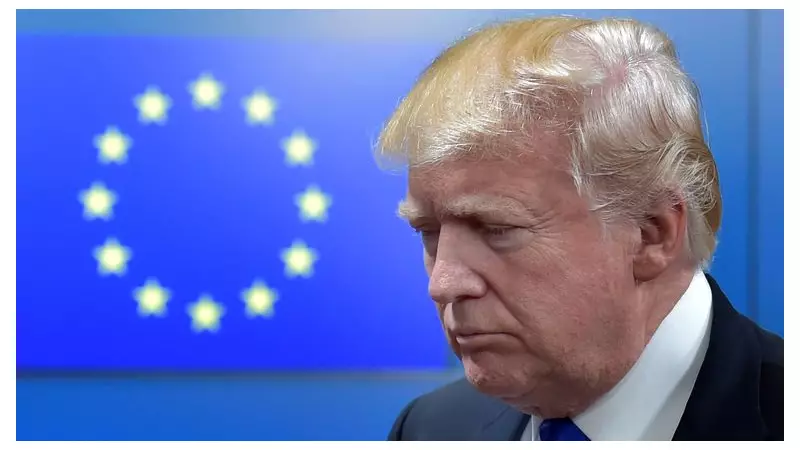
The transatlantic alliance faces one of its most bizarre and critical tests as former President Donald Trump's unequivocal ambition to acquire Greenland creates an unprecedented diplomatic crisis for the European Union and NATO.
A Stance With No Room for Compromise
Following high-level talks in Washington this past week, European diplomats have reached a stark conclusion: Donald Trump is not bluffing. The message from the Trump administration, both publicly and in private, is uncompromising: the only way to secure Greenland from perceived Russian and Chinese threats is for it to become American territory.
This position leaves zero compatibility with that of Denmark, Greenland, and the wider EU. The Danish government, while flexible on issues like military expansion and access to critical minerals, has drawn a firm red line at any discussion ceding sovereignty. "The situation is critical," a top European diplomat stated, echoing sentiments described by others as "extraordinary" and "urgent."

An Existential Threat and Strategic Stakes
At the heart of the dispute is the fate of Greenland's 56,000 people, whose nationhood is often overlooked in the geopolitical debate. For them, Trump's hostile takeover bid feels existential.
The strategic importance of Greenland is undeniable. As Arctic ice melts, the region becomes a new frontier for great power competition. While Europe acknowledges the value of closer US ties to the island, it argues this can be achieved without annexation. Trump, however, dismisses the protective umbrella of NATO's Article 5, which currently safeguards Greenland as part of Denmark, believing only full American control is sufficient.
To force the issue, Trump plans to impose sweeping tariffs on eight European nations, including the UK, turning the situation into an immediate economic threat.
European Resolve and UK Awkwardness
The third crucial question is whether Europe will capitulate. Having repeatedly acceded to Trump's demands in the past, there is a growing sense that allies are tired of his tactics. Ceding European territory under duress is viewed as unthinkable, suggesting a firmer stance may be taken.
The situation is particularly awkward for the United Kingdom. Prime Minister Sir Keir Starmer has consistently portrayed Britain as having a superior understanding of how to manage Trump, citing the UK's trade deal as evidence. As Trump doubles down on Greenland, that claim now looks uncomfortable, testing the UK's special relationship amidst a crisis that pits its European neighbours against Washington.
With pressure potentially mounting on Denmark to cut a deal, no viable middle ground is in sight. The internal consensus within the US administration on the wisdom of the move may be varied, but as one source noted, the president calls the shots. The world now watches to see if European unity will hold against an unprecedented sovereignty challenge.






