

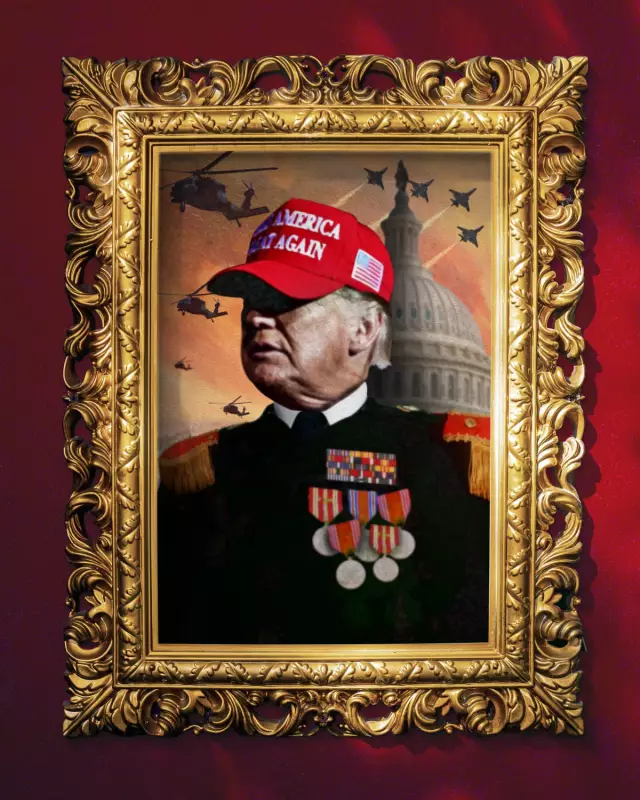
Reports have surfaced detailing former US President Donald Trump's alleged territorial ambitions, sparking intense debate among analysts and policymakers. These ambitions, if pursued, could signal a significant shift in American foreign policy towards a more overtly expansionist and imperialistic model.
The Core of Trump's Reported Ambitions
According to detailed investigations, Trump's vision extends beyond conventional political influence. It is suggested that he has privately expressed interest in acquiring or asserting control over specific territories. This is not merely rhetorical; discussions have reportedly included the potential annexation of land, leveraging economic or military power to secure strategic assets.
Key figures within Trump's inner circle have allegedly been tasked with exploring the feasibility of such plans. The motivations appear to be a blend of resource acquisition, national prestige, and the fulfilment of a long-held personal ideology that views territorial expansion as a marker of strength. This represents a stark departure from post-Cold War norms, where US power was projected through alliances and economic systems rather than direct territorial claims.

Historical Echoes and Modern Manifestations
The concept of American imperialism is not new, but its character has evolved. Historically, US expansion across the North American continent in the 19th century was followed by overseas territories like Puerto Rico and Guam. In the late 20th and early 21st centuries, imperialism took a more economic and cultural form.
Trump's reported ambitions, however, suggest a potential return to a more classical, territorial form of imperialism. This could involve efforts to formalise control over areas seen as strategically vital or rich in resources. The implications for international law and the sovereignty of other nations are profound, challenging foundational principles of the modern global order established after the Second World War.
Global Repercussions and Future Scenarios
The potential consequences of such a policy shift are vast. Allied nations, particularly in Europe and Asia, would be forced to reassess their security dependencies. Adversarial states might see it as a justification for their own expansionist actions, increasing the risk of regional conflicts.
Global institutions like the United Nations would face a direct challenge to their authority and founding charters. A move towards overt territorial acquisition by the world's pre-eminent military power could destabilise entire regions and trigger a new era of great-power competition focused on land and resource grabs. The report underscores a critical juncture, where the ideas of a leading political figure could reshape the geopolitical map and redefine what it means to be a superpower in the 21st century.
As the world watches, the debate continues: are these ambitions a real blueprint for action, or merely provocative rhetoric? Regardless, their emergence into public discourse has already altered the landscape of what is considered possible in international relations, forcing a sober examination of the future of American power and its global footprint.






