

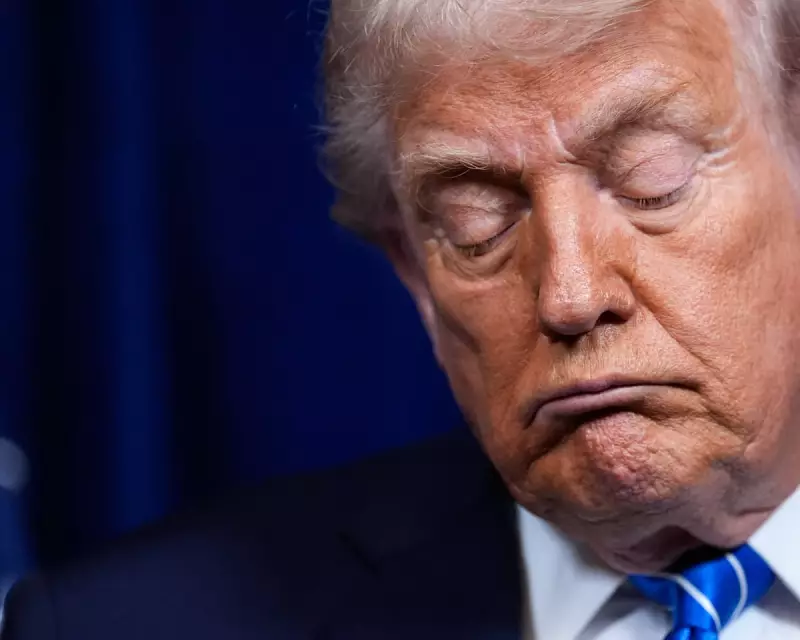
Former US President Donald Trump has asserted that a deal to end the war in Ukraine is now "95% done", following his weekend meeting with Ukrainian leader Volodymyr Zelenskyy at Mar-a-Lago. However, this bold claim has been met with profound scepticism from observers and the Ukrainian president himself, as the critical remaining hurdle involves securing agreement from a Russian leader showing no sign of compromise.
The Mar-a-Lago Meeting and a Dubious Declaration
The encounter between Trump and Zelenskyy was notable for several reasons. The Ukrainian president reportedly reacted with a mixture of disbelief and shock when Trump stated that "Russia wants to see Ukraine succeed". This moment underscored the vast gap in perceptions between the two leaders. Furthermore, the diplomatic courtesies extended were starkly different from those afforded to Vladimir Putin; Zelenskyy arrived without a single US official to greet him, a far cry from the red-carpet treatment Putin received from Trump in Alaska last summer.
Trump's announcement of progress on US-backed security guarantees for Ukraine, intended to bolster Kyiv after any future peace, was also light on detail. The proposals remain vague, and their practical enforcement—especially given likely Russian vetoes on NATO-like assurances—poses a significant, unresolved challenge.

The Unchanging Reality of Russian Maximalism
Beneath the surface of Trump's optimistic pronouncement lies a grim and unchanging reality. Since the leak of a US peace plan based on Russian demands in mid-November, multiple predicted deadlines have passed without result. Russian officials consistently state the conflict will only end when its "root causes" are addressed, a nebulous term implying ongoing Russian political or military influence over Ukraine's sovereignty.
While Ukraine faces its most difficult winter yet, capitulation is not on the table. Crucially, Vladimir Putin exhibits no indication of stepping back from these maximalist goals, and critically, Donald Trump shows no sign of being prepared to pressure him to do so. This dual impasse remains the central obstacle to any genuine, lasting peace.
European Diplomacy and the Spectre of Empty Guarantees
The focus for Ukraine's European allies has been a delicate diplomatic dance aimed at keeping Washington engaged. Their priority is to prevent a Trump administration from cutting off crucial US assistance, such as intelligence sharing. The push for security guarantees is part of this strategy, designed to strengthen Kyiv's hand in any eventual negotiations.
However, analysts point out that any meaningful guarantee requiring Western military commitment would likely have to be imposed on Russia, not negotiated with it. Given that neither the US nor Europe is currently willing to go to war with Russia over Ukraine, such a scenario seems improbable, rendering the guarantees potentially hollow without a fundamental shift in Western resolve.
A Disheartening Fork in the Road
With Trump appearing more fascinated by the Kremlin autocrat than supportive of the besieged Ukrainian president—a dynamic highlighted by his call to Putin just before meeting Zelenskyy—the path forward looks bleak. If a ceasefire were miraculously agreed, there are no clear mechanisms to ensure Russian compliance.
Absent a deal, Ukraine is left with two grim potential futures:
- A protracted stalemate, where it continues to fight, hoping for a political or economic shift within Russia that forces the Kremlin to compromise.
- A forced capitulation, where deteriorating conditions eventually compel Kyiv to accept Moscow's punishing terms.
For now, Trump's "95%" figure appears to be another in a long line of overoptimistic assertions, starting with his campaign pledge to end the war in 24 hours. Until there is tangible movement from the Kremlin or genuine pressure from Washington, the final 5% needed for peace looks as distant as ever.






