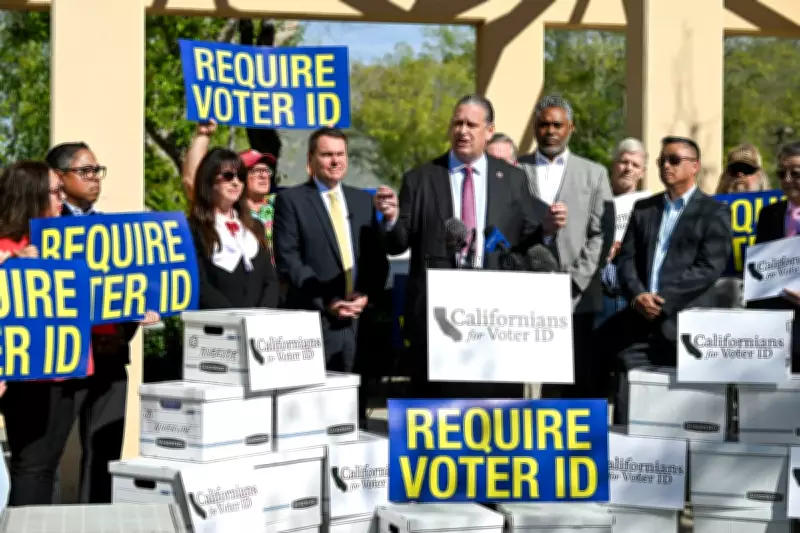
California Republican Voter ID Ballot Measure Sparks National Debate
A Republican-backed ballot measure in California, aiming to impose strict voter identification requirements, has ignited a fierce national debate over election integrity and voter access as the 2026 elections approach. The proposal, which seeks to mandate photo ID for all in-person and mail-in voting, represents a significant shift in a state traditionally dominated by Democratic policies, raising questions about its potential impact on voter turnout and electoral outcomes.
Details of the Ballot Measure
The ballot measure, officially titled the "California Voter Integrity Act," requires voters to present government-issued photo identification, such as a driver's license or passport, when casting ballots. For mail-in voting, voters would need to include a copy of their ID with their ballot or use a secure online verification system. Proponents argue that this measure is essential to prevent voter fraud and restore public confidence in elections, citing concerns over irregularities in recent cycles.
However, opponents, including civil rights groups and Democratic leaders, contend that the requirement could disenfranchise millions of Californians, particularly low-income individuals, elderly voters, and minority communities who may lack easy access to such IDs. They warn that this could lead to a significant reduction in voter participation, potentially altering the political landscape in a state with over 22 million registered voters.

Political and Legal Implications
The measure has drawn attention from national political figures, with Republicans viewing it as a model for other states to adopt similar voter ID laws, while Democrats see it as a voter suppression tactic. Legal challenges are anticipated, as critics argue it may violate state constitutional protections for voting rights. If passed, the measure would take effect for the 2026 statewide elections, setting a precedent that could influence voter ID debates across the United States.
Supporters have launched a campaign to gather signatures for ballot qualification, emphasizing themes of election security. In contrast, opposition groups are mobilizing to block the measure through public awareness efforts and potential litigation, highlighting the high stakes involved in this contentious issue.
Broader Context and Future Outlook
This development occurs amid ongoing national discussions about election reform, with voter ID laws being a polarizing topic in many states. California's move, if successful, could signal a broader trend toward stricter voting requirements, impacting future electoral strategies and voter engagement efforts. As the 2026 elections near, the outcome of this ballot measure will be closely watched for its implications on democracy and voting rights in one of America's most populous states.