French Town's Mayoral Election Hijacked by Candidates' Controversial Surnames
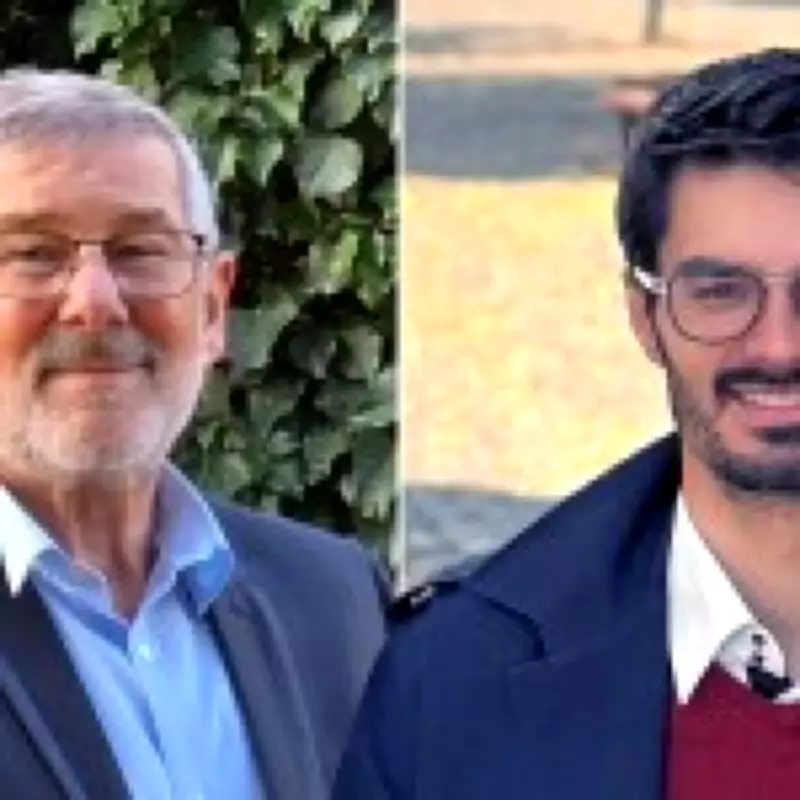
In the quaint French commune of Arcis-sur-Aube, a local mayoral election has unexpectedly captured global attention, not for its political stakes, but for the unfortunate surnames of the two main contenders. The race pits incumbent mayor Charles Hittler against challenger Antoine Renault-Zielinski, turning what should be a discussion of local governance into a media frenzy focused solely on their names.
A Campaign Gone 'Completely Crazy'
Charles Hittler, seeking re-election in the town of just 2,785 residents, expressed his frustration to the BBC, stating that the campaign has spiraled 'completely crazy' due to the focus on names rather than policies. 'All my life I’ve had the occasional joke made about my name. Sometimes people drew moustaches on my election posters. It was never a big deal,' Hittler recounted. 'But now it’s out of control. I’ve seen online articles saying ‘37% of the people of Arcis are Hitlerites!’. My wife is in tears.'
Hittler emphasized that this attention is detracting from critical local issues. 'If people were talking about the town and our policies, that would be one thing. But all they’re interested in is our names,' he lamented. He revealed that his father considered changing the family name after World War II but found it to be a 'huge administrative headache' and prohibitively expensive, leading to the decision to retain it. Despite this, Hittler noted that the surname is gradually disappearing over time.

The Opponent's Perspective
On the other side of the ballot, Antoine Renault-Zielinski, a 28-year-old member of the far-right Patriot movement, faces his own set of name-related queries. He is frequently asked if he is related to Ukrainian President Volodymyr Zelensky, though he clarifies that the names are entirely different. 'I can see why people find it amusing. Personally, it doesn’t make me laugh, but it doesn’t bother me either,' Zielinski stated. 'It would be better if people were talking about Arcis for other reasons, but at least we’re on the map.'
A Global Pattern of Political Name Controversies
This incident in France echoes a similar situation from last autumn in Namibia, where Adolf Hitler Uunona, a 59-year-old politician, won a landslide election in his northern constituency. Despite sharing a name with the infamous historical figure, Uunona is a popular local leader focused on anti-apartheid efforts in his town of 5,000 residents. He has publicly distanced himself from any association, stating, 'It does not mean I have Adolf Hitler’s character or resemble that of Adolf Hitler of Germany.'
Following his victory, Uunona requested to be referred to by his other surname, emphasizing, 'My name is not Adolf Hitler. I am Adolf Uunona. In the past, I have been called Adolf Hitler, and they have tried to associate me with someone I don’t even know.' He added that his wife simply calls him Adolf, highlighting the personal disconnect from the historical connotations.
The Broader Implications for Local Democracy
The cases in Arcis-sur-Aube and Namibia underscore a troubling trend where superficial elements, such as surnames, can overshadow substantive political discourse. In small communities where local issues like infrastructure, education, and healthcare are paramount, this distraction risks undermining democratic engagement. Voters may be swayed by sensationalist headlines rather than informed policy positions, potentially impacting election outcomes and governance quality.
As the French town grapples with this unexpected spotlight, both candidates continue their campaigns, hoping to redirect focus toward the real challenges facing Arcis-sur-Aube. The election serves as a poignant reminder of the power of names in politics and the need for media and public to prioritize substance over symbolism in democratic processes.