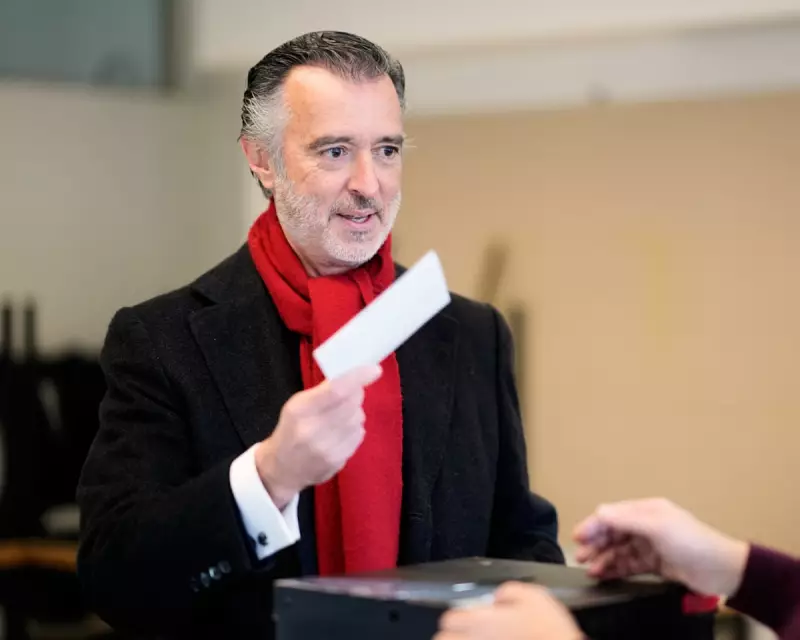
Voters across Portugal are casting their ballots in a presidential election that is shaping up to be one of the most fragmented and closely contested in decades. Opinion polls indicate a tight race where the leader of the far-right, anti-immigration Chega party could secure a place in a likely second-round runoff.
A Fragmented Political Landscape
This election underscores a significant shift in Portugal's political scene. Since the end of its fascist dictatorship fifty years ago, the country has only needed a presidential runoff vote once before, in 1986. The rise of the populist far right and widespread voter disenchantment with mainstream parties have shattered the traditional political order.
While the role of president is largely ceremonial, the office holds crucial powers. These include the ability, under certain circumstances, to dissolve parliament, call a snap election, and veto legislation. Approximately 11 million citizens are eligible to vote, with polling stations closing at 7pm local time. Exit polls are expected by 8pm, with official results following through the night.

The Front-Runners and Key Figures
The final opinion survey released on Friday by Pitagórica pollsters placed three candidates in a statistical dead heat. Socialist party candidate António José Seguro led with 25.1%, followed closely by Chega's leader, André Ventura, on 23%. In third was João Cotrim de Figueiredo, of the rightwing, pro-business Liberal Initiative party, with 22.3%.
André Ventura's Chega party, founded just seven years ago, cemented its position as the main opposition force in a parliamentary election last May, winning 22.8% of the vote. Despite some polls last week showing him slightly ahead, all projections for a potential runoff suggest he would lose, due to a high voter rejection rate exceeding 60%.
The Economist Intelligence Unit noted that a Seguro-Ventura runoff "would be more straightforward given his [Ventura's] limited appeal beyond his core base". A contest involving Cotrim de Figueiredo would be more unpredictable. The EIU added that while Ventura is the only candidate signalling a more interventionist presidential style, this is unlikely to translate into an ultimate victory.
Broader Field and Electoral Implications
Beyond the top three contenders, eight other candidates are also on the ballot. These include Luís Marques Mendes, backed by the ruling centre-right Social Democrats, and retired admiral Henrique Gouveia e Melo, who led the nation's successful Covid-19 vaccination campaign. Both are polling at over 11%.
The outcome of this election will be a critical barometer of Portugal's political direction. A strong showing for the far right, potentially propelling it into a runoff, would signal a continued and profound realignment in a nation once known for its stable, two-party dominated politics. The results will be closely watched across Europe as a gauge of populist momentum.