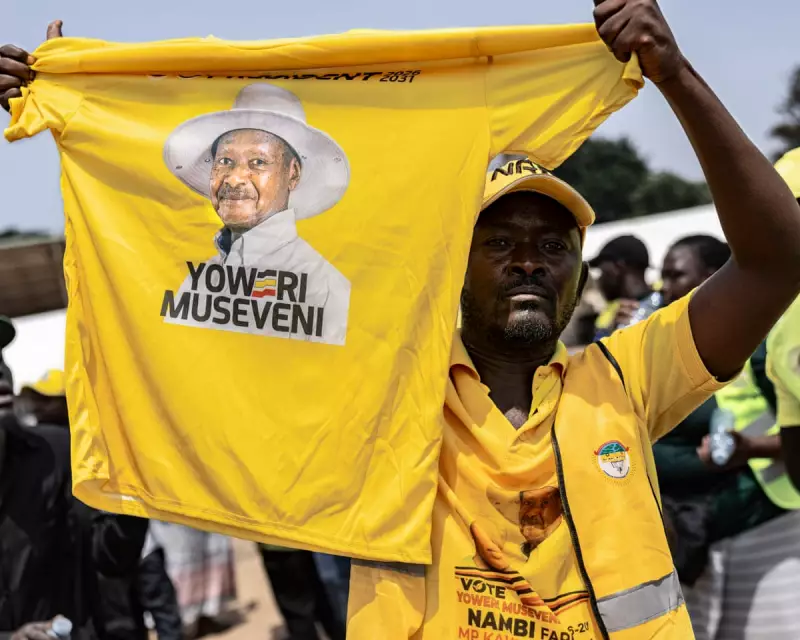
Uganda's long-serving President Yoweri Museveni has secured a controversial seventh term in office, using his victory speech to denounce his political opponents as "terrorists". The 81-year-old leader, who has ruled since 1986, claimed a landslide win with 72% of the vote according to official results released on Sunday.
Repression and Raids Mar Poll
The election process faced severe criticism from both African election observers and international human rights groups. They cited a widespread crackdown on opposition figures and a government-imposed internet blackout in the days leading up to the vote. The whereabouts of main challenger Bobi Wine, whose real name is Robert Kyagulanyi, remained uncertain after he claimed to have escaped a police raid on his home.
Wine, who officially garnered 25% of the vote, stated he was in hiding. Police denied conducting a raid but simultaneously blocked journalists from approaching his residence. The opposition leader's last social media post on Saturday accused the government of a "blatant theft of the presidential election".

'Terrorists' and 'Traitors': Museveni's Victory Address
In a fiery national address, President Museveni accused Wine's National Unity Platform (NUP) party of plotting to attack polling stations. "Some of the opposition are wrong and also terrorists," he declared. The veteran leader, who originally seized power at the head of a rebel army, further alleged they were "working with some foreigners and some homosexual groups".
He issued a stark warning to his critics: "All the traitors – this is free advice from me – stop everything, because we know what you are doing and you will not do it."
Observers Condemn Climate of Fear
The electoral environment was condemned by monitoring missions. A team from the African Union noted that "reports of intimidation, arrest and abductions" had "instilled fear and eroded public trust in the electoral process". Human Rights Watch had previously accused the government of "brutal repression" in the pre-election period.
While some internet access was restored late Saturday, the government stated a ban on social media platforms would continue indefinitely. The blackout was initially justified as necessary to prevent "misinformation" and "incitement to violence".
Despite the tensions, Uganda remained largely peaceful following the result announcement, though small-scale protests occurred in the capital, Kampala, where AFP journalists reported teargas being deployed. The heavy security presence seen on election day was notably reduced by Sunday.
Analysts view Museveni's victory as a foregone conclusion, given his total control over the state and security apparatus. However, he retains significant support from many Ugandans who credit him with bringing relative stability and economic growth. The government took extensive measures to avoid the violent unrest witnessed during recent elections in neighbouring Tanzania.
The most serious election-day violence was reported in Butambala, central Uganda, where an opposition MP claimed security forces killed at least ten people at his home. Museveni supported the police narrative, stating the deaths resulted from a thwarted attack on a ballot-tallying centre.
The political landscape remains fraught. Another key opposition figure, Kizza Besigye—a four-time presidential candidate—was abducted in Kenya in 2024 and faces an ongoing treason trial in a Ugandan military court.