

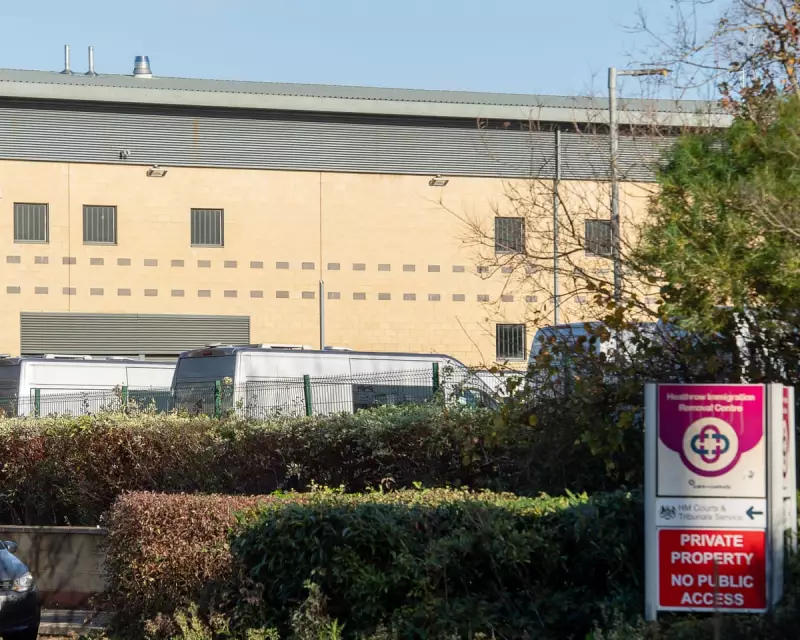
A group of eighty asylum seekers, detained under the UK government's controversial 'one in, one out' scheme, have compiled a formal document alleging degrading treatment and severe psychological harm at the Harmondsworth immigration removal centre near Heathrow.
Allegations of Inhumane Conditions and Psychological Harm
The detainees, who hail from conflict zones including Sudan, Afghanistan, and Iran, have submitted their 'Report on conditions and treatment at Harmondsworth immigration removal centre' to United Nations bodies and human rights groups. They accuse the Home Office of subjecting them to arbitrary detention, denial of legal representation, and inadequate medical care.
In the document, they state they came to the UK "in the pursuit of safety, dignity, and a chance to live a peaceful life" but have instead suffered "fear, humiliation, and psychological distress." The report details a profound psychological impact, with many of the young adults, aged between 17 and 30, experiencing widespread depression, anxiety, insomnia, and emotional breakdowns.

"There have been multiple incidents involving individuals experiencing severe mental health crises, including self-harm attempts," the report states. It adds that detainees feel "dehumanised and invisible" after being placed in isolation and not given sufficient time to recover from traumatic journeys or speak with their families.
Scheme's Impact Amid Record Channel Crossings
The call for an investigation coincides with the ongoing implementation of the 'one in, one out' policy, where individuals arriving via small boats are detained for return to France, while a corresponding number are brought to the UK legally from French processing centres. The first return flight of 2026 under this scheme is scheduled for this Wednesday.
Official Home Office figures show that in the first three months of the scheme, 193 people were sent to France, while 195 were brought to the UK legally. This number represents less than a quarter of the 803 people who crossed the Channel in small boats on a single day last December.
Despite various government measures to tackle people smuggling since Labour took power, 2025 saw the second-highest number of crossings on record, with over 41,000 people reaching the UK by small boat. However, data from the UN's International Organization for Migration (IOM) indicates a silver lining: while crossings increased, the number of deaths among those in northern France hoping to reach the UK fell significantly from at least 85 in 2024 to 36 in 2025.
New Powers and a Plea for Humanity
The publication of the detainees' report also comes as new government powers take effect, allowing authorities to seize and examine mobile phones from small boat arrivals. Offences under these powers can carry sentences of up to five years and include 'collecting information that is of use to those planning an illegal crossing'—a charge that could theoretically apply to checking a weather forecast.
The asylum seekers at Harmondsworth conclude their report by asserting that their treatment violates fundamental human rights and amounts to punishment for seeking protection. "The authors of this report ask not for privilege, but for fairness, humanity, and freedom," they write. "They ask to be seen, heard, and treated as human beings."
The Home Office and the UN's refugee agency have been approached for comment on the allegations.






