

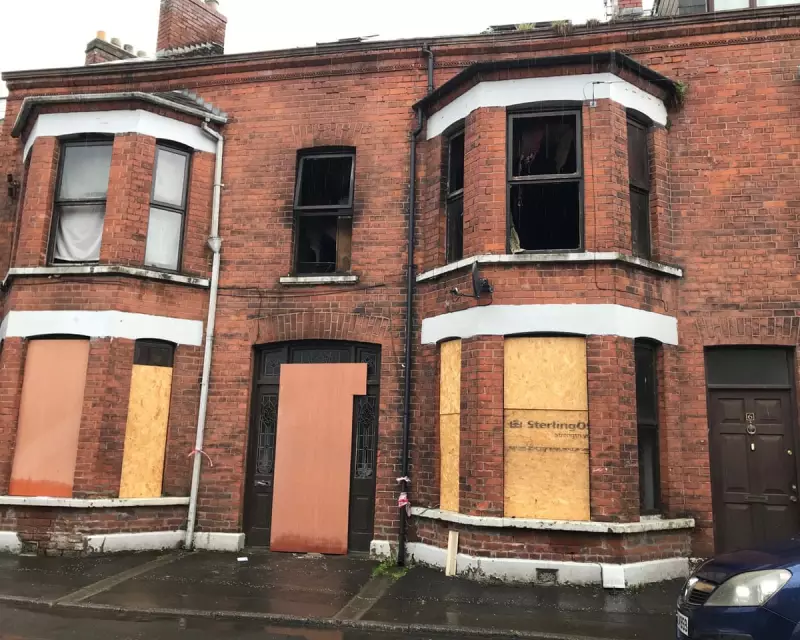
Six months after a wave of violent unrest targeted immigrant communities, the Northern Irish town of Ballymena remains a place scarred by fear, division, and an official wall of silence. The aftermath of what police labelled an attempted pogrom has left streets patrolled by intimidating groups and families living behind drawn curtains.
A Town on a Knife-Edge
The chaos erupted over three nights in June 2025, when hundreds of rioters hurled rocks and petrol bombs at police lines in the predominantly Protestant working-class town. The mob's chilling cry of "Where are the foreigners?" sent Polish, Bulgarian, Filipino, Nigerian and other residents fleeing or barricading themselves indoors. Dozens were injured in the mayhem, which transformed Ballymena into an international byword for intolerance.
Today, a tense calm prevails. Several houses around Clonavon Terrace are still scorched and empty. Occupied homes often have curtains drawn even in daylight. "Everybody is being very careful. It's on a knife-edge," said an African health worker who asked to remain anonymous. Another resident, from the Czech Republic, reported men in masks driving slowly through neighbourhoods to scrutinise people. "They slow down and look at you," he said.

Targeted Violence and Troubling Justifications
While the violence appeared indiscriminate, many local residents insist the rioters' primary target was the town's Roma community. According to the 2021 census, almost half of Northern Ireland's 1,500-strong Roma population lived in and around Ballymena. Community sources suggest that number had more than doubled to between 1,500 and 2,000 by 2025.
Some locals offer a starkly ambivalent view of the riots. "Shameful, a sad thing, but that's what happens when you try to mix people too quickly," said one 40-year-old Ballymena native. When asked if the events constituted ethnic cleansing, he nodded. "Yes. A certain group of people were made to feel not welcome. And the town is better for it." He claimed residents who appreciated the outcome preferred not to dwell on the method, predicting the episode would be "swept under the rug."
This sentiment is echoed by others who frame the violence as an ugly but necessary response to alleged antisocial behaviour and criminality linked to the Roma community. Grievances ranged from men congregating on pavements to more serious, overblown allegations fuelled by the arrest of two men last year on suspicion of human trafficking and controlling prostitution.
Official Silence and Lasting Consequences
The riots were sparked by accusations that two 14-year-old Roma boys had sexually assaulted a teenage girl. In a significant development, prosecutors dropped all charges against the boys in late 2025, stating the evidential test for prosecution was no longer met. Instead of prompting reflection, the decision ignited fury online, with the Public Prosecution Service branded the "paedophile protection service" in toxic social media groups.
Amid this climate, official voices are absent. Mid and East Antrim Borough Council declined to put any representative forward for interview, refusing to comment on the ongoing tensions. This silence contrasts sharply with the stark statistics: June 2025 saw 347 race-hate incidents recorded in Northern Ireland, the second-highest monthly level on record. Patrick Corrigan of Amnesty International called 2025 a "shameful year" for the region, criticising politicians for echoing anti-migrant misinformation.
Despite the intimidation, there are signs of resilience. It is estimated that almost three-quarters of the Roma population fled immediately after the riots. However, since September, most have quietly returned, avoiding the Clonavon area and dispersing across other neighbourhoods. "They're hoping for the best and doing what they can to keep their heads down," said Jacqueline Monahan, coordinator of a Roma support hub in Belfast.

The immediate threat of large-scale riots has diminished, partly because more than 90 people have been charged with riot-related offences. Yet, the threat persists in a lower-key form. Small groups now patrol neighbourhoods to monitor and intimidate, sending a clear message to immigrant communities: they are being watched. The formidable obstacles to reconciliation, as one veteran loyalist activist noted, are now amplified by the toxic echo chamber of social media, creating a "new war with a different set of warriors."





