

On a January evening in the quiet suburb of Mulbarton, south Johannesburg, residents witnessed a disturbing scene: five young men standing in the street dressed only in their underwear. This incident, which occurred on 5 January, unveiled a darker reality behind the migration of tens of thousands of Ethiopians to South Africa each year.
A Suburban Nightmare and a Growing Crisis
Police later picked up these five men along with seven others. Authorities stated that two were in a car involved in a high-speed chase. A 47-year-old Ethiopian man was arrested and charged with kidnapping and failing to stop for police. The twelve men, initially thought to be teenagers but aged between 22 and 33, were charged with being in South Africa illegally.
This was not an isolated event. It represents the latest in a series of incidents where young Ethiopian men and boys have escaped from suburban houses in Johannesburg. They were allegedly held captive in dire conditions while smugglers extorted money from their relatives back home to secure their release.

The Long and Dangerous Journey South
The UN's International Organization for Migration estimated in 2024 that as many as 200,000 Ethiopians live in South Africa. Researcher Yordanos Estifanos, who has studied the "southern route," gives an "educated guess" that tens of thousands arrive annually.
Migration began in earnest after 1994, when Nelson Mandela opened South Africa's doors post-apartheid, coinciding with the fall of Ethiopia's brutal Derg junta. Today, the motivation is increasingly economic. "Increasingly, the migration is inspired by economic opportunity here and lack of opportunity in Ethiopia," said Tanya Zack, author of a book profiling Jeppe, the economic hub for Ethiopians in Johannesburg.
The journey itself, spanning over 3,000 miles, has grown more treacherous. In 2020, 64 people were found dead in a truck in Mozambique. The lucrative trade has attracted rival gangs who sometimes intercept migrant groups to trade them amongst themselves.
Personal Stories of Hope and Despair
Aseged Yohannes fled political persecution in Addis Ababa in 2012. He paid a smuggler 22,000 birr (then about £785) upfront, with another 20,000 due on arrival. His two-month overland trek through Kenya, Tanzania, Malawi and Mozambique was relatively smooth. Now 36, he manages a shop in a township, considering himself lucky.
For Sahlu Abebe, the journey three years later was far grimmer. His brother, who migrated in 2012, warned him not to come. Ignoring the advice, Abebe set out in 2015. His brother was forced to pay the first half of a 63,000 birr (about £2,030) smuggler's fee.
While walking through a forest in Tanzania, a friend fell violently ill and was left behind. Abebe, now 36, assumes he died, as did more than 40 others he later heard perished in the country. "I was hoping to see him here," he said through a translator. "I never thought he would die on the road." His group was then arrested in Malawi, where he spent six months in a jail cell crammed with up to 90 people. "The route was the most painful thing, as a human being," he recalled.
A Changed Landscape and Constant Risk
The profile of migrants has shifted. Most now come from the region around Hosanna in southern Ethiopia, a trend partly catalysed by a former ambassador who helped dozens from the area relocate. Estifanos notes that poverty and the allure of wealthy returnees' social media posts drive the migration, creating a sense of being "left behind."
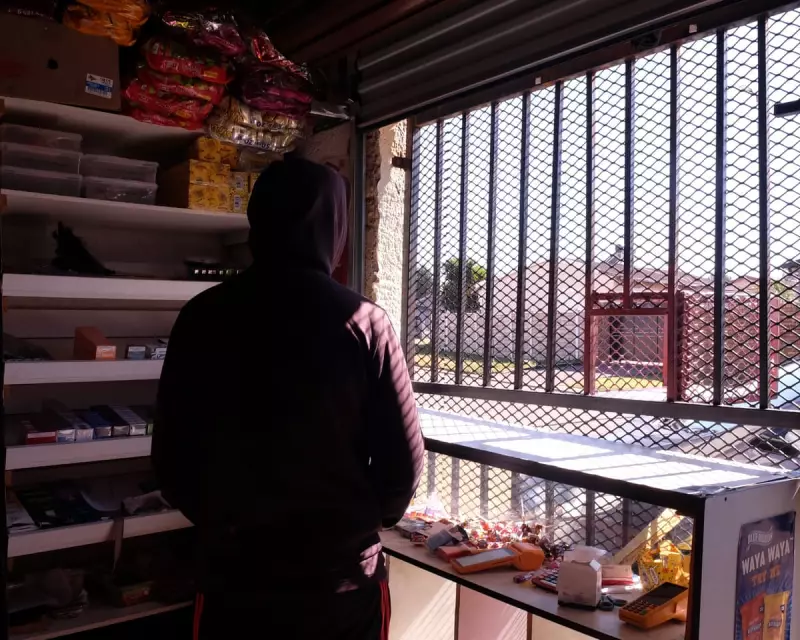
While Abebe was not abused upon arrival—a newer phenomenon of captivity in Johannesburg—he has been violently robbed twice in South Africa, where xenophobic attacks remain a constant threat.
His advice to those in Hosanna considering the journey is stark: "I can't say that you must come this side. It is not safe." His words underscore a brutal reality where the search for a better life is overshadowed by kidnapping, extortion, and deadly danger.






