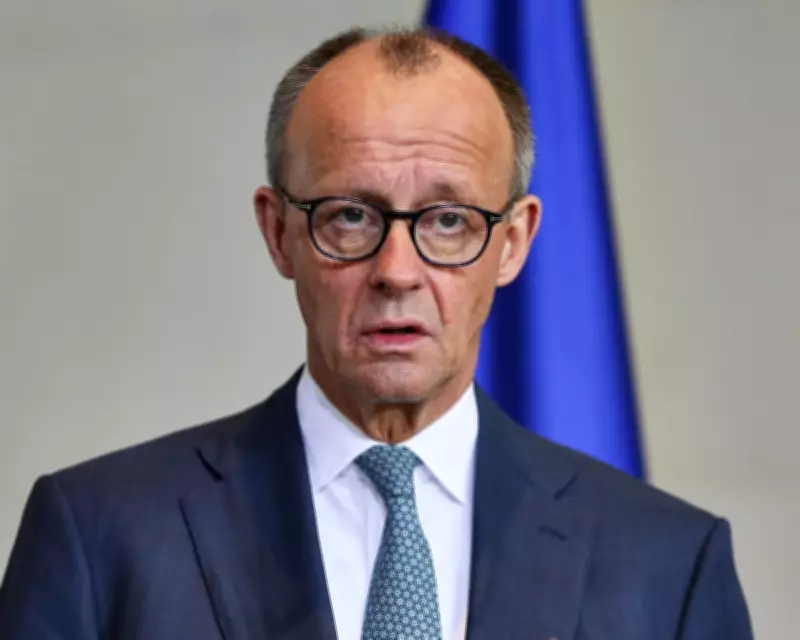
German Chancellor Merz Faces Backlash Over Syrian Repatriation Remarks
Friedrich Merz, the German chancellor, has sparked widespread condemnation from non-governmental organizations and members of his own government following his call for the vast majority of Syrians residing in Germany to "go back to their homeland." The controversy erupted during a visit to Berlin by interim Syrian president Ahmed al-Sharaa, where Merz outlined long-term goals for broad-scale returns from Germany, which hosts the largest Syrian diaspora in the European Union.
Political and Social Reactions to Merz's Statements
Merz, elected last year on a platform of stringent immigration policies to counter the far right, stated that Berlin's immediate priority is to deport Syrians who have committed crimes. However, he emphasized a longer-term vision, citing al-Sharaa's wish for approximately 80% of the over 900,000 Syrian citizens registered in Germany to return by 2029. This figure, aimed at rebuilding the war-ravaged nation, surprised many political officials in Berlin and drew sharp criticism.
Anke Rehlinger, deputy leader of the co-ruling Social Democrats (SPD), accused Merz of inadvertently aiding the anti-migration, anti-Islam Alternative für Deutschland (AfD) by setting specific repatriation targets ahead of Germany's next general election. She warned that such promises could raise unrealistic expectations and noted the integral role Syrians play in German society, with many working in critical sectors like healthcare and transportation.

Economic and Humanitarian Concerns Highlighted
Criticism extended within Merz's conservative Christian Democratic Union (CDU), with foreign policy spokesperson Roderich Kiesewetter labeling the chancellor's figures as "problematic in several respects." He cautioned that the AfD might exploit any unfulfilled promises and highlighted the significant contributions of skilled Syrian workers to the German economy. The German Hospital Society reinforced this, pointing out that Syrian doctors and carers are vital to the healthcare system, with over 5,700 physicians and 2,000 caregivers from Syria currently employed.
Franziska Brantner, co-leader of the opposition Greens, denounced Merz's repatriation goal as "reckless," citing ongoing security risks and political instability in Syria that make return unfeasible for many. Immigration advocacy group Pro Asyl called for an immediate halt to deportations, urging policies based on human rights and long-term stability rather than short-term migration deterrence.
Historical Context and Merz's Policy Shift
Merz assumed office in May of last year in a coalition with the SPD, pledging to depart from the more open border policies of his predecessor, Angela Merkel. Under Merkel's leadership from 2015 to 2016, Germany welcomed about 1.3 million refugees from conflict zones, a move that initially garnered support but later fueled backlash, bolstering the AfD's rise as the largest opposition party. Merz acknowledged the valuable contributions of Syrians who arrived during this period but argued that most now desire to return following the fall of Bashar al-Assad's regime.
Official data indicates that more than 3,700 Syrians have voluntarily returned from Germany as of November 2025, though forced deportations often face protracted legal hurdles. In response to the outcry, Merz appeared to backtrack on the specific 80% target, attributing the figure to al-Sharaa and acknowledging the complexity of the task ahead.