

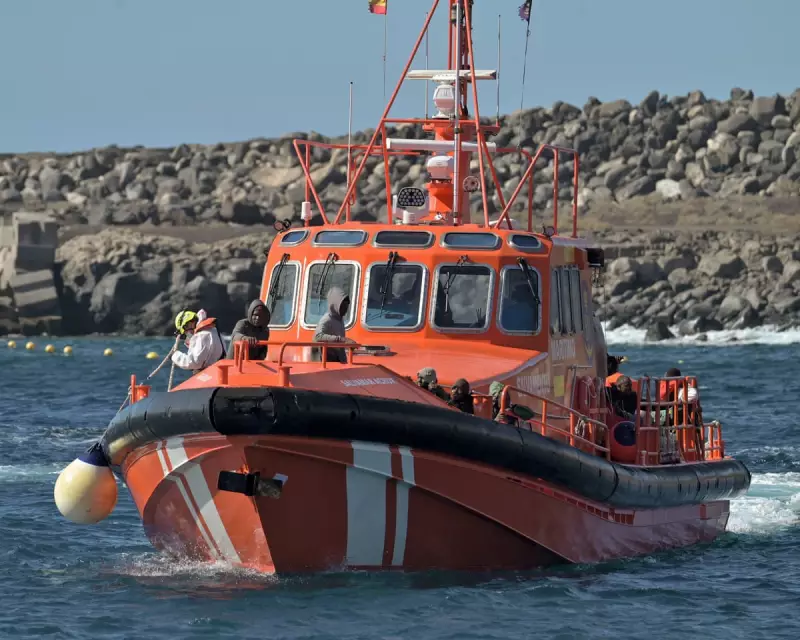
More than 3,000 people lost their lives attempting to reach Spain by sea in 2025, according to a major new report from the non-governmental organisation Caminando Fronteras. The figure, while staggeringly high, represents a significant decrease from the previous year's death toll.
A Drop in Fatalities, A Rise in Danger
The NGO's data, covering the period from January to 15 December 2025, records 3,090 fatalities, including 192 women and 437 children. This is markedly lower than the 10,457 deaths documented in 2024.
However, Helena Maleno, the group's research coordinator, issued a stark warning. She stated that the reduction is not a sign of safer migration, but a consequence of stricter border enforcement pushing people onto more perilous pathways. "The persecution and witch-hunts of migrants is having a huge impact on human rights in Europe," Maleno said, describing a policy of "necropolitics" influenced by far-right parties.

Despite fewer deaths, the report notes an increase in the number of shipwrecks to 303, with approximately 70 vessels disappearing without a trace.
The Impact of EU Border Deals and Shifting Routes
Officially, migrant arrivals in Spain have fallen sharply. Spanish interior ministry figures show 35,935 irregular arrivals by sea and land up to 15 December 2025, compared to 60,311 during the same period in 2024.
Analysts and the report itself attribute much of this decline to enhanced border policing, particularly in Mauritania. The north African nation, a key departure point, signed a €210 million migration partnership with the European Union in 2024. Human Rights Watch has accused Mauritanian authorities of systematic abuses against migrants, allegations the government denies.
These pressures are altering migration geography. The Atlantic route from north Africa to the Canary Islands remains the deadliest, claiming 1,906 lives this year on voyages that can last 12 days. Meanwhile, the shorter but hazardous crossing from Algeria to the Balearic Islands is growing in popularity, resulting in 1,037 deaths. A new, ultra-long route from Guinea to the Canaries, spanning 2,200km, has also emerged.
"This is because we've seen an increase in the number of embarkations on the dangerous route from Algeria to the Balearic Islands," explained Maleno. "These boats tend to carry around 30 people, whereas the ones on the Atlantic route to the Canary Islands may have up to 300 people on board."
An Inadequate Response to Ongoing Tragedy
The report concludes with a damning assessment of institutional failure. It states that responses to maritime emergencies are "patently inadequate," citing delayed rescue mobilisations, insufficient resources, and a lack of political will to prioritise saving lives.
The victims, who hailed from 30 countries across West and North Africa, as well as Pakistan, Syria, Yemen, Sudan, Iraq, and Egypt, underscore the global scale of the crisis. The findings challenge the narrative that reduced arrival numbers equate to a successful or humane policy, highlighting instead a system that continues to cost thousands of lives.






