

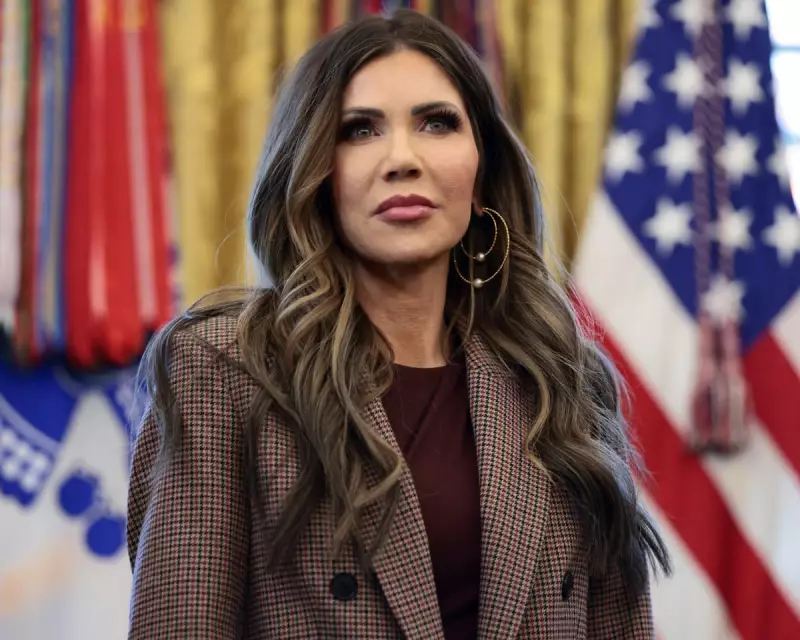
US Governor Kristi Noem has thrust the issue of Venezuelan migration back into the international spotlight, issuing a stark call for the United States to grant Temporary Protected Status (TPS) to nationals fleeing the South American country.
A Call for Humanitarian Protection
In a formal letter dated 4 January 2026, addressed to President Alejandro Mayorkas of the Department of Homeland Security, the Republican governor from South Dakota made a forceful case. Noem described Venezuela as a "failed socialist state" and argued that its citizens are escaping "violent repression, economic collapse, and humanitarian catastrophe."
Her proposal advocates for the designation of TPS for Venezuela, a measure that would offer a legal shield from deportation and grant work permits to eligible Venezuelans already residing in the US. This move, while focused on American policy, resonates with ongoing global discussions about the responsibility of wealthy nations towards those fleeing profound crises.

Political Motives and Policy Realities
Governor Noem's intervention is seen by many political observers as a calculated manoeuvre. As a potential vice-presidential candidate, her public stance on a high-profile issue like immigration serves to bolster her national profile. The letter allows her to criticise the Biden administration's handling of border security while simultaneously adopting a seemingly humanitarian position towards a specific group.
However, the policy landscape is complex. The Biden administration had previously extended TPS for Venezuela in 2021 and again in 2023, covering an estimated 472,000 individuals. Noem's letter is a push for a further extension or a more permanent solution, highlighting the persistent instability in Venezuela under the leadership of Nicolás Maduro.
Broader Implications for Global Refugee Strategy
The debate ignited by Noem's letter extends far beyond US borders, offering a case study for UK policymakers and international relations experts. It underscores the enduring political potency of immigration as an issue and the delicate balance between border control and humanitarian obligation.
Furthermore, it raises questions about the use and limitations of tools like TPS. While providing immediate relief, such temporary measures often leave recipients in a state of prolonged uncertainty, unable to plan a long-term future. The situation in Venezuela, with no clear end to its political and economic turmoil, exemplifies this challenge.
Noem's framing of Venezuela as a "failed socialist state" also injects potent ideological language into a humanitarian discussion, a tactic that is frequently mirrored in political discourse on both sides of the Atlantic. The episode serves as a reminder of how refugee and asylum policies can become entangled in broader geopolitical narratives and domestic political positioning.






