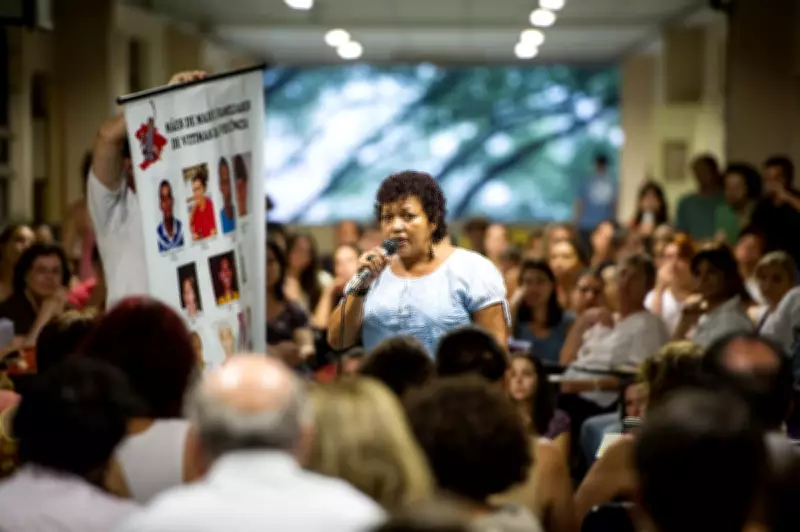
Thousands of people gathered in São Paulo on Sunday to honor the victims of police violence, marking the anniversary of the May 2006 massacres that left hundreds dead. The event, organized by the group Mothers of May, brought together families, activists, and human rights organizations to demand justice and accountability.
A Decade and a Half of Struggle
The Mothers of May movement was formed in the aftermath of the 2006 police crackdown, which targeted suspected criminals in poor neighborhoods. Official figures show that 493 people were killed in May 2006, but activists believe the real number is much higher. The group has since fought for recognition and reparations for the victims.
During the event, mothers carried photos of their children and held signs reading "Justice for Our Children." They called on the government to investigate the deaths and prosecute those responsible. Many participants wore black in mourning and carried flowers to lay at a memorial for the victims.

Demands for Reform
Speakers at the rally called for an end to police violence and for reforms to the security forces. They argued that the police continue to operate with impunity, killing hundreds of people each year, mostly young black men from poor communities. The Mothers of May have also pushed for a national truth commission to investigate human rights abuses by the police.
“We want justice for our children, but we also want to ensure that no other mother has to suffer the same pain,” said Maria Aparecida, one of the founders of the movement. “The police must be held accountable for their actions.”
- Over 400 people were killed in the May 2006 police operations.
- Most victims were young, black, and from low-income neighborhoods.
- Human rights groups have documented widespread torture and extrajudicial executions.
Government Response
The Brazilian government has acknowledged the need for police reform but has taken limited action. In 2020, the Supreme Court ordered the government to implement a national plan to reduce police violence. However, activists say progress has been slow and that police killings remain at high levels.
In a statement, the Ministry of Justice said it is committed to addressing police violence and that it is working on new training programs for officers. But critics argue that without political will and accountability, little will change.
The Mothers of May continue to hold weekly vigils and have become a symbol of resistance against state violence. Their struggle has inspired similar movements across Brazil and Latin America.
As the sun set over São Paulo, the crowd lit candles and sang songs of hope. “We will not forget,” said one mother. “Our children are not just numbers. They were loved, and they deserve justice.”