

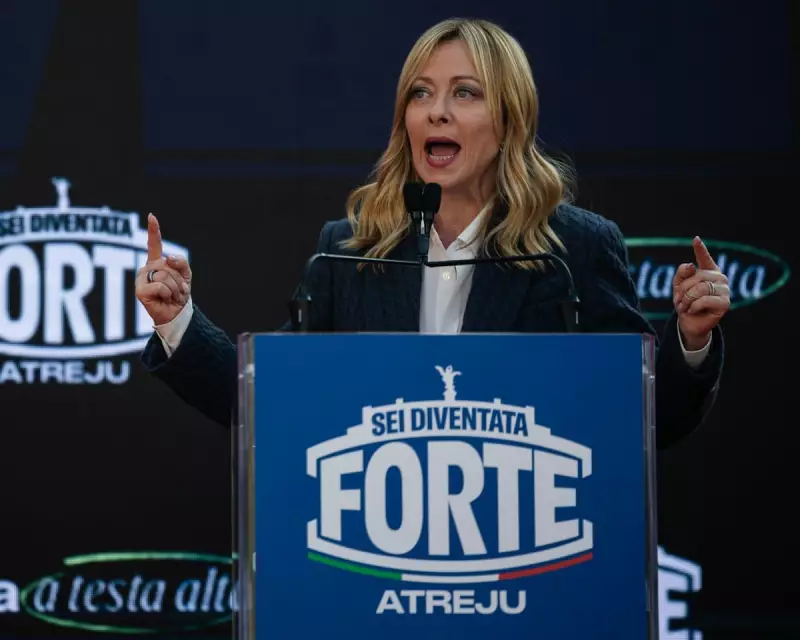
In the shadow of Rome's historic Castel Sant'Angelo earlier this month, a festive scene unfolded with an unmistakable political edge. The annual Atreju festival, the premier gathering of Italy's right-wing, presented a polished face to the world. Gone were the overt symbols of its neo-fascist roots; in their place, a crowd of students, influencers, and families drawn by the Christmas market allure. Yet, the underlying message remained, celebrating the nationalist vision of Prime Minister Giorgia Meloni.
The Neverending Story of a Political Movement
The festival's peculiar name, borrowed from the hero of Michael Ende's The Neverending Story, reveals its ideological origins. In the 1990s, Meloni and her contemporaries in neo-fascist youth groups used fantasy literature to sugar-coat hard-right doctrine. Atreju, which she helped launch, embodies this legacy—transforming a complex tale into a simplistic battle between a "good Italy" of patriots and a "bad Italy" of leftists and migrants.
This year's slogan, "You became strong … Italy with its head held high," resonated with a movement now firmly in power. From a marginal party with just 2% of the vote, Meloni's Brothers of Italy leads the ruling coalition, and she stands as one of Italy's most enduring postwar premiers. The mood was one of triumph, with speakers boasting of newfound stability and international credibility.

International Fanfare vs. Domestic Cracks
Meloni's supporters point to her active foreign policy as proof of success. She has pivoted from China's Belt and Road Initiative, courted investment in Africa, strengthened ties with India, and positioned herself as a key transatlantic bridge, notably attending Donald Trump's 2025 inauguration. However, this robust image is fragile. Within the EU, her stance is often contradictory, while at home, her deputy PM Matteo Salvini's pro-Putin sympathies undermine a unified front on Ukraine.
More critically, her cosy relationship with Trump's 'America First' movement rings alarm bells for Italian industry. Fears of protectionist tariffs threaten the very "Made in Italy" brand she champions, leaving exporters of food and fashion deeply anxious.
A Nation in Precarious Decline
While Atreju celebrated, a different reality gripped the nation. On 12 December, as the festival continued, thousands joined a general strike against a budget criticised for stealth cuts and underfunding public services. The data paints a grim picture: approximately 5.7 million Italians live in absolute poverty, nearly 10% of the population. So-called rising employment masks a surge in insecure, poorly paid work, compounded by the government's refusal to implement a national minimum wage.
Inflation continues to erode living standards, with purchasing power still below pre-pandemic levels. This accelerating decline is triggering a historic exodus. In 2024 alone, 191,000 people officially emigrated, the highest number in a quarter of a century, fleeing a lack of opportunity and a crushing cost of living.
Rather than confront this economic emergency, Meloni's government appears focused on consolidating control. A planned 2026 referendum on judicial reform is viewed by critics as a power grab that would politicise the courts, distracting from the nation's pressing material woes.
The festival's namesake, Atreju, was ultimately warned in his story about the treachery of political narratives. As Italy's celebratory mood clashes with the harsh truths of poverty and departure, the question remains whether the public will see through the tale being spun, or continue to be persuaded to "hold beliefs that make them easy to handle."






