

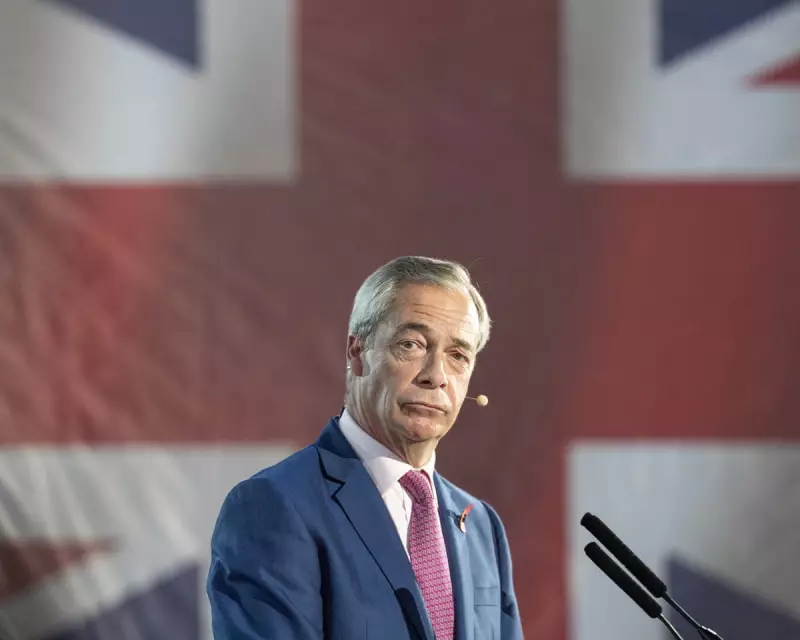
A former senior Labour election strategist has issued a stark warning that the party is failing to mount an adequate defence against the rising populist threat posed by Nigel Farage's Reform UK. Chris Powell, who advised Labour for over two decades, argues that Keir Starmer's current approach is "not nearly enough" and that the party requires a complete strategic "reset" to prevent a dangerous entrenchment of populist forces in British politics.
The Existential Threat to Democracy
Powell, writing with colleague David Cowan, frames the next general election as a pivotal moment for UK democracy, far beyond a typical change of government. He highlights the alarming rhetoric of international populist leaders like Donald Trump and Recep Tayyip Erdoğan to illustrate the nature of the threat. The core danger, he states, is that Reform UK is being allowed a "free run" to establish itself as a credible alternative in the minds of disenchanted voters. Relying on hopes that the right-wing vote will split or that Reform will implode is labelled a "potentially suicidal" strategy for freedom and democracy.
The article points to an increasingly coordinated international populist movement, noting the US foreign policy strategy of supporting European populist parties and the role of Steve Bannon's Conservative Political Action Conference in uniting these groups. In contrast, Powell laments a void of equivalent coordination on the anti-populist side at a European level.

Lessons from New Labour and Global Populists
Drawing a direct parallel to the 1990s, Powell recalls the meticulous, no-holds-barred planning session held at his home in September 1995, where Tony Blair and his team plotted New Labour's path to power. He argues that a similar scale of reorientation—encompassing strategy, branding, policy, and presentation—is urgently needed today.
From four years of research into countering populism, Powell outlines three critical lessons. First, anti-populists must adopt a "ruthless rebuttal mindset" within democratic bounds, fighting fire with fire on messaging and exposing simplistic solutions. He cites the examples of Viktor Orbán in Hungary and Erdoğan in Turkey to show how populists can rig systems to stay in power once elected, posing a direct threat to institutions like the BBC and an independent judiciary.
A Blueprint for Labour's Fightback
The second lesson is that Starmer must fundamentally change how he connects with voters. Powell argues that to show they are "on the people’s side," Labour must emulate figures like Kentucky's Democratic Governor Andy Beshear, who focuses relentlessly on plain-language, bread-and-butter issues.
Third, and crucially, Powell calls for a top-to-bottom overhaul of Labour's media and communications. He proposes a two-front strategy: a semi-autonomous digital narrative unit to win the daily online attention war, and a permanent, hyper-local "ground war" infrastructure modelled on Stacey Abrams's work in Georgia. This local action network would listen to communities, campaign on local issues, and publicise every win.
Powell concludes that the current situation is a "textbook case" of an establishment party frozen in the headlights. Time is a luxury Labour cannot afford, and a comprehensive action plan is needed immediately to prevent the populist threat from growing further.






