

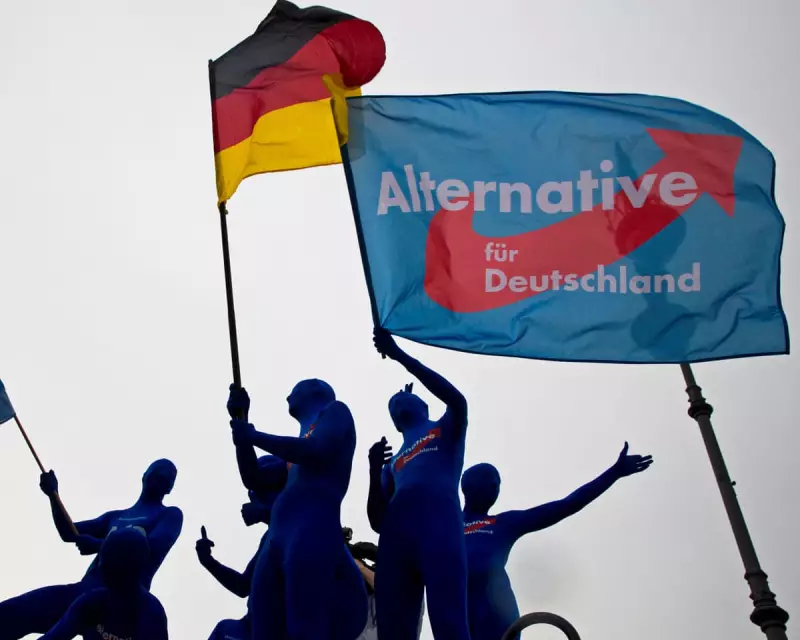
A potent combination of economic anxiety, migration concerns, and a growing disillusionment with the political establishment has propelled Germany's far-right Alternative for Germany (AfD) to unprecedented electoral success. Once a fringe movement, the party now commands significant support, fundamentally altering the nation's political landscape and sending shockwaves across Europe.
The Economic Discontent and Energy Policy Backlash
A primary engine for the AfD's rise has been widespread economic unease. The party has skilfully capitalised on fears surrounding deindustrialisation and the perceived decline of Germany's economic model. Voters in former industrial heartlands, particularly in the east, feel left behind by globalisation and technological change.
Critically, the AfD has positioned itself as the chief opponent of the government's ambitious energy transition, known as the Energiewende. The party argues that policies aimed at combating climate change, especially the phase-out of nuclear power and reliance on renewable sources, have driven up energy costs for households and crippled the competitiveness of German industry. This message resonates deeply in regions where manufacturing jobs are seen as under threat.

Immigration as a Defining Political Fault Line
No issue has been more central to the AfD's platform than immigration. The party's hardline stance, which intensified following the 2015 refugee crisis, continues to attract voters. The AfD frames immigration as a direct challenge to German culture, public security, and social welfare systems.
They have consistently criticised Chancellor Olaf Scholz's coalition government for its management of migration, accusing it of losing control of the nation's borders. This narrative, amplified by the party's media allies and on social networks, has kept the issue at the forefront of political debate and provided the AfD with a clear, polarising identity that distinguishes it from all other major parties.
The Collapse of the Political Centre and Voter Disillusionment
The AfD's surge cannot be understood without examining the weakening of Germany's traditional political pillars. The once-dominant centre-right CDU/CSU and centre-left SPD have seen their vote shares erode after periods in grand coalitions, which blurred ideological lines and fostered voter apathy.
Many citizens perceive the established parties as an out-of-touch political class, more focused on consensus within the Berlin bubble than addressing the pressing concerns of ordinary people. This crisis of representation has created a vacuum that the AfD has eagerly filled, presenting itself as the authentic voice of the 'forgotten' citizen against a self-serving elite.
Strategic Messaging and Media Ecosystem
The AfD has proven adept at modern political communication. It bypasses traditional media outlets, which it routinely labels as part of the 'lying press' (Lügenpresse), and instead cultivates a direct relationship with supporters through social media platforms like Telegram and alternative online news sites.
This allows the party to control its narrative, spread its messages unfiltered, and mobilise supporters effectively. Its rhetoric often employs simple, emotionally charged language about homeland, security, and traditional values, which cuts through more complex policy debates.
Institutional Acceptance and the 'Firewall' Erosion
For years, other German parties maintained a cordon sanitaire—a so-called 'firewall'—refusing to cooperate with the AfD at any level of government. However, as the party's vote share has grown, particularly at state and municipal levels, this firewall has begun to show cracks.
Local deals and instances of tacit cooperation, especially in eastern states like Thuringia and Saxony, have gradually normalised the AfD's presence within the political system. This process of institutional acceptance, however reluctant, further legitimises the party in the eyes of some voters who previously saw it as an unacceptable protest option.

The convergence of these five factors—economic strain, the immigration debate, mainstream party failure, savvy communication, and creeping normalisation—has created what analysts describe as an 'unstoppable rise' for the AfD. The party's strength now presents a profound challenge to Germany's post-war democratic consensus, influencing policy across the spectrum and forcing a national reckoning with issues it has placed firmly on the agenda. The long-term stability of German governance and its role in Europe now hinges on how the political establishment responds to this formidable challenge.





