

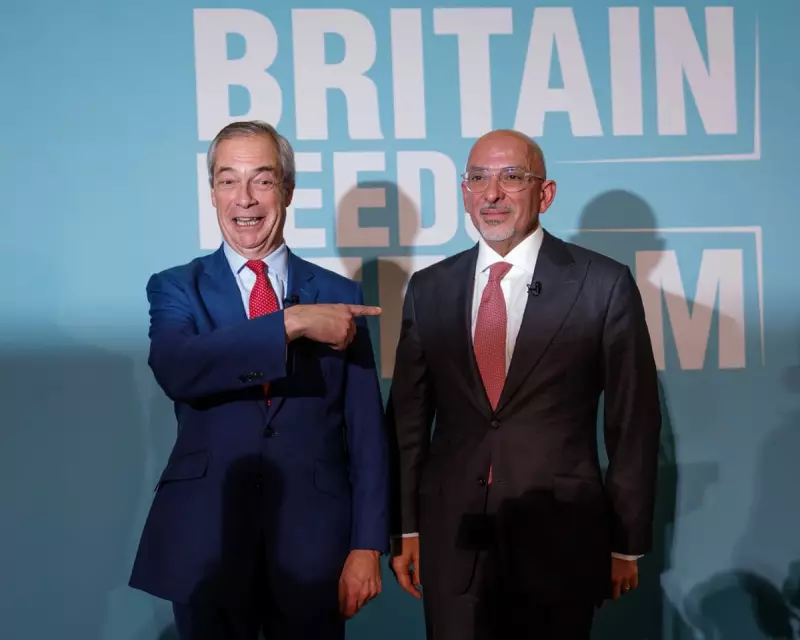
In a move that has sent shockwaves through Westminster, former Conservative Chancellor Nadhim Zahawi has crossed the floor to join Nigel Farage's Reform UK. The defection was announced at a press conference at the Institute of Directors in London on 12 January 2026, with Farage presenting his new recruit as a prized asset who chose public service over a life of luxury.
The Grand Unveiling: A 'Glorious Revolution'?
Standing alongside his new party leader, Zahawi framed his decision as an act of patriotic duty. He emphasised that, as a successful businessman, he could have opted for a comfortable retirement but felt compelled to join what he termed Farage's "glorious revolution". Farage, in turn, was effusive in his praise, declaring that Zahawi "doesn't need to be here" and could have chosen to live abroad, implicitly presenting the defection as a favour to the British public.
This narrative of reluctant, philanthropic service is becoming a hallmark of Reform's messaging. The party's ranks are increasingly filled with figures who project an air of not needing the political arena, from Farage himself – who famously wanted his life back in 2016 – to deputy leader Richard Tice, who has stated his business career funds his political pursuits.

A Career Under Scrutiny
Zahawi's political baggage, however, casts a long shadow over his professed altruism. His tenure in government was marred by controversy, most notably a serious breach of the ministerial code over his tax affairs, which led to his resignation as Chancellor. He was also forced to repay thousands of pounds in taxpayer money claimed for the energy bills of his stables at his Warwickshire estate – a fact unlikely to endear him to voters struggling with the cost of living.
The article highlights that this 'consequence-free' attitude is not confined to the party's upper echelons. It cites the case of Ian Cooper, the former Reform leader of Staffordshire County Council, who resigned after links to extremist content were revealed. His parting shot was to sniff that he didn't need the money from politics and could walk away without consequences.
A Wider Political Trend
This phenomenon of politicians presenting themselves as magnanimous saviors, graciously descending from their ivory towers, extends beyond Reform. The piece references former Tory minister Rory Stewart recalling how he leveraged a Harvard position to seek faster promotion. It also traces the lineage to US politics, noting how Donald Trump's 2016 campaign was built on the mantra "I don't need to do this," a sentiment pioneered by billionaire independent candidate Ross Perot in the 1990s.
The irony, as columnist Marina Hyde points out, is stark. At a time when 74% of people across several Western nations believe the world is "hopelessly rigged for the rich," the self-proclaimed political cavalry is comprised of individuals who constantly remind the electorate of their immense personal wealth and lack of need for public office.
The defection of Nadhim Zahawi is less a political earthquake and more a calculated manoeuvre. For Reform, it represents a coup in acquiring a former senior Cabinet minister. For critics, it symbolises the hollowing out of political service into a brand of self-serving opportunism, where the ultimate luxury is the ability to claim you never needed the job in the first place, while the public is asked to follow on trust alone.






