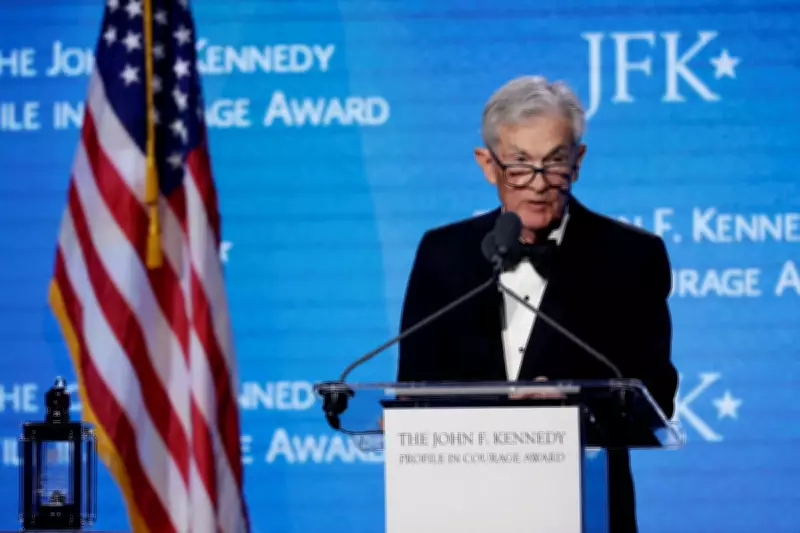
Jerome Powell, the former chair of the Federal Reserve, has warned that a single act of political interference in monetary policy could permanently destroy public trust in the central bank. Speaking on Sunday night in Boston, where he was accepting the 2026 John F. Kennedy Profile in Courage Award, Powell said the institution was in the midst of a "stress test" as the Trump administration continues to challenge the Fed's longstanding independence.
Powell's Warning on Political Pressure
Powell, who stepped down as Fed chair last month and was succeeded by Kevin Warsh, remains on the board of governors. In his acceptance speech, he argued that legal protections insulating monetary policy from politics "have served the public well" across administrations of both parties. He added, "If any administration finds a way to remove Fed officials over policy differences, then future administrations will do so as well."
The former chair spoke as the Supreme Court weighs a highly anticipated decision on the fate of Fed Governor Lisa Cook, whom President Trump attempted to fire last August. Powell did not mention Trump or Cook by name but stressed that "the public would lose faith that the central bank will make decisions based only on what's best for all Americans. The Fed's credibility would be lost."

Background of the Conflict
The JFK Library Foundation's award committee said it was honoring Powell for withstanding "years of personal attacks and threats from the highest levels of government," noting that he "refused to let political forces dictate monetary policy." Powell emphasized that Fed decisions are made "based only on our best economic analysis of what would most benefit the people we serve. We do not take into account the fortunes of any political party or politician."
Powell repeatedly defied Trump's demands for drastic interest rate cuts. Trump's subsequent attempt to exert greater control over the Fed set the stage for a constitutional showdown that has unsettled global markets for months.
The Lisa Cook Case
Last August, Trump announced he was removing Cook, citing what he described as "deceitful and potentially criminal conduct" relating to mortgage transactions. This marked the first time in the Fed's history that a sitting president attempted to remove a Fed governor. Cook denied any wrongdoing and refused to leave. A federal district judge blocked the firing in September, concluding that Cook's alleged conduct could not constitute lawful "cause" for dismissal because it occurred before she took office.
When the case reached the Supreme Court in January, both conservative and liberal justices signaled skepticism toward the administration's position, indicating they were unlikely to grant its request to lift the injunction while litigation continued. A final ruling is expected before the court rises for summer, typically in late June. Powell attended the January oral arguments and told reporters afterward that the case was "perhaps the most important legal case in the Fed's 113-year history."
Powell's Call for Institutional Integrity
On Sunday, Powell said Fed officials "hold office with legal protection against removal" and serve "long terms unrelated to the four-year presidential election cycle." Quoting philosopher Edmund Burke, he warned that democratic institutions "take much time, effort, and patience to build but can be torn down all too quickly."