

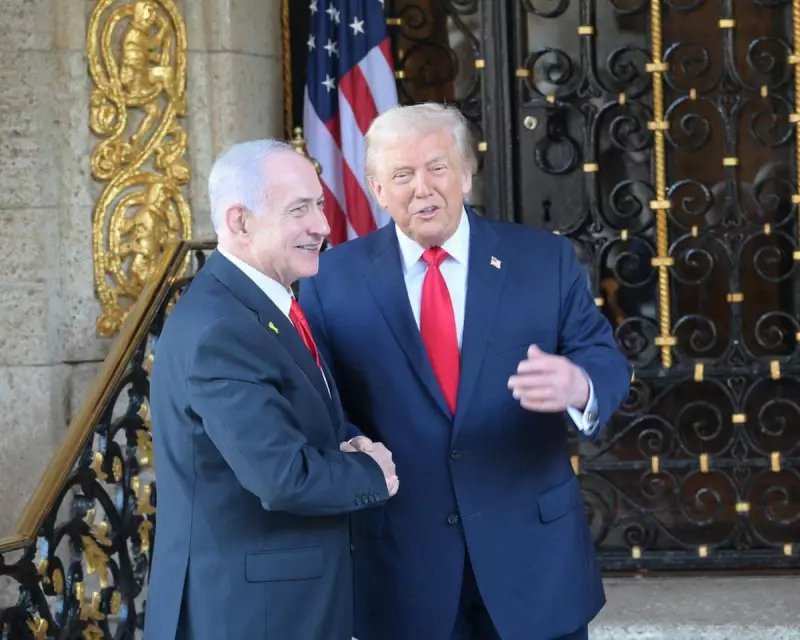
The office of Israel's President, Isaac Herzog, has issued a swift and firm denial following claims by former US President Donald Trump that a pardon for Prime Minister Benjamin Netanyahu was imminent. The public contradiction highlights a significant diplomatic rift over the ongoing corruption trial of the Israeli leader.
Trump's Public Assertion Met with Immediate Denial
Speaking in Florida on Monday ahead of a meeting with Netanyahu, Donald Trump told reporters he had been informed by President Herzog that a pardon for the Israeli PM was "on its way." Trump framed the issue as a matter of wartime necessity, asking, "How can you not? He's a wartime prime minister who's a hero. How do you not give a pardon?" He added that Herzog had personally told him the pardon was forthcoming.
Within minutes, Herzog's office released a statement directly contradicting Trump's account. The statement clarified that there has been no conversation between the two presidents since November, when Trump sent a formal letter urging clemency. The office reiterated that any pardon request must follow established legal procedures, a point it had previously communicated to Trump's representatives.

The Background of Netanyahu's Legal Woes and Trump's Advocacy
Benjamin Netanyahu, Israel's first sitting prime minister to face criminal charges, is on trial for bribery, fraud, and breach of trust, charges he vehemently denies. His supporters view the proceedings as a political witch-hunt. A conviction could result in a lengthy ban from public office, effectively ending the 76-year-old's long political career.
Donald Trump has been a vocal advocate for Netanyahu, repeatedly calling for the trial to be cancelled. In October, he raised the prospect of a pardon in a speech to Israel's national assembly. The following month, he sent a formal letter to President Herzog, describing the case as a "political, unjustified prosecution." His latest comments in Florida represent a continued, highly public pressure campaign.
The corruption cases against Netanyahu are substantial. In one, he and his wife, Sara, are accused of accepting over $260,000 (£198,000) in luxury gifts including cigars, jewellery, and champagne from wealthy businessmen in exchange for political favours. Separate cases allege he sought favourable media coverage in return for regulatory benefits.
Legal Precedent and Political Fallout
Netanyahu formally submitted a pardon request to President Herzog on 30 November, arguing the court hearings hinder his governance and that clemency would promote national unity. However, legal experts note that presidential pardons in Israel are traditionally exercised after a conviction, not to halt an ongoing trial.
The intervention by the former US president has sparked outrage within Israel, with critics accusing Trump of infringing on the nation's judicial sovereignty and undermining the rule of law. Opponents of Netanyahu argue that pardoning him mid-trial would be an unprecedented and dangerous breach of legal norms.
This public disagreement underscores the complex intersection of law, politics, and diplomacy. As Netanyahu's trial continues, the calls for its termination from powerful external figures like Donald Trump are creating significant tension, placing Israel's democratic institutions under an intense international spotlight.






