

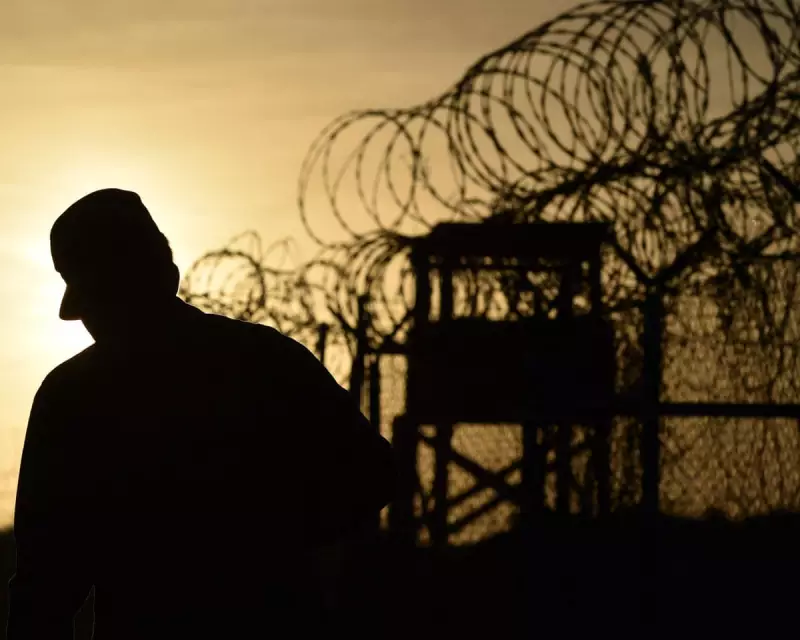
The UK government is facing calls for transparency after reportedly making a substantial compensation payment to a Palestinian man still detained in Guantánamo Bay, over the involvement of British intelligence in his torture.
Former Attorney General Demands Ministerial Statement
Dominic Grieve, the former Attorney General, has urged ministers to explain why compensation has been paid to Abu Zubaydah. Grieve, who chaired a 2018 parliamentary inquiry into UK complicity in US torture and rendition, stated that the government should make a ministerial statement or answer a parliamentary question to provide clarity.
He emphasised that while the inquiry could establish what happened, the reasons behind the agencies' actions remained unclear. "We could see what had happened, but not why it happened," Grieve said.

The Case of Abu Zubaydah
Abu Zubaydah was captured in Pakistan in March 2002 and accused of being a senior al-Qaida figure, a claim the US has since dropped. He was never charged with any crime and has no link to the 9/11 attacks. He holds the grim distinction of being the first person subjected to CIA waterboarding.
Despite MI6 being warned in 2002 that he was facing harsh mistreatment, both MI5 and MI6 continued to supply questions to the CIA for his interrogations until at least 2006. This made the British agencies complicit in his abuse, according to legal arguments.
A 2018 report by Parliament's Intelligence and Security Committee (ISC) noted that the conditions Zubaydah endured were so severe it was considered "98% of US Special Forces would have been broken."
Compensation and a Lack of Accountability
The BBC reported that Zubaydah has now received a "substantial" compensation payment from the UK, with lawyers estimating it could be a six-figure sum. The Foreign, Commonwealth and Development Office issued a standard statement, refusing to comment on intelligence matters, and it is not believed the payment included an admission of liability.
Human rights group Reprieve criticised the move. Dan Dolan, its interim deputy executive director, argued: "If the UK government was complicit in Abu Zubaydah’s horrendous torture, they owe him a public apology, not just a cash sum."
Dolan highlighted a continuing "gap in accountability," where the UK can still use intelligence obtained from prisoners at risk of torture in exceptional circumstances.
Zubaydah's legal victory in December 2023, where the UK Supreme Court ruled English and Welsh law applied to his case, was pivotal. Notably, he was represented at one stage by Richard Hermer, who is now the Attorney General.
A promised public inquiry into such cases was halted by former Prime Minister David Cameron and replaced with the narrower ISC investigation, which was barred from questioning junior intelligence staff.
Court disclosures from a separate case brought by Security Minister Dan Jarvis and MP David Davis suggest there could be up to 15 other cases where UK spy agencies are accused of involvement in mistreatment.
Abu Zubaydah, described as a "forever prisoner," remains in US custody after over two decades, with his lawyers campaigning internationally for both compensation and his release.






