

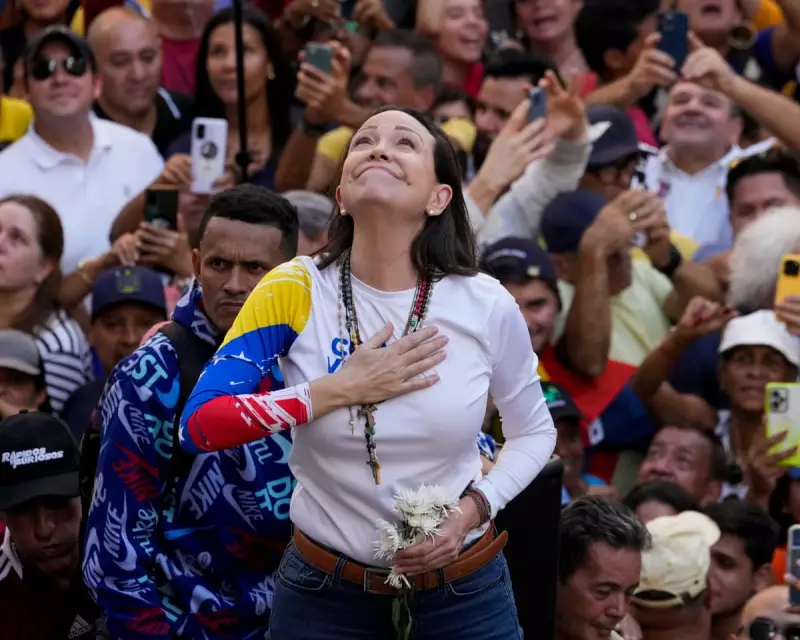
The political landscape in Venezuela has been thrown into further turmoil following the dramatic removal of President Nicolás Maduro, with opposition leader María Corina Machado vowing to return to the country and rejecting the authority of the interim president now backed by the United States.
Machado's Defiant Stance and Praise for Trump
Speaking to Fox News from an undisclosed location, the 58-year-old industrial engineer and Nobel Peace Prize laureate declared her intention to go back to Venezuela "as soon as possible". She asserted that her movement is prepared to win a free and fair election, claiming it would secure over 90% of the vote.
Machado praised former US President Donald Trump for the "historical actions" taken to dismantle what she called the "narco-terrorist regime" and bring Maduro to justice. She revealed she had not spoken to Trump since 10 October, the day her Nobel Prize win was announced. When asked if she had offered to give Trump the prize, Machado said she would "certainly love to be able to personally tell him" that the Venezuelan people want to share it with him.

The Unexpected Rise of Delcy Rodríguez
Despite many expecting Machado to lead a post-Maduro transition, the US under Trump instead threw its support behind Delcy Rodríguez, Maduro's former vice-president. Machado fiercely criticised Rodríguez, accusing her of being a key architect of torture, persecution, corruption, and narco-trafficking in the country.
Reports suggest Trump's decision may have been influenced by CIA briefings that Machado and her electoral candidate, Edmundo González Urrutia, would face legitimacy challenges. Alternatively, The Washington Post suggested a more personal motive, with Trump potentially irritated that Machado accepted the Nobel Prize.
Trump has stated his willingness to work with Rodríguez and Maduro's former team, conditional on them submitting to US demands on oil, and has dismissed the idea of a vote within the next 30 days.
A Nation Under a State of Emergency
The situation on the ground remains volatile. The government made public a decree, signed by Maduro just before his arrest at 2.01am on Saturday, declaring a "state of external commotion" – effectively a state of emergency.
The decree mandates:
- The mobilisation of the armed forces.
- The militarisation of public service infrastructure, the oil sector, and basic industries.
- The suspension of the right to public assembly and protest.
- The immediate search and capture of anyone involved in supporting the US armed attack.
This crackdown has seen at least 14 journalists and media workers detained in Caracas on Monday, with 13 later released. Overnight, gunshots and explosions were reported near the Miraflores presidential palace, which the government attributed to firing at unauthorised drones.
As repression reportedly increases, the path forward for Venezuela remains deeply uncertain, caught between an opposition leader demanding democratic elections and a US-backed interim administration facing significant internal resistance.






