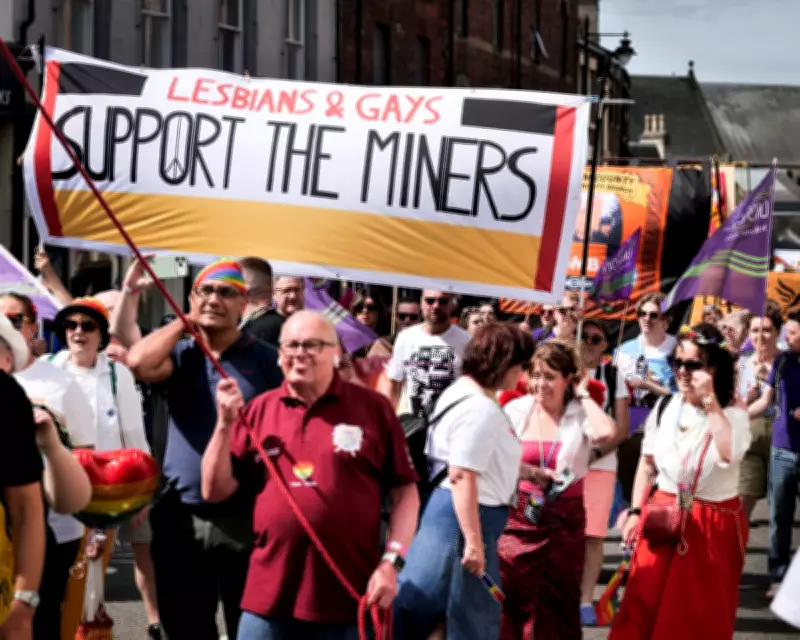
Rainbow flags were almost matched in number by trade union banners at the biggest march in Durham Pride's history, as solidarity between the LGBTQ+ community and unions saved the event from a funding cut by Reform UK.
When Reform UK won control of Durham County Council last year, one of its first moves was to take down the rainbow flag from its headquarters and announce it was axing funding for the city's Pride event. Deputy leader Darren Grimes stated, 'Durham Pride won't be getting a single penny from this council next year. Taxpayers shouldn't be bankrolling it.'
However, this year's event returned bigger than ever, thanks to funding from trade unions. Stephen Guy, chair of the Durham Miners' Association (DMA), said he encouraged the trade union movement to step up and stand shoulder to shoulder with the LGBT+ community, recalling how that community supported miners during the 1980s strikes. 'They not only raised funds for us, but came to our communities, uplifted our spirits when they were down, and showed their solidarity,' he said.

Mel Metcalf, founder of Durham Pride, noted that while the event lost about £2,500 in council funding, Reform's move brought in 'about £25,000 from the unions and people who are supporting us more because of that decision.' He added, 'I can't stress how much people like CISWO, the Durham Miners' Association, the TUC and the trades unions have come together and said: Right, that money's gone, but let's find it. Not only did they find it, they've found more.'
One of the largest donations came from Equity, the performing arts union. Its president, Lynda Rooke, said, 'We are sending a message to Reform and any other group that is planning on attacking the cultural sector, which is: we see you, we will fight you, and we will succeed.'
The trade union presence was larger than ever, with the National Union of Mineworkers, Aslef, Unite, the CWU, and NASUWT among those marching. In July, the LGBTQ+ community will reciprocate by showing solidarity at the 140th Durham Miners' Gala.
Dave Pike, regional secretary for TUC North East, Yorkshire & Humber, said, 'It was really important for us as a trade union movement to step in and make sure that Pride went ahead, and could be bigger and better than ever. I'm really proud that we managed to raise more money than Reform ever took away. I think it's a really great example of solidarity in action.'
Labour MP Mary Kelly Foy, who joined the parade in a rainbow feather halo, said, 'We're just showing that we're here stronger than ever and we're not going away.' She dismissed Reform councillors as 'silly, silly people in County Hall who just want divisive politics.'
Louise Brown from Gateshead carried a sign saying 'Pride 1 Reform 0,' adding, 'You can't just cut money for pride, I'm going to come and show solidarity.' Another marcher, Lisa V Hesling, called the funding cut 'disgraceful' and said 'a Reform council is not what we need.'
The relationship between LGBTQ+ people and mining communities was immortalized in the film Pride, which highlighted the work of Lesbians and Gays Support the Miners (LGSM). Mike Jackson, a founder member of LGSM, said local Pride events like Durham's are vital: 'Now people are actually having Prides in little isolated towns up north, and that makes all the difference. It's beyond our wildest dreams that we would ever find an organisation like the Durham Miners' Association absolutely and unconditionally standing up in support of LGBT rights in the face of a council that's basically turning its back on the LGBT community.'
A Reform spokesperson said, 'Durham county council took the decision to withdraw taxpayer funding because residents expect their money to be spent on core local services. If trade unions and private supporters now wish to fund the event themselves, that is a matter for them. This demonstrates that the event can go ahead without relying on council tax payers to foot the bill.'