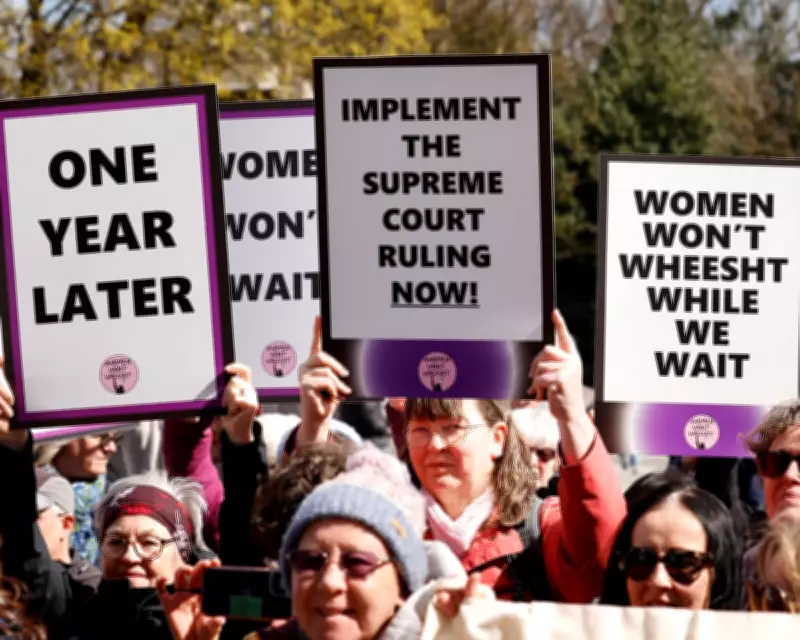
Thirteen months after the UK Supreme Court delivered its landmark ruling that sex in the Equality Act refers to biological sex, and ten days after an updated draft code of practice from the Equality and Human Rights Commission (EHRC) was laid before Parliament, the UK is once again debating single-sex spaces, particularly toilets. The purpose and value of these spaces for women risk being overshadowed by complaints from those who prefer they did not exist in a way that complies with current law.
What the EHRC Code Confirms
The code confirms that there is no legal way to open a single-sex service to people of the other sex, even if they are transgender. Organizations are instructed to address potential disadvantage to trans people by offering alternative, mixed-sex facilities. Associations, such as membership organizations with rules, can be trans-inclusive as long as they do not claim to be single-sex. Bridget Phillipson, the Women and Equalities Minister, stated that avoiding any new burden on business was one reason the revised guidance took over a year to arrive.
Reactions from Trans Rights Groups
The angry reaction from trans rights groups was expected. Bathroom bans, as they are called in the US, are a totemic issue. Public toilets are the only single-sex space most people encounter daily. Trans campaigners view the guidance as a mandate to exclude them from ordinary life. However, for entry to single-sex spaces, the criteria must be sex, and the code is clear that any checks—for example, if a trans man were mistaken for a biological man in a women's health setting—must be conducted sensitively to avoid discrimination or harassment.

Broader Implications Beyond Toilets
Among those who welcomed the Supreme Court ruling, there is relief but also frustration. The charity Sex Matters has criticized a section of the code stating that sex should be treated as special category personal data and therefore kept private. This, it argues, risks making single-sex spaces harder to operate. The implications extend far beyond toilets, which were never the top priority for groups like For Women Scotland, Woman's Place UK, and Fair Play for Women, which led the UK campaign for sex-based rights.
From the start, these groups were more concerned about less visible spaces with special status in the women's movement: prisons, refuges, rape crisis centres, lesbian groups, women's health centres, and sports. Attacks on the exclusionary nature of such spaces by the trans rights movement are a key reason why gender-critical feminism exists. Several leading figures are lesbians or sexual abuse survivors who have spoken publicly about this. Karen Ingala Smith, co-founder of the Femicide Census, which records women killed by men, bravely spoke out years before Women's Aid supported single-sex services. Her book, Defending Women's Spaces, explains from a refuge provider's perspective why these spaces are important for traumatized victims of domestic violence as they rebuild confidence and reestablish boundaries.
Trans People and Mixed-Sex Services
Trans people also suffer from high rates of domestic abuse and need access to services. There are justified concerns about inadequate funding. However, mixed-sex support groups already exist, and a trend toward gender-neutral commissioning has been noted. The vast majority of public spaces and activities are mixed-sex, which is why the Equality Act refers to single-sex ones as exceptions. What is not acceptable is the removal of this option on grounds that seeking a female-only space is bigoted, or claiming a service is single-sex when it is not.
The Law and Future Challenges
The law is the law. The EHRC is only the messenger. So far, Reform UK is the only party with a plan to repeal the Equality Act. But if a campaign materializes to eliminate single-sex spaces, details on rising levels of sexual violence will feature prominently in the arguments against it. Radical and gender-critical feminists are often accused of stigmatizing transgender people and fixating on anatomy. However, while there is no global body to analyze the science like the International Olympic Committee adjudicates male advantage in sport, a vast body of evidence points to males' far greater propensity for violence and sexual abuse.

Nature or nurture? Take your pick. Biological drives need not come into it. The point is, first, that a gender transition—particularly one made later in life—cannot erase the previous person and everything that shaped them. Second, since there is no objective test of gender identity, there is no failsafe way to distinguish a transgender woman from a man who wishes to access female spaces.
Research and Data
Research is limited in this highly contested area, but facts back up the gender-critical view. In 2024, a government minister reported that out of 245 transgender prisoners identifying as women in England and Wales, 151 were convicted of a sexual offence—a far higher proportion than the roughly 2% of female prisoners jailed for sex crimes. Other data may point to different conclusions, but it remains scarce; for example, we do not even know how many trans people live in England and Wales after a question on the 2021 census was botched.
Why Single-Sex Spaces Matter
The threat posed by men to women is not the only reason single-sex spaces matter. Fairness in sport and the right of women, including lesbians, to have their own groups are also important. So are the privacy and dignity of women who must change clothes at work, such as the nurses in Darlington who objected to undressing in front of transgender colleagues and brought claims against their NHS employers.
With 739,000 female victims of sexual offences in England and Wales last year, and grim trends including a huge rise in camera-enabled crimes (indecent exposure, voyeurism, filming of abuse, image-sharing), many women see the case for single-sex spaces getting stronger, both as a tool of prevention and as a resource for survivors. While loos were not the main issue, mixed-sex school toilets strike me as one of the worst ideas anyone has ever had.
The trans population faces its own challenges. The code is emphatically not a reason to disregard these. But it should not have taken the Supreme Court or the EHRC to make it clear that sacrificing single-sex spaces is not the answer.