

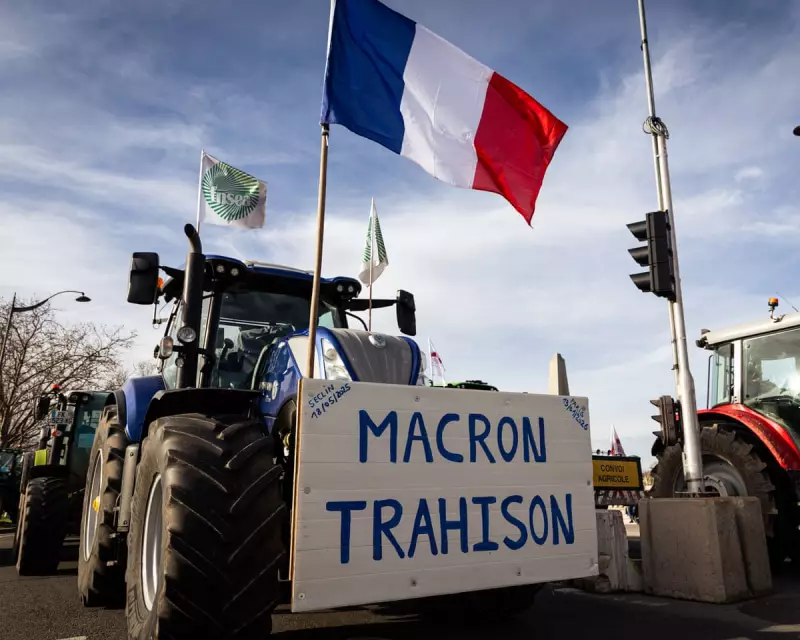
On Tuesday, 13 January 2026, a convoy of tractors rolled into the heart of Paris, parking defiantly in front of the National Assembly. The dramatic scene marked a fresh wave of agricultural protests, this time squarely aimed at the European Union's impending trade agreement with the Mercosur bloc of South American nations.
A Deal Decades in the Making Sparks Immediate Fury
After 25 years of complex negotiations, the EU is on the cusp of finalising a landmark, rules-based free-trade pact with Mercosur, comprising Brazil, Argentina, Paraguay, and Uruguay. This deal is a strategic counter to aggressive US trade protectionism. However, in France, it is being portrayed not as an economic victory but as a betrayal. Farmers fear being undercut by a flood of cheaper South American beef, produced to standards they argue are less stringent than the EU's rigorous norms.
The European Commission has attempted to placate these concerns, incorporating safeguard clauses and emergency brakes against import surges and bringing forward agricultural funding. Yet, the narrative in France has been seized not by defenders of the deal, but by its opponents. The protest, capturing national attention with tractors positioned near iconic landmarks, enjoys nearly 80% public support, according to opinion polls.

Political Cowardice and a Convenient Scapegoat
Analysts argue the core issue is not Brussels but a profound failure of political leadership in Paris. President Emmanuel Macron, elected as a pro-European reformer, has reversed his position. Despite having secured protections for French agriculture, he voted against the Mercosur deal. With his government weakened and facing elections, Macron has chosen to appease the powerful farm lobby—representing under 4% of GDP and 2.5% of the workforce—rather than defend the agreement's broader benefits.
This surrender, critics say, legitimises false claims. Similar fears were voiced about the EU-Canada trade pact (Ceta), yet French exports like wine and cheese to Canada have thrived without the predicted deluge of hormone-treated beef. The real pressures on French farmers include rising costs, squeezed supermarket prices, and burdensome regulation—issues unrelated to Mercosur.
Empowering the Far-Right and Jeopardising EU Stability
The political vacuum has been expertly filled by the far right. The National Rally (RN), led by Marine Le Pen, has capitalised on the rural fury. The party's close ally, the rightwing farmers' union Coordination Rurale, now the country's second-largest, has spearheaded the anti-Mercosur movement. While Le Pen has abandoned earlier calls for a 'Frexit', a softer Euroscepticism—promising to wrench power from Brussels and cut EU payments—is gaining traction.
The consequences extend beyond French borders. Macron's inability to rally a blocking minority in the EU and his domestic weakness undermine France's influence. The broader danger is that this episode reinforces a narrative that Europe is acting against French interests. This sentiment could propel Le Pen's protégé, Jordan Bardella, into the Élysée Palace in the upcoming presidential election, setting Paris on a collision course with the EU and Germany.
Ultimately, the tragedy of the Mercosur dispute is that a significant EU trade achievement is being weaponised to destabilise the Union itself. The collective cowardice of France's political class in explaining the deal's merits risks a far greater loss: the long-term cohesion and stability of the European project.






