

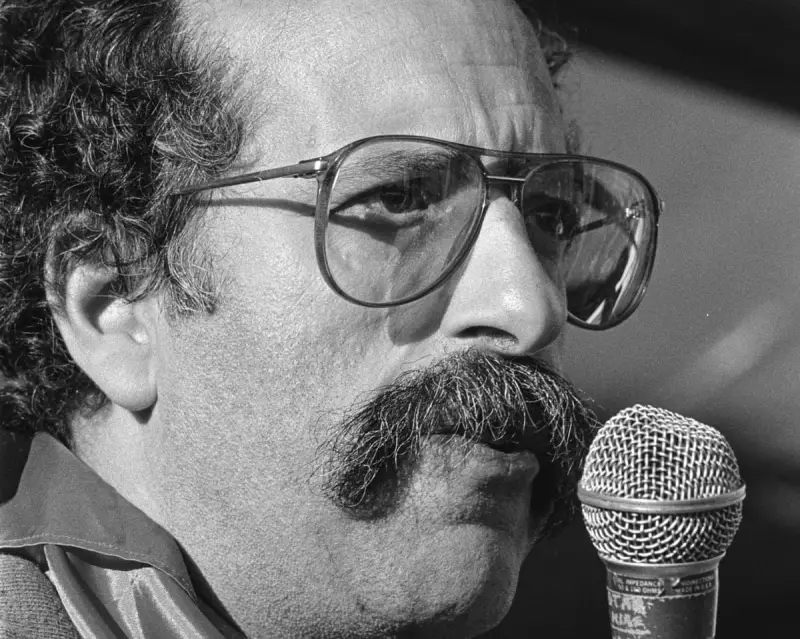
Gerry Gable, a towering and relentless figure in Britain's post-war struggle against fascism and the extreme right, has died at the age of 88. As the founder of the investigative Searchlight magazine, Gable pioneered a unique blend of activism, undercover intelligence-gathering, and journalism that exposed and disrupted generations of neo-Nazi and far-right groups.
The Birth of Searchlight and a New Model of Anti-Fascism
Gable's central legacy was the creation of Searchlight, which became the UK's most authoritative intelligence source on the far right. First appearing as a tabloid in 1965, it was relaunched in its definitive magazine format in 1975 in response to the rising threat of the National Front (NF). Working with journalist Maurice Ludmer, Gable built an operation that infiltrated extremist organisations, exposed their funding and international links, and laid bare their core criminality.
When the Anti-Nazi League (ANL) was formed in 1977, Searchlight acted as its research wing. The magazine supplied devastating evidence, including photographs of NF leaders in Nazi uniform, which helped brand the party as a Nazi organisation and contributed to its electoral collapse in 1979. This intelligence-led model was adopted by anti-fascists across Europe and the United States, inspiring the late Stieg Larsson to launch Sweden's Expo magazine.

Daring Operations and Personal Risk
Gable's activism began in his mid-20s as a Communist party member, organising opposition to groups like Colin Jordan's National Socialist Movement. He worked closely with the militant 62 Group, participating in audacious raids on fascist headquarters to seize membership files and photographs. His belief was that while fascism needed direct confrontation, intelligence was equally vital.
Perhaps the most perilous aspect of his work was running moles inside far-right groups. Over decades, he managed a remarkable network of informants, including Mosley's former bodyguard, reformed neo-Nazis, and infiltrators within groups like Combat 18. Their information helped prevent a planned bomb attack on the Notting Hill Carnival in 1981 and identified London nail bomber David Copeland in 1999.
This work came at great personal cost. Gable faced constant threats, vilification, and lawsuits. He survived a letter-bomb attack and a petrol bomb attempt on his home by Combat 18 members. The relentless targeting was a testament to his effectiveness.
Legacy, Split, and Reconciliation
In the early 2000s, Searchlight's campaigning arm, which later became HOPE Not Hate, played a key role in grassroots campaigns that devastated the electoral prospects of Nick Griffin's British National Party in areas like Barking and Dagenham. A bitter split occurred in 2011 over strategic differences, but Gable and HOPE Not Hate's chief executive, Nick Lowles, publicly reconciled in 2023, shaking hands at a London anti-fascist event.
Gable was awarded an honorary doctorate from the University of Northampton in 2011, which now houses the Searchlight archive. The magazine ended its print run last year, moving entirely online—a transition Gable initially doubted but later embraced for its greater reach.
Born in London on 27 January 1937 to a Jewish mother and an Irish Protestant father, Gable worked as an electrician and a trade union organiser before dedicating his life to anti-fascism. He is survived by his fourth wife, Sonia, and five children. His life's work, as he noted in the final print edition of Searchlight, was meant to be a short-term project but instead spanned 50 years of continuous publication, leaving a profound mark on British society.






