

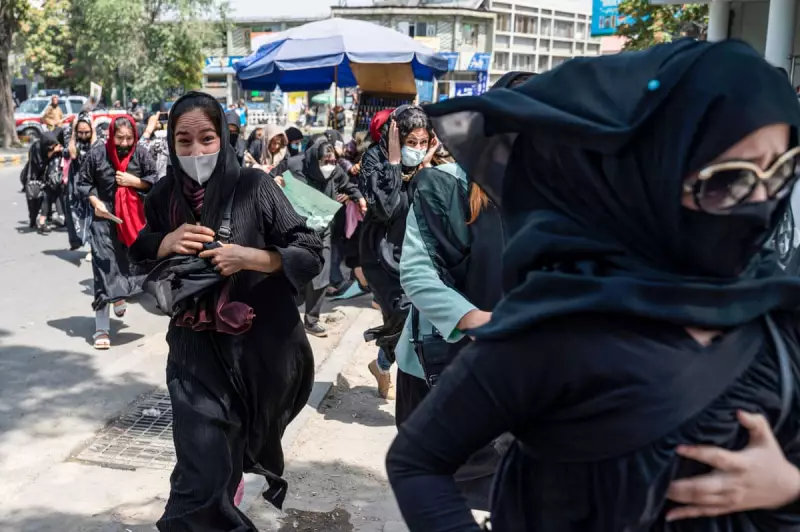
In the fading light of a Kabul evening, a persistent knock at the door signalled a terrifying reality for activist Zarmina Paryani and her sisters. The Taliban had come for them. This raid on 19 January 2022 was the direct consequence of a bold act of defiance just days prior, where Paryani and dozens of women had burned a burqa in protest against the regime's escalating restrictions.
The Night of the Raid and a Desperate Leap
As masked men forced their way into her family flat, Zarmina Paryani faced an unimaginable choice. Fearing capture, violation, or execution, the 26-year-old made a split-second decision. "I couldn't bear to be taken alive," she recounted from exile in Germany. In a moment of sheer desperation, she leapt from the third-storey window.
Miraculously, she survived the fall with minor injuries. Meanwhile, inside the apartment, her sister Tamana Paryani acted swiftly. She recorded a harrowing, short video, screaming that the Taliban were at their door, and sent it to a journalist. The footage was instantly shared across social media, drawing global attention to their plight.

"That video saved our lives. It was the only weapon we had," Zarmina stated, crediting the viral clip with preventing their immediate disappearance.
A Movement Silenced: From Streets to Shadows
Paryani's story is emblematic of the brutal suppression faced by Afghan women since the Taliban's return to power in August 2021. In the early weeks of the takeover, a spontaneous, leaderless protest movement emerged, composed of students, teachers, midwives, and police officers. Zarmina and her sisters joined these clandestine marches, hiding signs in bags and changing locations to avoid patrols.
Their demands were fundamental: the right to education, work, and a life free from fear. However, the regime's response escalated from sporadic arrests to targeted, violent repression. By the time of the raid on Paryani's home, the Taliban were often arriving at protest sites before the demonstrations had even begun.
Today, public protests by women have been virtually erased. The last known public demonstration occurred in west Kabul in September 2023. Resistance has been forced into symbolic, isolated acts conducted indoors, such as dancing in a mosque or burning the burqa.
Life in Exile and a Testimony for History
Following the raid, Zarmina Paryani endured 27 days in Taliban detention before being released with a grim warning: "If you speak again, we will cut your throat." She eventually escaped to Pakistan, disguised in a burqa and plastic shoes, and now lives in Germany, though she still fears for her family's safety back home.
Despite these fears, she testified at the People’s Tribunal for Women of Afghanistan in Madrid in October 2023. This tribunal serves as one of the few platforms where Afghan women can document what chair Rashida Manjoo termed a system of "gender persecution," citing the systematic exclusion of women from public life.
Paryani and other exiled activists continue to receive distressing messages from girls inside Afghanistan who have been pushed into early marriage or forced into sex work to feed their families. Her reflection is stark: "We used to think the Taliban were just a group of religious men. Now we see what their rule really means." Her story, and the video that captured its most terrifying moment, stand as a potent record of resistance against a regime seeking to silence half its population.






