

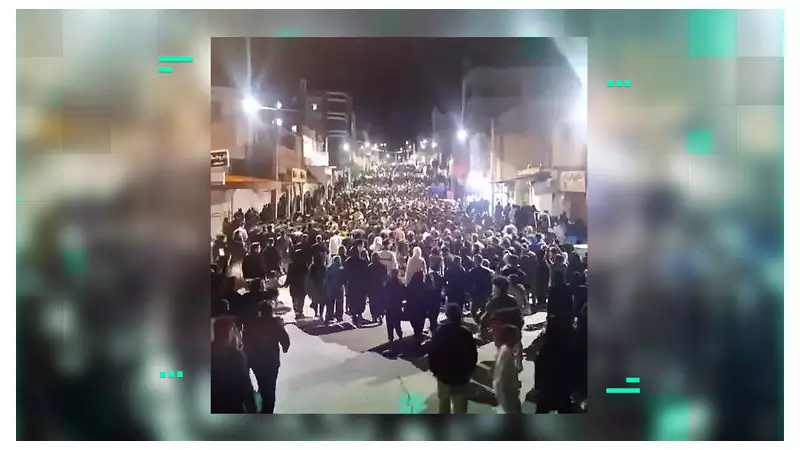
Nationwide protests in Iran, now entering their third week, have been met with a severe and violent security crackdown, including the storming of hospitals to detain wounded demonstrators. The unrest, sparked by a catastrophic economic collapse, has spread to over 280 locations across 27 provinces, according to reports verified by the Sky News Data and Forensics team.
Bloody Saturday and Hospital Assaults
The town of Malekshahi in western Iran witnessed a pivotal moment of violence on 3 January, an event locals now call 'Bloody Saturday'. Protesters converged on a base operated by the Islamic Revolutionary Guard Corps (IRGC), expressing their fury over an imploding economy. The guards responded with live gunfire, leaving casualties on the street as bystanders desperately tried to carry the injured away.
The following day, the crisis escalated at the regional hospital. As relatives of those shot gathered, demanding an end to the regime, security forces massed outside. Amnesty International has reported that personnel forced their way in on multiple occasions, arresting injured protesters and their family members. The human rights group states that bodies were also removed to prevent public mourning. Verified online footage shows patients hiding in their rooms as security forces tear through the wards.

Economic Implosion: The Root of the Anger
The demonstrations, which began on 28 December, are fundamentally driven by an economic disaster. The Iranian rial has plummeted to a historic low, trading at 1.46 million to the US dollar on Tuesday 6 January. This contrasts sharply with the rate of 32,000 rials to the dollar at the time of the 2015 nuclear deal.
This hyperinflation, running at approximately 40% annually, has priced basic staples like cooking oil, meat, and rice beyond the reach of most citizens. The rebellion ignited in Tehran's Grand Bazaar, the traditional heart of commerce, where shopkeepers can no longer stock or sell goods. The economy has been crippled by US sanctions, government mismanagement, corruption, and the aftermath of last year's war with Israel.
A Cycle of Violence and Defiance
From the capital to Shiraz, 500 miles south, the protests have turned increasingly confrontational. In one verified incident, a protester used a modified fire extinguisher to spray fuel at security forces, setting an officer alight. The protester was later caught and publicly beaten.
Iranian scholar Yassamine Mather told Sky News the regime is sending mixed signals, acknowledging some legitimacy to the protests while cracking down hard. "The cycle of violence is inevitable," she stated, noting the government is aware news spreads via social media and foreign broadcasts regardless.
Despite a pledge from US President Donald Trump to 'rescue the protesters' if extreme force is used, the crackdown continues. Back in Malekshahi, funerals are held for the dead. One survivor of Bloody Saturday told Sky News anonymously that the assault on the hospital and the people "can be described... as crimes against humanity."
The Sky News Data and Forensics team has independently geolocated and verified protest footage from 19 of Iran's 31 provinces, providing a transparent account of the escalating crisis.






