

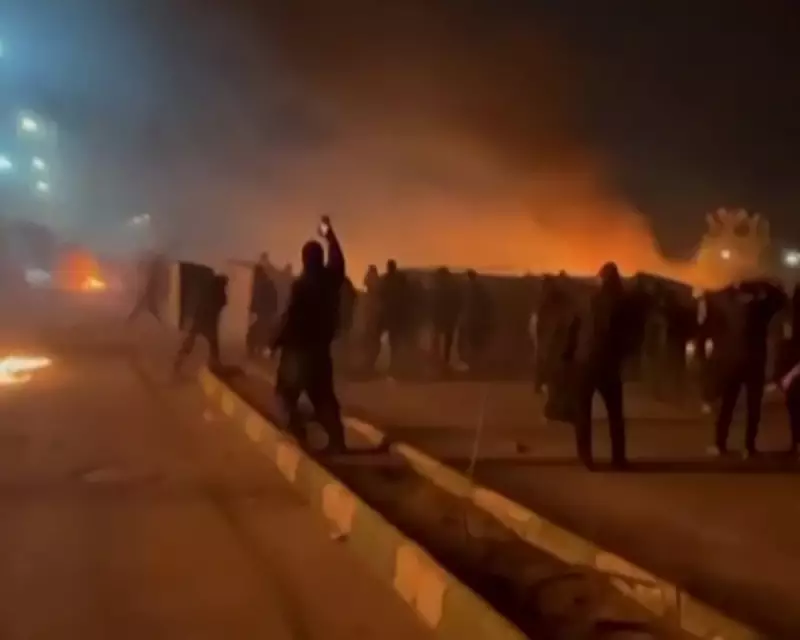
Iran is facing one of its most severe periods of internal turmoil in years, with widespread protests threatening the very foundations of the Islamic Republic. What began as demonstrations over a plummeting currency and soaring inflation has rapidly transformed into a nationwide movement openly challenging the authority of Supreme Leader Ali Khamenei and the entire political establishment.
Unprecedented Scale and a Brutal Crackdown
The current wave of dissent, which erupted in early January 2026, has reached a scale that has profoundly alarmed Iran's authorities. Protests have been reported in all of Iran's provinces, spanning more than 180 towns and cities. This unrest has united Iranians across class, ethnic, and regional divides, with slogans quickly evolving from economic grievances to direct calls against the regime.
The state's response has been characterised by extreme severity. In a drastic move to stifle coordination and obscure the reality on the ground, authorities imposed a near-total national internet and communications blackout. Simultaneously, security forces have deployed their full coercive arsenal. Human rights organisations estimate the death toll may exceed 6,000 individuals, with thousands more arrested, injured, or forcibly disappeared into the country's opaque detention network.

Despite the violent crackdown involving live ammunition and mass arrests, protesters have displayed remarkable resilience. The movement remains largely leaderless—a tactical strength that makes it hard to decapitate, but also a strategic limitation for organising a coherent political alternative. This structure is less a choice and more a consequence of decades of systematic repression that has crippled civil society and filled prisons like Evin with activists.
A Historical Trajectory of Resistance and Regime Intransigence
These protests are the latest chapter in a long history of public defiance. Since the 2009 Green Movement, Iran has witnessed significant upheavals in 2017, 2018, 2019, and 2022. Each episode has been met not with reform but with intensified repression. Under Khamenei's leadership, the regime has consistently doubled down on ideological rigidity and coercion, refusing any meaningful compromise.
The vacuum of organised opposition inside Iran has led some protesters to invoke symbols from the past. Chants for Reza Pahlavi, the exiled son of Iran's last Shah, have been heard in several cities. Analysts suggest this reflects not a genuine desire for monarchist restoration, but a desperate search for any symbol representing a complete break with the current Islamic Republic—a notion deeply unsettling to the authorities.
As is customary, the regime has blamed foreign enemies. In a Friday sermon on 9 January 2026, Khamenei dismissed the unrest as a foreign conspiracy, framing dissent as treason. This narrative aims to legitimise domestic repression and foster a siege mentality. However, this claim appears increasingly hollow, especially following the June 2025 conflict with Israel, which revealed significant penetrations of Iran's security apparatus.
International Dimensions and an Uncertain Future
The crisis is further complicated by the international arena. Former US President Donald Trump has threatened potential military intervention, prompting Tehran to warn of retaliatory strikes against US assets and Israel. While direct US involvement could provide the regime with propaganda cover for a harsher crackdown, its strategic goal would be to deepen Iran's economic isolation and degrade its security capabilities, exacerbating the state's internal contradictions.
Looking ahead, the path towards liberalisation appears closed. Faced with collapsing legitimacy, economic ruin, and geopolitical isolation, the Islamic Republic is likely to become a more inward-looking and repressive state. Analysts draw disturbing parallels with Saddam Hussein's Iraq, where regime survival depended entirely on fear, pervasive surveillance, and brute force rather than public consent.

While the current protests may eventually be suppressed, they signal a political order that has lost its ability to adapt. The fundamental tensions exposed—between a youthful population demanding change and an ageing leadership refusing it—are not going away. Future unrest seems inevitable unless Iran's rulers embark on a radical path of economic reform, political accountability, and genuine engagement with the world. One conclusion is clear: the Islamic Republic that emerges from this protracted crisis will not be the same as the one that entered it.





