

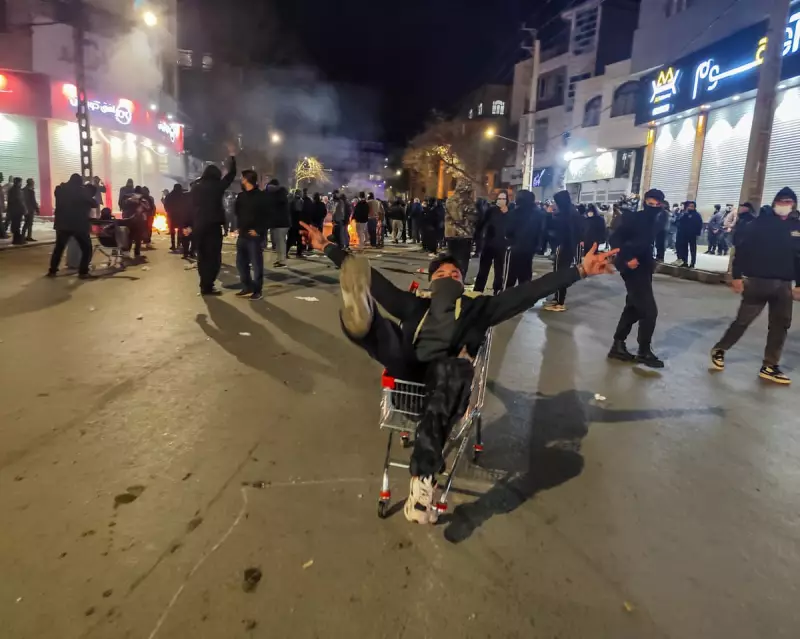
Iran has plunged into a sophisticated and severe nationwide internet blackout, now entering its 36th hour, as authorities attempt to quell escalating anti-government protests. The disruption, described by digital rights experts as a "new high-water mark" in state-imposed censorship, is both sweeping and selectively precise.
A New High-Water Mark in Digital Repression
The blackout, which began as protests over economic conditions flared, saw 90% of Iran's internet traffic evaporate. International calls appear blocked, and domestic mobile networks have been rendered useless. Amir Rashidi, an Iranian digital rights expert, described the scene as akin to "living in the middle of nowhere," with no signal from cellular towers.
While this is not the first state-ordered internet shutdown—comparable to Egypt's six-day blackout in 2011 or the Taliban's 48-hour cutoff last year—the current Iranian operation is unprecedented in its severity and technical sophistication. It surpasses even the country's own 2019 digital blackout, previously labelled the most "severe disconnection" observed globally.

Notably, even alternative systems like Elon Musk's Starlink satellite service, a crucial lifeline during the 2022 protests following Mahsa Amini's death, are reportedly being jammed, with effectiveness varying by neighbourhood.
Selective Silence: A Government Whitelist in Action
What makes this shutdown particularly chilling is its apparent selectivity. While ordinary Iranians are cut off, the government maintains crucial online channels. Ayatollah Ali Khamenei, Iran's Supreme Leader, posted on X at least a dozen times on Friday, criticising Donald Trump and US policy.
Doug Madory, an expert in internet infrastructure, notes this fine-tuning differentiates the blackout from past efforts. "If they end up implementing a whitelist, and it works as planned it may enable them to operate in some kind of degraded state for an extended period of time," he said. This approach allows state propaganda on platforms like Telegram, Twitter, and Instagram to continue while public access is severed.
Rashidi corroborates this, pointing out that some government Telegram channels remain active, indicating administrators have special access. There was also a brief, tactical restoration of service for university websites before it was shut down again.
A Long Haul Towards a National Internet
This precision suggests Iran has developed more advanced censorship tools, moving closer to its long-stated goal of a national intranet system similar to China's. Such a system would connect domestic users while isolating them from the global internet. Iran is not alone in this pursuit; Russia and India are pursuing similar state-controlled digital ecosystems.
However, Rashidi suggests Iran's national model may not yet be fully functional, as sites linked to it are currently inaccessible. Regardless, the current blackout's design for endurance worries observers. Madory warns, "This might be for the long haul... I think it's going to be a big one."
The strategy aims to cripple protest coordination and information flow while keeping the state's own communications machinery running. As the blackout continues, it sets a disturbing precedent for the future of digital control and dissent in Iran and beyond.






