

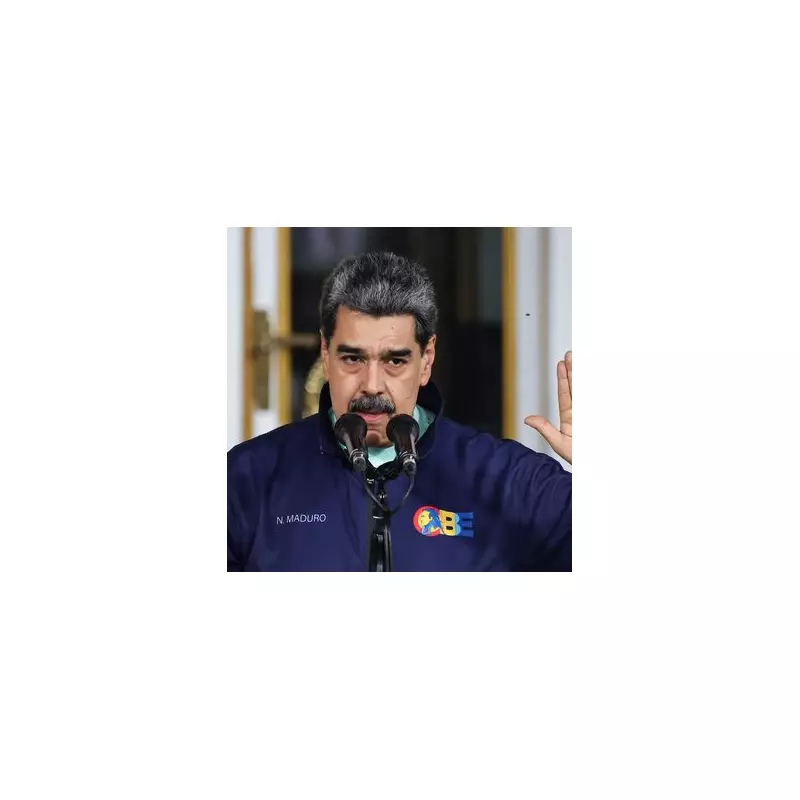
Crowds of demonstrators converged on the United States Embassy in London on Saturday afternoon, voicing fierce opposition to a dramatic military intervention led by US President Donald Trump. The operation resulted in the capture of Venezuelan President Nicolás Maduro and his wife, Cila Flores.
Operation and Arrest: A Swift Strike in Caracas
The controversial mission, authorised by President Trump, was executed on Saturday, January 3, 2026. Forces apprehended Maduro and Flores in the Venezuelan capital, Caracas, on drug-trafficking charges. The couple were subsequently transported to a detention facility in Brooklyn, New York.
In a statement following the operation, President Trump declared his intention to "run Venezuela" temporarily. He pledged to oversee a "safe, proper and judicious transition" while also vowing to repair the nation's "broken infrastructure" and "start making money for the country." The move has sparked a deeply polarised reaction globally, hailed by some as decisive action against a dictator and condemned by others as an illegal overreach.

London's Response: Voices of Dissent in Knightsbridge
The echoes of this international crisis resonated loudly in the UK capital. A significant protest formed outside the US Embassy, with participants waving Venezuelan flags and chanting "shame" and "viva Venezuela." Metropolitan Police officers were deployed to monitor the demonstration as it unfolded.
The scene in London contrasted sharply with celebrations reported among some Venezuelan expatriates in other cities, such as Lima, Peru, highlighting the profound division the event has caused.
Background: The Road to Maduro's Capture
Nicolás Maduro first came to power in 2013, succeeding Hugo Chávez. His tenure has been marked by economic collapse, severe food shortages, and widespread protests. Despite winning elections again in 2019 and 2024, his government lacks recognition from the United States, Canada, and numerous Latin American nations.
The US long accused Maduro of facilitating drug trafficking and illegal immigration. In July 2025, a $50 million bounty was placed on his head, labelling him a major narco-trafficker. A final ultimatum was issued in late November 2025, demanding he step down with a safe passage offer, which he refused, accusing the US of coveting Venezuela's oil reserves.
Ironically, just two days before his capture, Maduro stated in a television interview that he was open to US investment in Venezuela's oil sector, reiterating that he did not seek war.
The extraordinary events of the past days have thrust Venezuela back into the centre of global geopolitics, raising urgent questions about sovereignty, international law, and the future of a nation now under unprecedented foreign control.






