

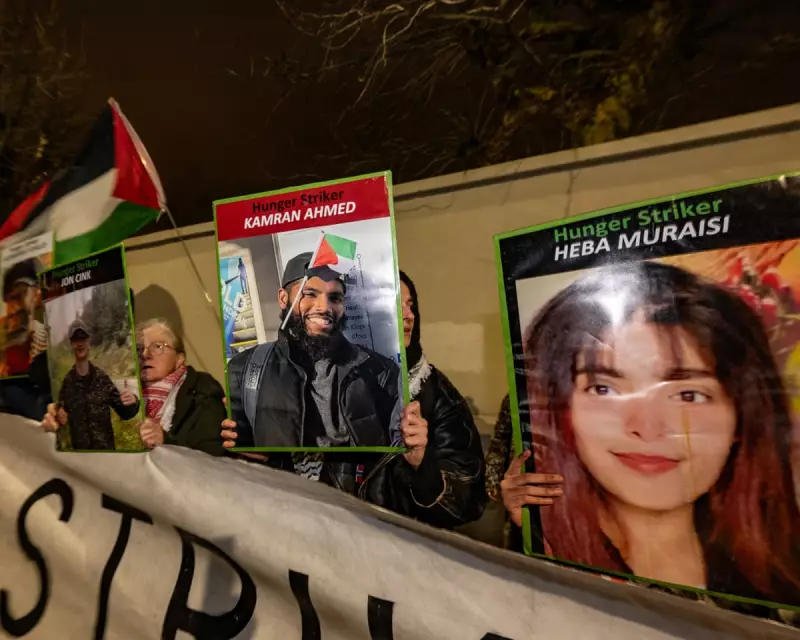
The UK government is facing mounting accusations of bearing direct moral responsibility for the lives of three hunger-striking prisoners, as supporters warn they could die at any moment. The three individuals, held on remand for alleged offences connected to the pro-Palestinian protest group Palestine Action, have refused food for 45, 59, and 66 days respectively, placing them deep into a medically critical phase.
A State of Legal Limbo and Physical Decline
Heba Alhayek, Kamran Ahmed, and Lewie Chiaramello remain in prison without conviction, their health deteriorating rapidly. A fourth striker, Teuta Hoxha, ended her 58-day fast this week, potentially with lifelong health consequences. Supporters report that Alhayek, on the longest strike, is now struggling to breathe and suffering uncontrollable muscle spasms, possible indicators of severe neurological damage.
The situation is compounded by what campaigners label "process as punishment." Despite Crown Prosecution Service guidelines suggesting a maximum remand period of 182 days, Alhayek and Ahmed, arrested in November 2024, face a potential 20 months in custody before their trial in June 2025. Chiaramello, arrested in July 2025, could wait 18 months until a provisional court date in January 2027.

"Terrorist" Conditions Without Terror Charges
Critically, none of the three has been charged with terrorism offences. They face standard criminal charges like burglary and criminal damage related to protests at sites linked to Israeli defence firm Elbit Systems and RAF Brize Norton. These actions occurred before Palestine Action's controversial proscription as a terrorist group, a decision currently under legal challenge.
Nevertheless, they are held under severe "terrorist conditions," which include minimal communication, denied access to prison jobs, libraries, and gyms, and strict non-association orders. In a move described as punitive, Alhayek was transferred from a London-area prison to HMP New Hall in Yorkshire, making visits from her ill mother impossible.
International Condemnation and Government Intransigence
The government's handling of the crisis has drawn sharp international criticism. In late December, a group of United Nations rapporteurs expressed "grave concern," citing reported delays in medical care, excessive restraint, and denial of family contact. They raised serious questions about the UK's compliance with international human rights law.
Despite pleas from over 800 medical professionals, lawyers, and MPs, the government has refused to engage. Justice Secretary David Lammy has not responded to a major medical letter warning of a "medical emergency." In Parliament, Justice Minister Jake Richards bluntly refused a request to meet the strikers' legal representatives, a response met with laughter in the chamber.
The government defends its stance by claiming engagement would create "perverse incentives," citing an average of 200 hunger strike incidents annually. However, critics argue these statistics refer to brief, individual food refusals, not a coordinated, life-threatening strike of this scale—the largest since the IRA hunger strikes of 1981.
The strikers' demands include release on bail, access to a fair trial with all evidence disclosed, the lifting of the ban on Palestine Action, and the shutdown of Elbit Systems' UK operations. The government's continued refusal to even discuss these points, commentators argue, leaves it morally culpable for what may follow.






