

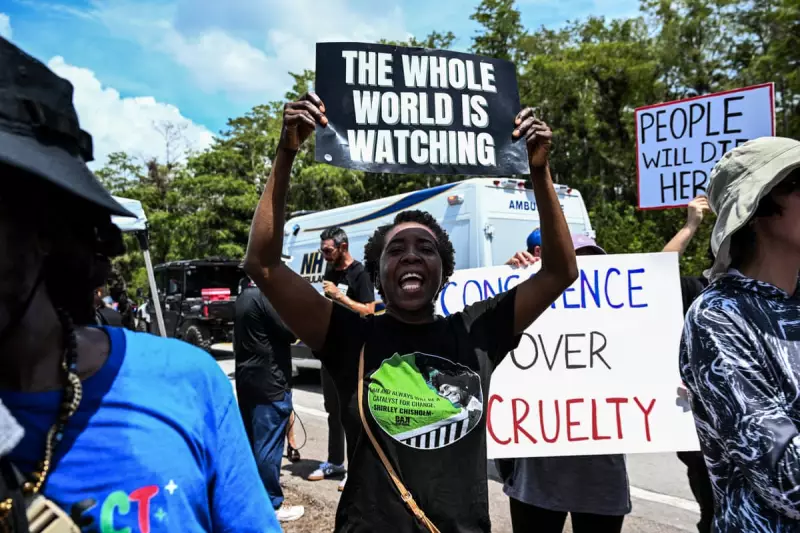
Every Sunday afternoon, a determined convoy of protesters makes its way to a remote corner of the Florida Everglades. Their destination is the immigration detention facility known as "Alligator Alcatraz," a site they are committed to seeing shut down for good.
A Ritual of Resistance in the Everglades
The weekly vigils began in August 2025, just one month after the controversial camp opened. The facility was championed by former President Donald Trump for its harsh conditions and hailed by Florida's Governor Ron DeSantis as a model for aggressive immigration enforcement. Despite the brutal heat and torrential rains of a south Florida summer, the gatherings have not only persisted but grown in size and resolve.
This resilience continued even after a federal judge ordered the centre's closure in August, a decision later reversed by an appeals court in September. The protesters' voices have grown louder in response to alleged human rights abuses and violence against detainees, with thousands more expected to join over the holiday season.

The Faces of the Protest
The movement is powered by a diverse coalition of individuals, each with a personal stake in the fight.
Arianne Betancourt is the US-citizen daughter of Justo, a 54-year-old Cuban-born man detained during a routine check-in in October. Her father, a diabetic, has reportedly been denied his twice-daily insulin injections. "They just told him he can get it in Mexico," Betancourt said. She finds solidarity at the vigils, sharing resources and support with other families who feel powerless against a system offering "no due process, no actual legal process."
Pastor Andy Oliver of St Petersburg's Allendale United Methodist Church organises buses to bring locals to the site. He draws a direct line from his faith to the action, stating, "Jesus was born a refugee. He'd be calling for these prisons to be emptied." He is moved by the diversity of the crowd and the courage of families who attend, often at personal risk.
For John Reynolds, an 81-year-old US Army veteran, the protests echo uncomfortable truths from America's past. "The way this immigrant population is being tortured... it's just beyond anything I've ever seen," said Reynolds, who questions the progress made since his service in Vietnam. He drives from Naples each week, believing public exposure of the injustice is a crucial educational tool.
Veteran civil rights activist Lois Cohen, 91, who marched in the 1940s and witnessed the Selma attacks, says nothing has angered her more. "Other than the Holocaust, I can't imagine this any worse," she stated. Cohen attends every weekend, arguing that many are unaware the jail is back at full operation after the appeals court ruling.
Building a Movement for Closure
The growth of the weekly action is largely credited to organiser Noelle Damico, director of social justice at the Workers Circle. She has helped unite church groups, trade unions, veterans, Native American tribes, and advocacy organisations. "People are finding one another. They're breaking their isolation," Damico said, noting she is already filling buses for upcoming weekends.
For Damico, the end is inevitable. "It's not a matter of if 'Alligator Alcatraz'... will one day shut down, it's a matter of when. And when is up to us," she declared. "It's not up to Donald Trump... It's up to us. And we will end this."
As the protests swell each Sunday, the message from the edge of the Everglades grows clearer: a coalition of conscience is building, demanding an end to what they call a brutal and unjust chapter in American immigration enforcement.






