

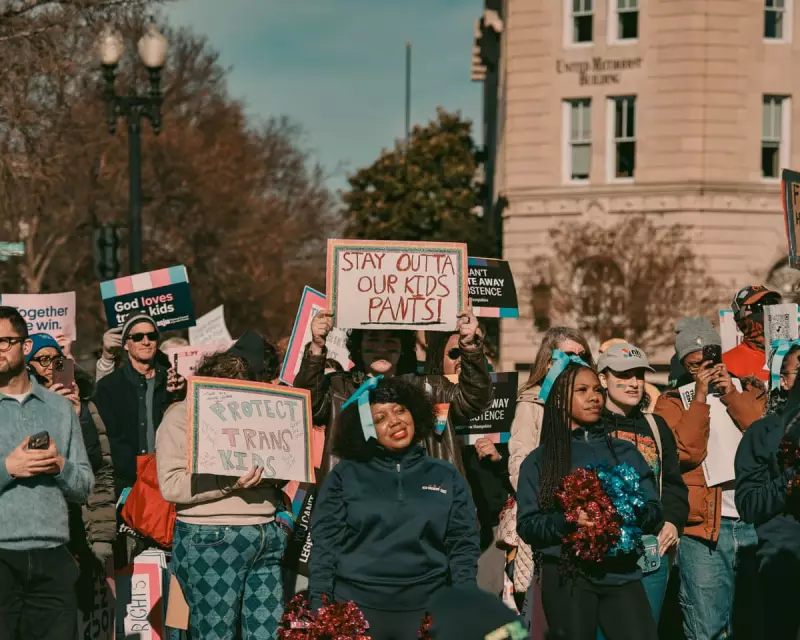
The US Supreme Court heard pivotal arguments on Tuesday, 13 January 2025, in a case that could decide whether transgender children can participate in school sports, a ruling with potential ramifications for broader LGBTQ+ civil rights protections. Outside the court, the legal battle was mirrored by deeply divided and increasingly hostile protests in Washington DC.
Rival Rallies Reflect a Nation Divided
On one side of the divide, a multiracial crowd of hundreds gathered to support trans rights and Becky Pepper-Jackson, the West Virginia track and field athlete who is the plaintiff in the West Virginia v BPJ case. They danced to pop remixes and chanted slogans of solidarity.
Facing them was an equally large, predominantly white crowd demanding the court "protect women's sports" by upholding state laws in West Virginia and Idaho that bar trans youth from sports aligned with their gender identity. Their gathering included a prayer session for the legal team representing West Virginia.

A Noticeable Escalation in Hostility
Trans rights advocates present reported a visible shift in the size, tone, and aggression from the opposing side. The Guardian witnessed trans activists being shoulder-checked, shoved, chased, and recorded without consent. Chants from the trans advocacy group of "our existence is resistance" were met with a retort of "your existence is ridiculous" from across the divide.
Raquel Willis, co-founder of the Gender Liberation Movement, suggested the larger, more organised opposition crowd may be linked to conservative efforts to sway Democratic voters on the issue. One sign quoted polling about "Dem voters don't want males in women's sports".
Confrontation and Arrest at the Scene
Tensions culminated in a confrontation between J Gia Loving, co-executive director of the GSA Network, and Jared L Ross, a fellow with the Do No Harm organisation. According to Loving and other witnesses, Ross shouted that he had been assaulted after they bumped into each other.
Capitol Police surrounded Loving, restrained her hands behind her back, and denied her access to identification or a lawyer, while repeatedly misgendering her. Ross was initially unrestrained. After nearly 20 minutes, Loving was released. Ross was later detained and charged with a misdemeanor for simple assault.
"It's just clear that they're here to antagonise us," Loving said afterwards.
Broader Political Backdrop and Advocates' Fears
The case unfolds against a backdrop of intensified political action. The Trump administration has prioritised rolling back LGBTQ+ protections, including denying funding for gender-affirming care and removing references from federal websites. This follows a wave of state-level legislation.
AJ Hikes of the ACLU, which represents Pepper-Jackson, argued, "This hyper-focus on sports is yet another example... of the ways that they are trying to erase trans and non-binary people from public life."
Chris Mosier, a trans triathlete, expressed concern that a broad Supreme Court ruling could create a legal framework for further discrimination. "They hope that they can win this case... to further discriminate against the LGBTQ+ community," he said.
The Human Impact: Voices from the Rally
Among the supporters were teenagers from North Carolina, a state with a law restricting discussion of gender identity in schools. One, who remained anonymous due to an unaccepting family, said he had been attacked at school three times since coming out. Another described constant harassment in changing rooms after joining a swim team.
They expressed frustration that bans are enacted without consulting the people they affect. "If they wanted to help us, why wouldn't they just ask us?" several posed.
Despite the hostility, the trans rights rally maintained a spirit of resilience and joy. "As a trans person, it can be really scary in the world today, but to see a great community of people coming out, supporting each other … it really means a lot," said Rebekah Bruesehoff, a 19-year-old college athlete.

Reflecting on the day's events and the long struggle, J Gia Loving stated, "We might lose battle after battle after battle, but after 500 years of this project to erase us, we are still here, and that matters."





