

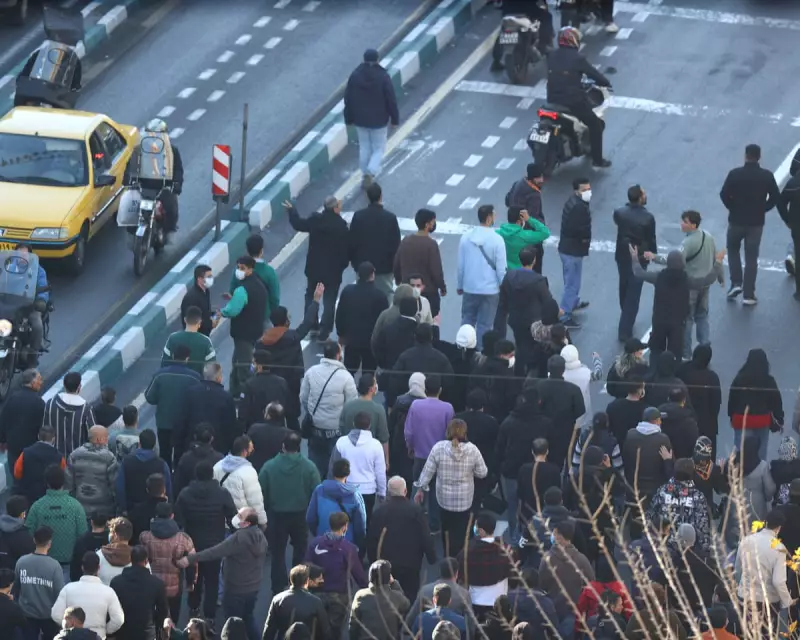
Iran has been rocked by a fifth day of widespread protests, with state-affiliated media confirming at least two fatalities as demonstrations against dire economic conditions and a collapsing currency have escalated into violent confrontations.
Deadly Clashes and a 'Battlefield' Atmosphere
The unrest, which represents the largest wave of protests in the country for three years, began on Sunday 29 December 2025 in the capital, Tehran. Shopkeepers and traders initially took to the streets to voice their anger over plummeting living standards and the embattled national currency.
By Thursday, the protests had spread to cities across Iran. State media confirmed that two people had been killed in the southwestern city of Lordegan. While officials did not identify the victims, social media footage and witness accounts appear to show protesters lying motionless after security forces opened fire.

An eyewitness, in a message relayed to the Guardian, starkly described the scene: “It’s a battlefield here and they [security forces] are firing mercilessly.” The Oslo-based Hengaw Organisation for Human Rights reported that one of those killed had been struck by live ammunition and died before reaching medical care.
A Response Met with Live Ammunition
Activists and human rights groups have warned of a brutal crackdown, with security forces accused of escalating their response. Videos circulating online appear to show the use of gunfire against protesters, with crowds seen fleeing through smoke-filled streets and carrying away the apparently injured.
Ebrahim Eshaghi, an Iranian wrestler now based in Germany with connections to Lordegan, appealed for international support. “Today, the people of my city came out into the streets to demand their rights. So far, two young people have been killed and many more have been injured... The Islamic Republic is the enemy of us all,” he said.
The Guardian received images showing two bodies bearing what appeared to be pellet and bullet wounds, though the circumstances could not be independently verified.
Economic Despair Fuels Nationwide Anger
The protests were initially sparked by the dramatic collapse of Iran's national currency, which has severely impacted the cost of living. Demonstrators have been chanting for economic justice, with many explicitly demanding an end to the regime.
Roya Boroumand of the Abdorrahman Boroumand Center for Human Rights in Iran stated that the protests are driven by currency devaluation and its crippling effect on livelihoods. “Iranians are living below poverty lines in increasing numbers and have no hope [of] any notable improvement,” she explained, citing public anger at state mismanagement, corruption, and policies that cause widespread misery.
She added that the state deems any anti-government protest illegal, leaving little space for legal dissent and creating a pattern of “popular outbursts and deadly crackdown.”
This wave of civil unrest follows a year of record executions in Iran, with more than 1,500 people put to death in 2025—the highest number since 1989. Human rights organisations argue the authorities use the death penalty to instil fear and suppress dissent. Amnesty International's Hussein Baoumi criticised these executions, stating they follow “grossly unfair trials held behind closed doors, amid widespread patterns of torture and forced confessions.”






