Price Caps Gain Popularity as Governments Confront Cost of Living Crisis
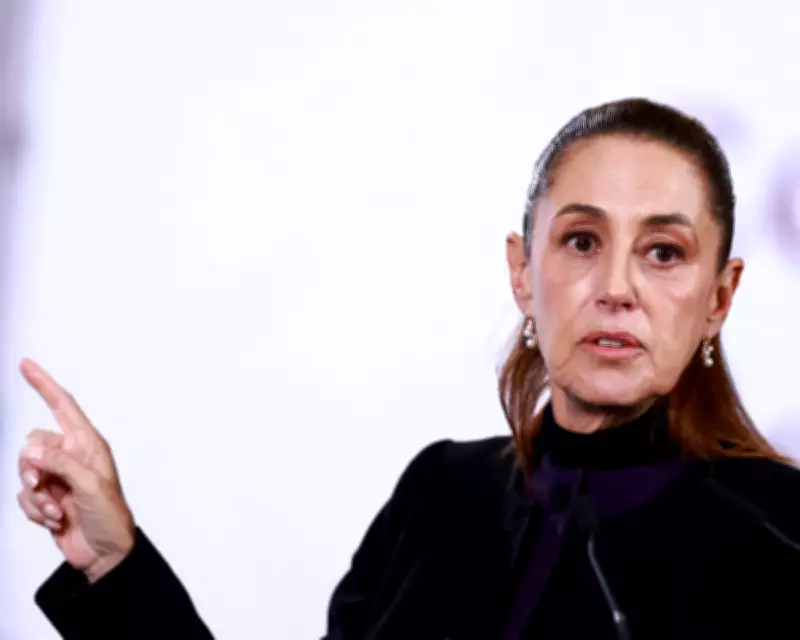
Claudia Sheinbaum, Mexico's president, has discovered that her administration's price caps resonate strongly with voters. This development signals a potential shift in economic policy approaches worldwide.
The Changing Landscape of Economic Intervention
For decades following the Soviet Union's collapse, conventional wisdom held that markets alone should determine prices. The influential Austrian economist Friedrich Hayek argued that governments lacked the dispersed information necessary to make informed pricing decisions in complex modern economies. This perspective dominated economic thinking across much of the globe.
However, as the twenty-first century progresses, market economies have demonstrated significant limitations in providing affordable essentials like energy and housing. Simultaneously, these systems have generated substantial inefficiencies, including exorbitant executive compensation packages and privatized utilities failing to deliver adequate services. These shortcomings have revived interest in state regulation and even direct price setting.

Global Precedents for Price Controls
Recent inflationary pressures stemming from conflicts, pandemic disruptions, and climate-related agricultural challenges have prompted governments to implement economic interventions that would have been considered outdated just years ago. Even traditionally pro-market political parties have adopted such measures, with Britain's Conservative government implementing an energy price cap after previously labeling similar Labour proposals as "Marxist."
Two democratic nations with substantial economies have notably avoided the anti-incumbent sentiment that has plagued many governments during recent inflationary periods. In Mexico, successive left-wing administrations led by Andrés Manuel López Obrador and Claudia Sheinbaum have capped prices for approximately two dozen essential goods, including chicken, rice, and toilet paper. Their party, Morena, increased its vote share from fifty-five percent to sixty-one percent in the 2024 presidential election.
Meanwhile in Spain, the center-left government of Pedro Sánchez has implemented a national rent freeze alongside previous measures including an energy price cap, temporarily free train tickets, and establishment of the Business Margins Observatory to monitor and deter profiteering. These assertive policies have helped maintain Sánchez's position through three general elections over eight years.
Growing Pressure for Policy Change in Britain
Green Party leader Zack Polanski recently advocated for Britain to follow Spain's example by implementing rent freezes and broader price controls. "We live in rip-off Britain," Polanski declared in a populist speech, criticizing how essential services have been "sold for profit and then sold or rented back to us at crushing rates."
Polanski's economic critique finds unexpected alignment with potential Labour leadership candidate Andy Burnham, who has identified Thatcher-era deregulation and privatization as root causes of Britain's current cost of living crisis. Both advocate for increased state involvement in the economy to reduce prices.
Supporting these arguments is evidence from Burnham's tenure as mayor of Greater Manchester, where returning buses to public control resulted in lower fares alongside improved usage and punctuality. Additionally, research from the left-wing think tank Common Wealth calculated that Britain's privatized utilities have distributed nearly £200 billion to shareholders, foreign owners, and private equity firms since the early 1990s.
The Political Calculus of Price Controls
Britain has served as a primary laboratory for modern capitalism's profit-maximization experiment, often disregarding broader social and economic consequences. With another inflationary wave approaching atop persistent cost of living pressures since the early 2020s, demands for Britain to emulate the price cap approaches of Spain and Mexico may become politically irresistible.

Current Prime Minister Keir Starmer's government has responded to the energy crisis with measured interventions and strong rhetoric rather than systemic reforms. Chancellor Rachel Reeves has declared that "this government will not tolerate any company exploiting this crisis." However, many Labour parliamentarians and some ministers, including Energy Secretary Ed Miliband, express greater criticism of the economic status quo.
With Starmer's leadership facing uncertainty beyond the May elections and inflation potentially accelerating, any successor might adopt less cautious approaches under mounting voter pressure. While price controls are sometimes dismissed as crude politics, they may appear increasingly reasonable as cost of living protests intensify across Britain.