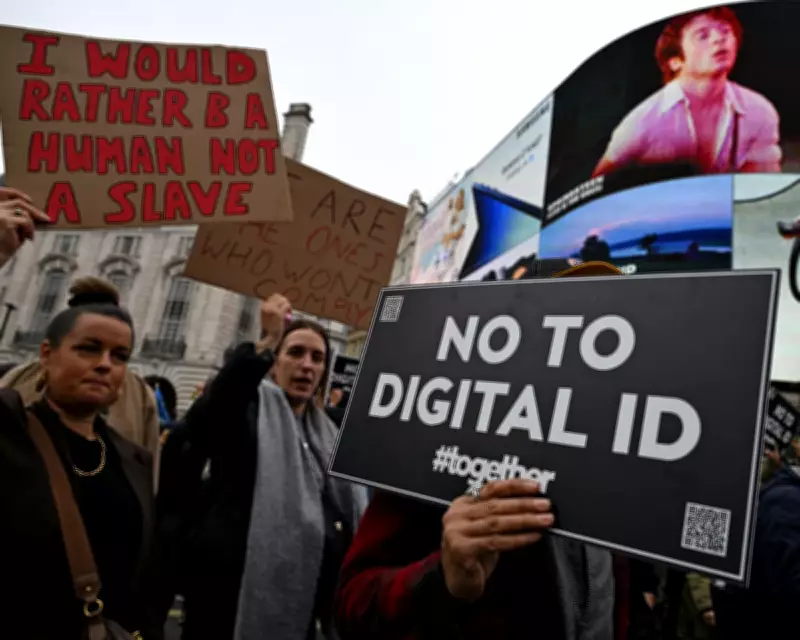
UK Government to Consult 100 Random Citizens on Digital ID Plans
In an effort to address widespread public skepticism and combat conspiracy theories, the UK government is launching an unprecedented consultation on its digital ID proposals. Ministers will establish a citizens' assembly comprising 100 individuals randomly selected from across Britain to provide direct input into the development of the controversial technology.
Addressing Public Mistrust Through Direct Engagement
Darren Jones, the chief secretary to the prime minister, will announce the details of this comprehensive consultation on Tuesday. The initiative comes amid significant public apprehension and internal government divisions regarding the implementation of digital identification systems. Jones emphasized that declining public trust in governmental institutions has created a pressing need for more inclusive decision-making processes.
"Public trust in the state has been declining for years, whoever has been in power – and people too often feel shut out of decisions," Jones stated. "This consultation is going above and beyond to bring people in to all the big debates, and the knotty trade-offs too. We're deliberately going out to seek the views of ordinary people from all walks of life and from right across the country – so it's not just the loudest or most powerful voices who are being heard."

Evolution of Digital ID Proposals
The digital ID concept has undergone significant transformation since Prime Minister Keir Starmer initially announced plans for a compulsory national system last year. Originally conceived as a mechanism to verify employees' right to work in the UK, the government has since abandoned mandatory implementation. Current proposals would allow workers to present alternative identification documents, such as passport scans, instead of requiring digital IDs.
On Tuesday, Jones will outline potential applications for the voluntary digital ID scheme, which primarily aims to streamline access to public services. A government spokesperson explained: "Digital ID will make everyday life easier for people, ensuring public services are more personal, joined-up, and effective."
Limitations and Internal Resistance
Despite these ambitions, the digital ID initiative faces notable limitations and internal opposition. The scheme will not involve the National Health Service, following expressions of skepticism from Health Secretary Wes Streeting. Additionally, Education Secretary Bridget Phillipson has explicitly ruled out using digital ID technology for allocating special educational needs funding, rejecting the concept of "digital Send passports" that had been considered as part of recent educational reforms.
Ministers have grown increasingly concerned about negative public perceptions fueled by misinformation. A recent incident involving the BBC comedy program Have I Got News For You highlighted this challenge, when the show incorrectly claimed that the digital ID contract had been awarded to Euan Blair, son of former Prime Minister Tony Blair. The BBC subsequently issued an apology for this erroneous reporting.
The Citizens' Assembly Model
The government is adopting the citizens' assembly model, previously utilized successfully in Ireland for contentious issues like abortion law reform, to build consensus around digital identification. The selected panel will convene over multiple weekends, engaging with experts, government officials, and hosting public debates before formulating their recommendations.
This innovative approach represents a significant departure from traditional consultation methods, prioritizing ordinary citizens' perspectives over those of established interest groups. The assembly's diverse composition – drawing participants from various regions, backgrounds, and walks of life – is designed to ensure that recommendations reflect broad societal concerns rather than specialized interests.
As digital transformation accelerates across public services, this consultation process represents a critical test of the government's ability to rebuild public trust while implementing technological advancements that could fundamentally reshape citizen-state interactions in the United Kingdom.