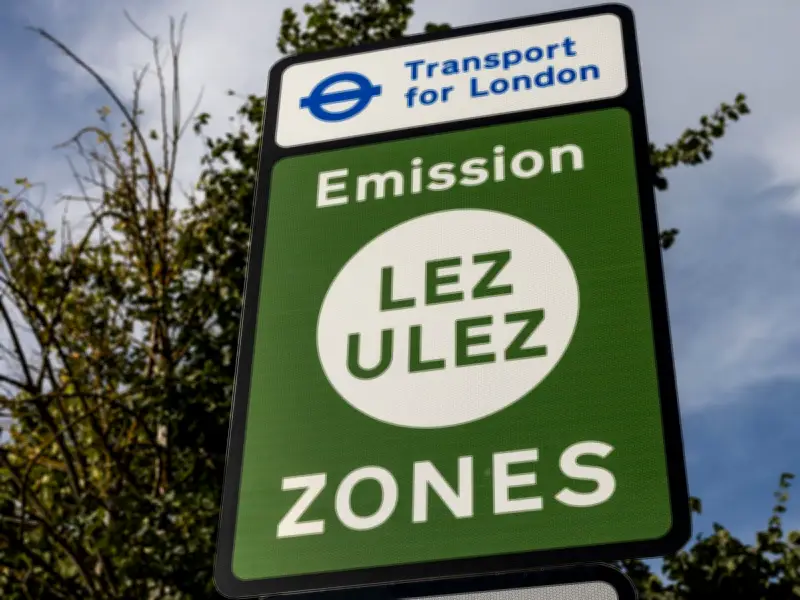
A new independent analysis by experts from Imperial College London reveals that air pollution levels in the capital are still killing thousands of Londoners prematurely, though the rate is far lower than before the introduction of the Ultra-Low Emission Zone (ULEZ). The study estimates that between 3,800 and 5,100 premature deaths in 2024 were linked to air pollution, highlighting that pollution remains a major public health challenge.
Significant reductions in harmful pollutants
The research shows significant reductions in levels of harmful PM2.5 and NO2 gases, two pollutants with well-established links to premature mortality. In 2019, researchers suggested between 6,390 and 8,040 deaths were attributable to pollution, meaning the estimated mortality burden fell by around 40% in the five years after ULEZ was introduced.
Mayor of London Sir Sadiq Khan hailed the results as "overwhelming and unarguable" evidence that ULEZ and other clean air policies have worked. He stated: "The bold action we have taken in London has reduced pollution, improved public health and saved lives. From dementia to childhood asthma, we know what a wide range of illnesses are linked to air pollution. This latest data shows why expanding ULEZ London-wide was even more important than we previously thought and is transforming lives right across our capital."

Mayor acknowledges more work needed
Khan acknowledged that the decision to expand ULEZ was not easy, but said it is now proven beyond doubt that it was crucial to protect the health and lives of Londoners. However, he added: "I'm not complacent. Despite our incredible progress, there is still more to do."
Green Party Assembly Member Caroline Russell agreed that ULEZ is "not the end of the story." She told the Local Democracy Reporting Service (LDRS): "Just as we knew it would, the London-wide ULEZ has delivered cleaner air across the capital, saving lives and improving the health of millions of Londoners. Its success is a testament to the many campaigners who pushed for the Mayor to act so that Londoners can trust the air they breathe. But this is not the end of the story. Too many Londoners are still breathing air that damages their lungs and increases the risk of serious disease."
Call for further action
Russell called for further measures, including rejecting the expansion of Heathrow, tackling dangerous pollutants such as ozone, and reducing miles driven in London by investing in clean, safe, and sustainable travel options.
The report, released on Wednesday, June 24, comes shortly after researchers discovered a link between the introduction of ULEZ and reduced hospital admissions. According to the Imperial College London analysis, the boroughs with the highest number of deaths attributable to air pollution per 100,000 residents in 2024 were in Outer London boroughs like Bexley, Havering, and Sutton, where opposition councillors, MPs, and Assembly Members have rallied against policies they see as anti-motorist.
Conservative criticism
Conservative Assembly Member Thomas Turrell, who represents Bexley and Bromley, told LDRS: "Sadiq Khan is once again cherry picking what science he supports. Many studies never see the light of day once they contradict Mayoral objectives. The truth is that air pollution was coming down naturally as Londoners upgraded to cleaner cars, not because of any government intervention. If you look at TfL's own data on NO2 emissions, you can't even plot the point when ULEZ was expanded because of how little an impact it has had compared to the natural trend. Once again, it's just Sadiq Khan taking credit for the work of Londoners."