Queensland's Proposed Hate Speech Laws Face Mounting Opposition Across Political Spectrum
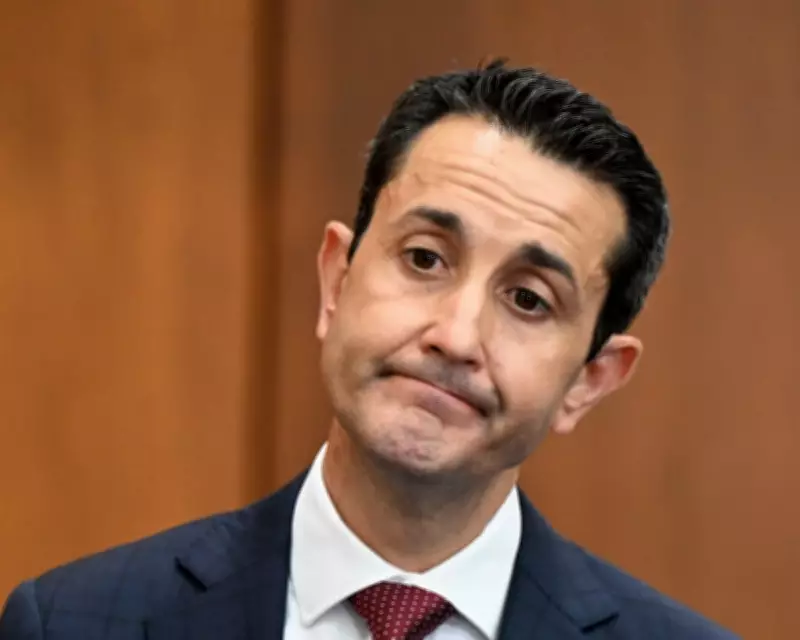
The Institute of Public Affairs, a prominent rightwing thinktank, has issued a direct call for the Queensland government led by Premier David Crisafulli to completely abandon its proposed hate speech legislation. This controversial bill, designed as part of a broader crackdown on antisemitism, is now facing significant backlash from multiple political directions, with critics labeling the measures as dangerously vague and potentially threatening to free speech protections.
Constitutional and Free Speech Concerns Raised
Margaret Chambers, a research fellow at the Institute of Public Affairs, has voiced particularly strong objections to the proposed legislation. Chambers argues that the bill would grant extraordinary powers to a single government minister, specifically the attorney-general, enabling what she describes as "censorship and the criminalising of opinions and debate" based on subjective standards without proper judicial oversight.
Constitutional scholar Anne Twomey has added her voice to the criticism, noting that the legislative process appears "unduly rushed," with a mere seven-day public comment period that concluded on Tuesday. This accelerated timeline has raised questions about whether adequate public consultation has occurred.

Broad Powers and Vague Definitions
Under the proposed laws, Queensland's attorney-general would possess the authority to ban specific expressions if satisfied that such expressions were "regularly used to incite discrimination, hostility or violence" toward designated "relevant groups." These groups are broadly defined to include those distinguished by "race, religion, sexuality, sex characteristics or gender identity."
While parliament could theoretically overturn the attorney-general's decisions through a vote, Queensland's unicameral parliamentary system means the government of the day typically maintains control, potentially limiting effective checks on this power.
Chambers has expressed particular concern about the legislation's breadth, stating: "These proposed laws are so vague and broad that even phrases used by the no campaign against the voice to parliament, which over two-thirds of Queenslanders supported, could have been outlawed."
Specific Phrases Targeted and Broader Implications
The Queensland government has announced its intention to specifically proscribe two phrases: "from the river to the sea" and "globalise the intifada." Premier Crisafulli has clarified that the government does not plan to ban additional phrases, including racist and antisemitic slurs.
Twomey has highlighted that Queensland's definition of protected groups extends significantly beyond recent commonwealth legislation, which only covers "race, colour, or national or ethnic origin." She warns that "a banned expression could be one that is regarded as inciting hostility towards people who have transitioned, for example."
Crisafulli has countered this criticism by arguing that the federal legislation was actually broader, stating: "It was the original federal bill that was so broad, and that's the reason why the parliament went into meltdown."
Serious Penalties and Legislative Process
The proposed legislation carries significant penalties, making public recitation, distribution, publication, or display of proscribed phrases an offence punishable by up to two years in prison. This applies if such actions "could reasonably be expected to make a member of the public feel menaced, harassed or offended" without a "reasonable excuse."
The government spent more than a month drafting the legislation before tabling it on Tuesday. The bill also addresses gun reforms developed at national cabinet following last year's Bondi beach terror attack.
When questioned about the accelerated timeline, Crisafulli defended the process, stating: "I was being criticised before Christmas, before New Year, for not doing it quickly enough. We genuinely took the time to get it right." He believes the timeframe "strikes the right balance."

Calls for Abandonment and Broader Implications
Chambers has urged the conservative Queensland government to "abandon ... what is in many ways a carbon copy of" the federal government's hate laws, which passed with opposition support last month. She warns that "the standard is so low that Queenslanders could face two years in prison for uttering a banned phrase that 'incites hostility' even when there is no victim and no proven harm."
Police Minister Dan Purdie has clarified the government's position, stating: "We don't want people at a protest or elsewhere chanting those sort of chants, which do incite hatred." He emphasized that the government supports peaceful protest rights, which are legislated in Queensland, but aims to "stamp out hate, people calling for genocide of a particular religion or faith."
A parliamentary justice, integrity and community safety committee inquiry into the legislation is scheduled to conclude on February 27, providing another opportunity for scrutiny of these controversial proposals.