Albanese Confronts Economic Turmoil Amid Iran War Fallout
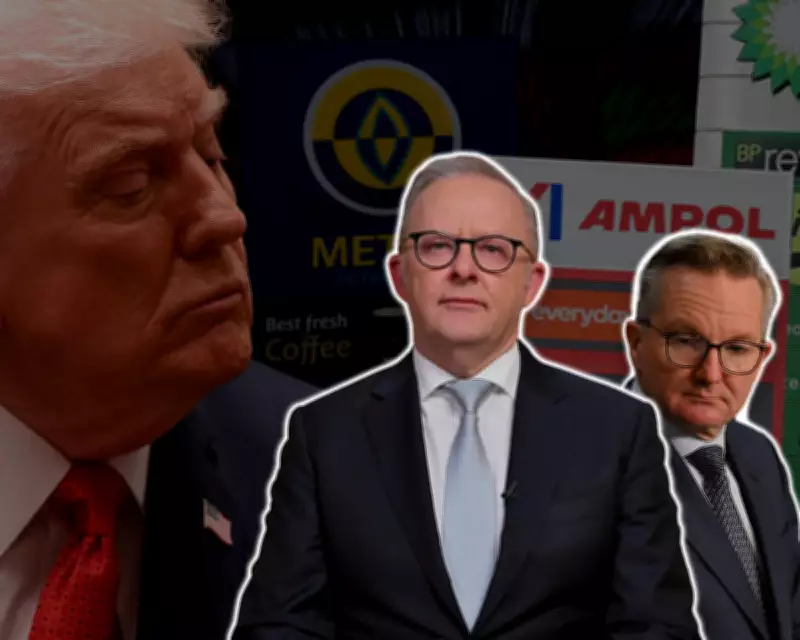
Prime Minister Anthony Albanese and Energy Minister Chris Bowen are steering Australia through the economic repercussions of the Middle East crisis, while subtly distancing the government from former US President Donald Trump's actions. The conflict, triggered by US and Israeli strikes on Iran, has unleashed a global energy shock, testing Albanese's leadership and prompting urgent policy responses.
Leadership Tested by Fuel Crisis and Political Pressure
In the wake of the Iran war, Australia faced a severe fuel supply disruption, with petrol prices soaring above $2.60 per litre for diesel and $2.20 for unleaded in major cities. The government, under intensifying political scrutiny, rolled out billions in relief measures, including a temporary halving of the fuel excise and a pause on heavy vehicle charges, costing the budget $2.55 billion. Energy Minister Chris Bowen initially assured the public of robust fuel stocks, but as regional service stations ran dry, the scale of the crisis became undeniable.
Bowen announced emergency measures, such as lowering fuel quality standards and releasing 20% of national stockpiles, to bolster supplies. Treasury warnings indicated that prolonged conflict could spike inflation above 5%, adding to economic anxieties. Albanese, in a rare address to the nation, cautioned that "the months ahead may not be easy," reflecting the government's struggle to balance reassurance with realism in a post-pandemic society.

Distancing from Trump's "Flip-Flopping" Objectives
As the war progressed, the Albanese government began to question Trump's shifting goals in the Middle East. While Australia endorsed initial strikes to prevent nuclear proliferation, it grew critical of the ongoing conflict's economic toll. Albanese emphasized that Australia was not consulted on the war and called for clearer objectives and de-escalation, marking a cautious rebuke of Trump's leadership.
Foreign Minister Penny Wong participated in international talks to reopen the Strait of Hormuz, notably without US involvement, highlighting Australia's independent stance. This distancing strategy, reminiscent of Albanese's 2025 election tactics, is now being revived to contrast Labor's approach with Trump's volatile policies, as the government seeks to navigate global uncertainty.
Pushing for Ambitious Reforms Amid Global Shocks
The crisis has spurred Albanese to advocate for structural economic reforms, previously avoided. In a speech to the National Press Club, he argued that international turmoil necessitates bold changes, such as potential revisions to housing tax concessions, to enhance Australia's resilience. He framed the upcoming budget as an opportunity for "ambitious" initiatives, aiming to shift away from outdated economic models in a less predictable world.
Government sources acknowledge that the fuel shock has exposed vulnerabilities, prompting a proactive stance on energy security and economic policy. As Albanese balances immediate relief with long-term planning, his administration faces the dual challenge of managing domestic pressures while redefining Australia's global posture in a time of upheaval.