Prime Minister's Strategic Singapore Visit Addresses Fuel Security Concerns
While Prime Minister Anthony Albanese didn't return from Singapore with literal shiploads of diesel in his luggage, his whirlwind diplomatic mission achieved something potentially more valuable: ironclad assurances about Australia's refined fuel supply during a period of global uncertainty. The visit, occurring against the backdrop of escalating Middle East conflicts, represents a strategic move to safeguard Australia's energy security before potential supply disruptions materialize.
Singapore's Crucial Role in Australia's Fuel Supply Chain
Singapore currently supplies approximately 55% of Australia's unleaded petrol, 22% of jet fuel, and 15% of diesel, making it Australia's single largest source of refined fuels. The government never expected this brief visit—with just one full day on the ground—to miraculously produce new fuel shipments. Instead, the objective was securing commitments that existing supply channels would remain open even if global conditions deteriorate further.
Singaporean Prime Minister Lawrence Wong delivered precisely that assurance, stating unequivocally: "We do not plan to restrict exports ... we will not do so during this energy crisis." Energy Minister Chris Bowen described this diplomatic statement as "as strong as you could expect it to be" in terms of guaranteeing continued fuel supply from Singapore.

Addressing Upstream Supply Chain Vulnerabilities
The most significant aspect of Wong's commitment came with a crucial caveat: Singapore would continue supplying refined fuels to Australia "as long as upstream supplies continue." This acknowledgment highlights the fundamental vulnerability in the global fuel supply chain—Singapore itself relies on imported crude oil, primarily from the Middle East.
Should the Strait of Hormuz close again due to escalating conflict between Israel and Iran, or should the fragile ceasefire collapse completely, Singapore's ability to process and export refined fuels would be directly impacted. This upstream dependency creates a chain reaction that could eventually affect Australian consumers.
Proactive Diplomacy During Unprecedented Times
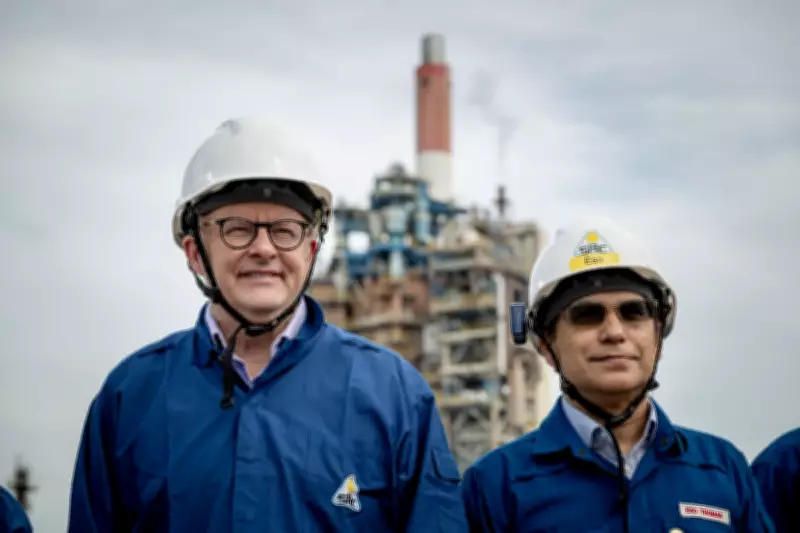
The current fuel crisis has prompted unconventional political responses. Normally, a prime minister wouldn't jet off overseas during a domestic crisis, but these extraordinary circumstances demand extraordinary measures. Images of Albanese touring fuel refining facilities on Singapore's Jurong Island and observing Australian LNG shipments being unloaded project a leader actively engaging with global partners to secure national interests.
Albanese explained the government's proactive approach: "What we have done consistently here is not to wait ... we've looked at every possible opportunity there is to increase supply." This philosophy extends beyond the Singapore visit to include:
- Leveraging Australia's LNG and coal exports to remind trading partners of mutual interdependence
- Diplomatic engagement with other major fuel suppliers including China and Brunei
- Planned foreign trips by senior government members to reinforce these messages
- Underwriting new fuel shipments for domestic refineries operated by Viva and Ampol
Managing Present Realities While Planning for Future Uncertainties
The government faces the delicate task of simultaneously reassuring Australians about current fuel supplies while preparing for potential future disruptions. On one hand, officials maintain that fuel stocks are actually higher now than at the beginning of the US-Israel conflict with Iran, and the number of service stations experiencing shortages continues to decline.
Yet simultaneously, Albanese has adopted increasingly urgent language, warning about "a difficult period ahead" and noting that "there's been substantial damage in the Gulf and that will have consequences for a period of at least months ahead." Even if the Strait of Hormuz reopened tomorrow, the economic ripple effects from six weeks of shipping disruptions are already propagating through global supply chains.

Strategic Positioning for Long-Term Energy Security
The Singapore visit represents what could become a pivotal moment in Australia's energy security strategy. While the immediate focus remains on securing diesel supplies as prices spike despite fuel excise cuts, the broader diplomatic engagement serves multiple purposes:
- Establishing personal relationships with key regional leaders
- Demonstrating Australia's reliability as a trading partner
- Creating contingency plans before potential crises escalate
- Positioning Australia favorably within complex global energy networks
As Albanese noted, "The day you plant the seed is not the day you eat the fruit." Similarly, the day the government secures fuel supply assurances isn't the day those fuels arrive on tankers. This forward-thinking approach acknowledges that while current supplies might be adequate, responsible governance requires preparing for scenarios where that might change rapidly.
The opposition has criticized the prime minister for returning without tangible new fuel supplies, but the near-guarantee of continued access to Singapore's refined fuels represents a significant diplomatic achievement. In an interconnected world where regional conflicts can trigger global economic consequences, proactive international engagement may prove more valuable than reactive crisis management.