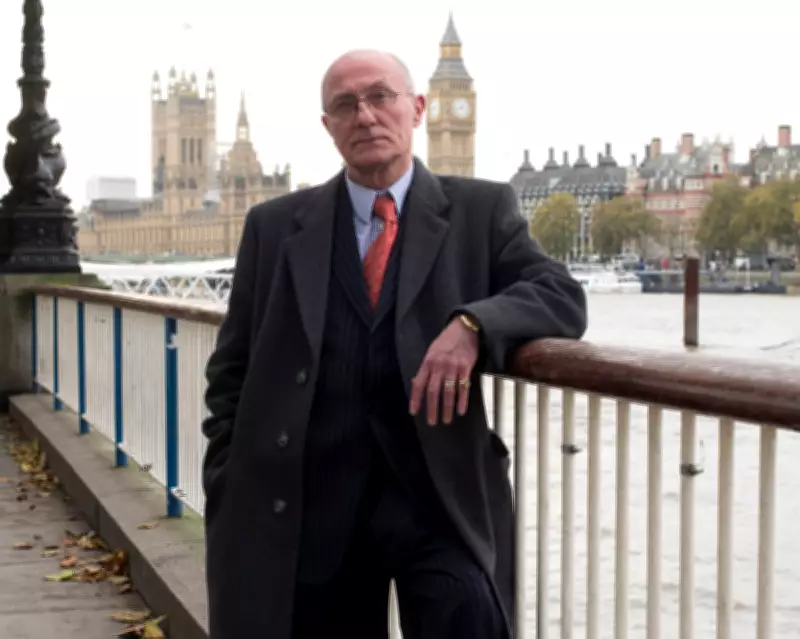
From Gangster to OBE: The Remarkable Transformation of Bobby Cummines
The journey from Parkhurst prison to Buckingham Palace is not one many undertake, but Bobby Cummines, who has died aged 74, traveled this circuitous path with remarkable determination and eventual success. His life story represents one of the most dramatic transformations in British criminal justice history.
A Violent Beginning and Prison Notoriety
Bobby Cummines progressed from a north London childhood of petty crime to a career marked by armed robbery and increasingly lengthy prison sentences. His criminal reputation grew substantially within the prison system, where he took the governor of Albany prison hostage and famously brokered a truce between incarcerated members of the rival Kray and Richardson gangs at Parkhurst prison.
During this period, he carried a blade from garden shears up his sleeve, later remarking: "I never saw a lot of rehabilitation going on." This observation would eventually fuel his passion for reform.

The Turning Point: Education and Liberation
The turning point came when gang boss Charlie Richardson encouraged him to pursue education. Bobby described this as "my liberation. I'm grateful that education humanised me." He transferred from Parkhurst on the Isle of Wight to Maidstone prison in Kent, which had an education unit, and enrolled in an Open University course.
Upon his release in the mid-1980s, he faced significant employment barriers due to his criminal record. He persevered through shelf-stacking jobs before securing responsible positions in various companies, volunteering with the Kent Probation Service, and ultimately earning a degree.
Leading Unlock and Driving Reform
In 2000, Bobby joined Unlock, the campaigning charity for ex-offenders, quickly rising to become its CEO. With founding president Sir Stephen Tumim, a former judge and chief inspector of prisons, Unlock became a powerful force in offender rehabilitation. Bobby's partnership with Sir David Ramsbotham, another former chief inspector of prisons, strengthened Unlock's political influence.
His advocacy extended to advising UK government bodies and Commons select committees on rehabilitation and prisoner education. He served as a specialist adviser to the public inquiry into the murder of Zahid Mubarek at Feltham young offender institution and joined the board of HM Inspectorate of Prisons.
Breaking Financial Barriers for Ex-Offenders
Bobby spearheaded Unlock's campaign to reform financial practices that prevented former prisoners from obtaining bank accounts, which excluded them from employment paying through the Bacs system. His tireless efforts persuaded banks and insurance companies to change their policies, materially improving ex-offenders' lives.
His charismatic campaigning style proved remarkably effective. When Coutts bank awarded £10,000 to Unlock, "one of the directors said that he was pleased to see me in his bank without a crash helmet and a gun."
Early Life and Criminal Escalation
Born and raised in King's Cross, central London, Bobby was the youngest of eight children. His father supplemented his building income through bare-knuckle fighting. Bobby's criminal trajectory accelerated after police planted a cut-throat razor on him. His father, believing "the police don't lie," insisted on a guilty plea and paid the fine, costing Bobby his shipping clerk job.
Within a year, he was convicted of armed robbery and served six months in a detention center, emerging "tougher and angrier than ever." He soon ran robbery and extortion operations across north London, his name spoken in hushed tones across the capital.
A Haunting Death and Lengthy Sentences
A botched robbery resulted in a bound and gagged man accidentally choking to death. Bobby later reflected: "Over the years that unnecessary death has haunted me." He received a seven-and-a-half-year sentence for manslaughter.

Upon release, he resumed violent criminal activities, specializing in armed robberies targeting banks, building societies, and security vans. This led to another arrest and a nine-year prison sentence. Standing at 5ft 6in, he learned to be more violent than his opposition, admitting in his 2014 autobiography, I Am Not a Gangster: "I deserved every day I got in prison because it was lunacy."
From Violent Dynamo to Eloquent Advocate
At Unlock, this former violent criminal transformed into an eloquent advocate for social reform. He proved more successful as a campaigner, fundraiser, and government adviser than he had been as a criminal. He frequently addressed young people about criminal life's pitfalls, explaining: "I've been stabbed, I've been shot and obviously I've shot other people. It was a violent, vicious life."
Royal Recognition and Legacy
In 2011, Bobby was appointed OBE. He recalled: "The Queen told me I had a really colourful background and she was pleased to award me the OBE. That's the nicest way I can think of someone telling me I've got a lot of form."
He recently expressed frustration that media often focused on his criminal past rather than his decades of reform work: "But look at all the good things I did. There's more to me than all that gangster shit."
Bobby Cummines is survived by his partner, Jayne, and his daughter, Sophie, from a marriage that ended in divorce. His journey from violent criminal to respected reformer remains an extraordinary testament to the power of rehabilitation and second chances.