Weekly Protests Erupt in Terlingua Against Border Wall Construction
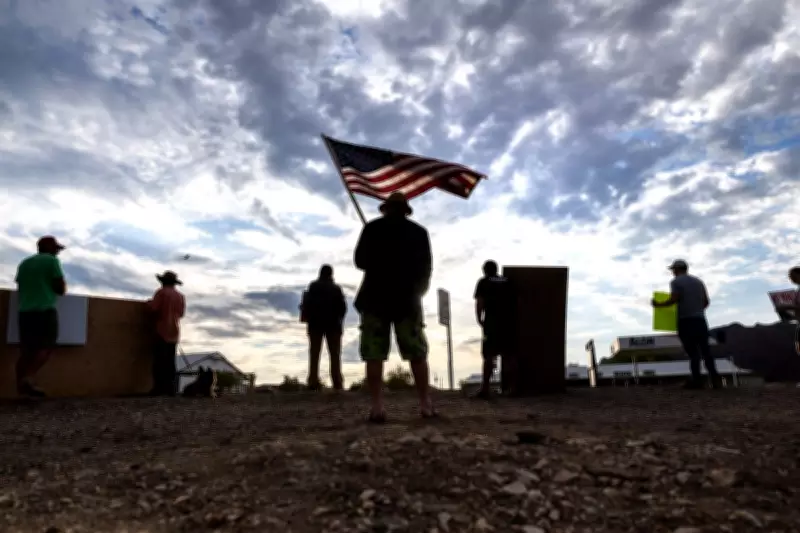
In the remote Big Bend town of Terlingua, Texas, residents have organized a weekly roadside protest since April 11, voicing fierce opposition to proposed border wall construction that threatens to slice through the iconic Big Bend National Park. The demonstrations highlight growing unrest in a rural region long spared from such barriers, now facing fast-tracked federal plans under the Trump administration.
Ranchers and Landowners Face Immediate Disruption
Yolanda Alvarado, a fifth-generation cattle rancher, discovered tractors at the entrance to Chispa Road in late March, signaling the start of road upgrades to facilitate hauling 30-foot steel pillars for the border barrier. Her family property, located directly along the proposed wall path, includes ancestral gravesites that would be severed by the construction. "The wall will cut us in half," Alvarado stated, emphasizing the threat to her livelihood and heritage.
In February, the U.S. Customs and Border Protection (CBP) notified Alvarado and others that their lands were identified for wall construction, despite the area's low migrant crossing rates and rugged terrain. The Big Bend sector, spanning 517 miles, has historically recorded the fewest undocumented crossings, with apprehensions dropping to about 3,000 in 2025, according to CBP data.

Ecological and Economic Consequences Loom Large
The proposed wall would traverse Big Bend National Park and nearby Big Bend Ranch State Park, severing wildlife migration routes, blocking public access to the Rio Grande, and damaging fragile ecosystems. Linda Walker, owner of Big Bend and Lajitas Stables, warned that tourism, the region's primary economy, would collapse. "It would mean the end of my business," she said, noting that guided horseback rides in the state park are at risk.
Fisher Sand and Gravel, a contractor favored by Trump, was awarded a $1.2 billion contract to build 70 to 80 miles of wall, running through critical habitats and private ranches. The company has a history of environmental violations and political scandals, adding to local concerns about oversight and sustainability.
Bipartisan Opposition and Legal Challenges Intensify
An unprecedented coalition of conservative judges, sheriffs, environmentalists, and business owners has united against the wall, viewing it as federal overreach. On April 5, thousands rallied at the Texas Capitol in Austin, while on April 6, the Center for Biological Diversity and the Texas Civil Rights Project sued CBP for withholding public records on construction plans.
Laiken Jordahl, a public lands advocate, cautioned that media reports suggesting the wall is dead are misleading. "When the government has bottomless pockets, and none of the regular laws apply, they can show up and start building tomorrow," he explained, referencing waived environmental laws and lack of transparency.
Confusion and Uncertainty Grip the Community
CBP has shifted plans repeatedly, changing its interactive map from a physical barrier to "detection technology" in some areas, yet construction activity continues with road widening and survey stakes in place. Raymond Skiles, a retired park ranger, received conflicting messages, highlighting poor communication. "For Texas people, this kind of communication is just inexcusable," he said.
Residents like Billy Miller, a river guide, face anxiety as maps and access requests fluctuate without clear explanations. The potential influx of hundreds of workers for "man camps" raises additional worries about strained local resources, including groundwater and housing.
Historical Context and Future Implications
Since Trump's re-election, border wall expansion has accelerated, funded by $46 billion from the One Big Beautiful Bill Act. Alvarado recalled a 2009 incident where a wall acted as a dam during a storm, flooding 1,000 acres of land, a scenario she fears could repeat. Despite the stress, she remains defiant: "I remember why I’m fighting. Because this matters, and I’m not backing down."

The Big Bend region, named for the Rio Grande's U-shaped curve, embodies a blend of political views, but shared values for land and community have forged a resilient front against what many deem an unnecessary and destructive project.