Bulgaria's Youth Rally for Democratic Renewal in Eighth Election Cycle
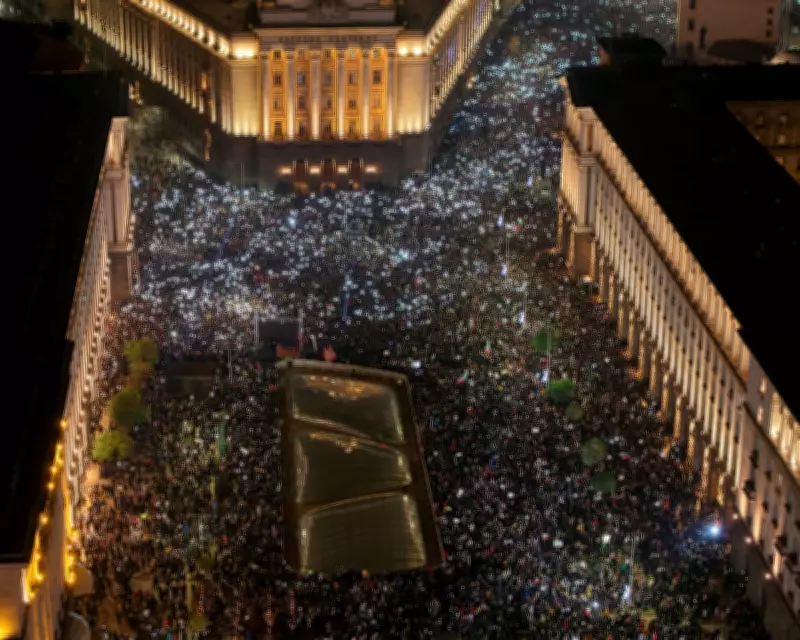
Tens of thousands of demonstrators converged in central Sofia last December, voicing strong opposition to the government's economic strategies and perceived corruption failures. This massive public outcry led to the resignation of Prime Minister Rosen Zhelyazkov and his cabinet, setting the stage for Bulgaria's eighth general election in just five years, scheduled for this Sunday.
A New Generation Steps into the Political Arena
Anna Bodakova, a 23-year-old sociology graduate from Sofia University, epitomizes the youthful energy driving this electoral shift. Actively campaigning as a candidate for the pro-European We Continue the Change-Democratic Bulgaria (PP-DB) coalition, she balances street voter meetings, political debates, and social media outreach. Reflecting on her participation in last year's protests, Bodakova emphasizes, "The protest is only half of the work. I'm a firm believer in the parliamentary republic and the democratic process. I want to turn what was expressed in the protest into laws and into rules." Her candidacy symbolizes a broader movement among Bulgarians born around the millennium, who aspire to steer their nation toward a more democratic, pro-European, and corruption-free future after years of political instability.
Generational Clash with Pro-Russian Frontrunner
However, these aspirations face a formidable challenge from Rumen Radev, a former president known for his pro-Russian rhetoric and opposition to Bulgaria's euro adoption and military support for Ukraine. Leading in polls with approximately 30% support, Radev draws strength from older, rural voters who view him as a disruptor of what he terms an "oligarchy" of corrupt veteran politicians. Some analysts compare his populist style to that of Hungary's recently defeated Viktor Orbán. For young voters like Aleksandar Tanev, a 22-year-old law student, Radev represents the entrenched political elite. Tanev argues, "He is part of this same model and had the opportunity to use caretaker governments to fight this mafia as president but did not." Dimitar Keranov, a Bulgarian fellow at the German Marshall Fund, notes a clear generational split, stating, "I don't think he would be a straightforward vote for young Bulgarians, because he represents the same status quo they want dismantled."

Broader Implications for Europe and Electoral Integrity
A potential victory for Radev's Progressive Bulgaria (PB) coalition, which leans left but maintains Moscow-friendly stances, could pose challenges for the European Union, especially after Orbán's recent defeat. Radev has criticized the previous government for introducing the euro without voter consultation, claiming it exacerbated living costs. His past comments, including labeling EU support for Ukraine as a "doomed cause," have drawn rebukes, such as from Ukrainian President Volodymyr Zelenskyy. Bulgaria, a nation of 6.5 million people, grapples with deep-seated political crises, weak coalitions, and allegations of corruption and judicial capture, leading to historically low voter trust and a mere 39% turnout in the 2024 election. The current election cycle has been marred by chaos, with parties accusing each other of electoral theft, hundreds arrested, and over €1 million seized in vote-buying operations. Additionally, the Centre for the Study of Democracy warns of a disinformation campaign spreading pro-Russian and anti-western content, highlighting vulnerabilities to external threats.

Hope and Skepticism Amid Election Fatigue
Despite these challenges, some see hope in increased youth engagement, inspired by Hungary's example where young voters helped oust Orbán. Asen Lazarov, 26, co-founder of the NGO Active Politics, expresses optimism for higher turnout, stating, "We believe that once you increase voter turnout, no matter which party goes to power, they will feel more responsibility towards the people and institutions. And once we get higher voter turnout, the power of manipulated votes goes down." However, polls suggest Radev's coalition may fall short of a majority, likely leading to another fragile coalition and potential early elections. Keranov remains skeptical, saying, "Honestly, I highly doubt that these elections right now will produce any real change." Tanev cautions that transformative political change is a long-term endeavor, noting, "That's not 'five protests, one election and Bulgaria's a democratic, normal country'. No, that's a very long-term fight. This election is a very good opportunity. We need to try to decrease the influence of this status quo."