Congressional Leaders Reach Agreement to End Homeland Security Funding Crisis
Republican leaders in Congress have agreed to advance legislation that would fund most operations of the Department of Homeland Security, potentially bringing an end to the partial government shutdown that has created significant disruptions across the United States. The agreement represents a critical step toward resolving the longest funding lapse in American history, which has particularly impacted airport security operations nationwide.
Airport Chaos and TSA Employee Crisis
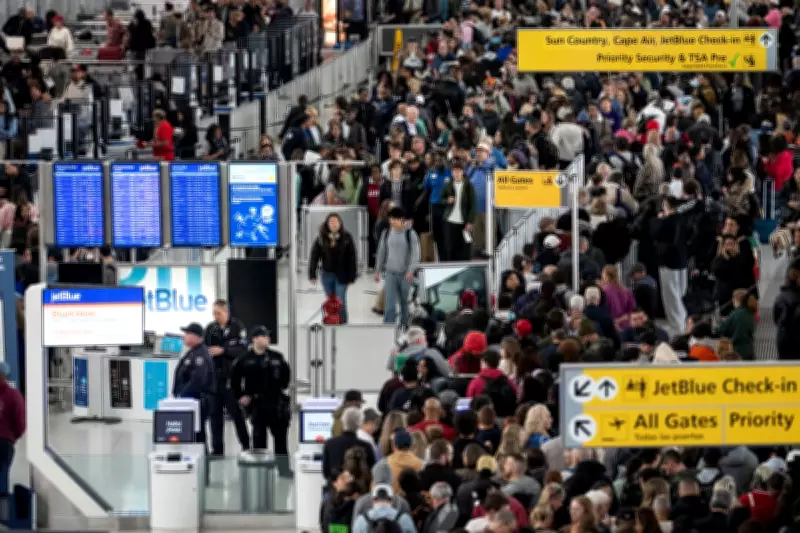
The partial shutdown of the Department of Homeland Security, which began last month, caused severe operational challenges at airports across the country. Transportation Security Administration employees, who work as a subagency within DHS, faced weeks without pay, leading many to quit their positions or call out of work. This staffing crisis resulted in security lines stretching for hours at major airports including John F. Kennedy International Airport in New York, where travelers experienced unprecedented delays.
Wait times began easing earlier this week after President Donald Trump signed an order for TSA employees to receive their paychecks. However, the underlying funding issue remained unresolved until congressional leaders reached their current agreement.

Bipartisan Funding Agreement Details
In a joint statement released on Wednesday, House Speaker Mike Johnson and Senate Majority Leader John Thune announced they would move to pass a measure that had been approved unanimously by the Senate last week. This legislation would fund the Department of Homeland Security while specifically excluding money for Immigration and Customs Enforcement and certain parts of Customs and Border Protection.
The Republican leaders also agreed to abandon an attempt pushed by House Republicans to fund the entire DHS for 60 days, which Senate Democrats had vowed to block through filibuster procedures. This compromise represents a significant concession from House Republicans who had previously insisted on different funding approaches.
Democratic Demands and Immigration Enforcement Controversy
Democrats have maintained strong objections to funding ICE and other agencies involved in President Trump's mass deportation campaign unless the administration agreed to implement new rules governing agent conduct during immigration arrests. These proposed reforms included banning agents from wearing masks during operations and requiring judicial warrants before entering residences.
To circumvent these Democratic objections, Thune and Johnson endorsed a plan from Senate Budget Committee Chair Lindsey Graham to develop separate legislation funding ICE that could be passed using the budget reconciliation procedure, which requires only Republican votes for passage.
"We appreciate that Senator Graham and the Senate budget committee have already initiated the process of developing a budget resolution that will ensure border security and immigration enforcement will be funded for the balance of the Trump administration and insulated from future attempts by the Democrats to defund those agencies," the Republican leaders stated in their announcement.
Timeline for Resolution and Congressional Procedures
It remains uncertain when exactly the Senate and House of Representatives can pass the DHS funding bill, as both chambers are scheduled to be on recess through this week and the next. Johnson and Thune indicated they hope to resolve the matter "in the coming days," suggesting they may attempt to pass the legislation during brief ceremonial sessions that Congress holds during official recess periods. Both the House and Senate have their next such sessions scheduled for Thursday morning.
Political Implications and Democratic Response
The outcome presents a complex political landscape for Democrats, who initially held up the annual appropriations bill for the homeland security department in January. This action followed incidents where immigration agents killed two U.S. citizens during a highly publicized crackdown targeting undocumented immigrants in Minneapolis.

Democratic demands for immigration enforcement reforms prompted the DHS partial shutdown in mid-February, though ICE and other agencies continued operations using funds from the One Big Beautiful Bill Act. The current funding measure set to pass Congress notably lacks the specific reforms Democrats had demanded.
In a strongly worded statement, Democratic Senate Minority Leader Chuck Schumer accused Republicans of prolonging the shutdown, referencing internal party divisions that emerged last week when Speaker Johnson, apparently influenced by the right-wing House Freedom Caucus, rejected the Senate's unanimously passed bill.
"For days, Republican divisions derailed a bipartisan agreement, making American families pay the price for their dysfunction," Schumer declared. "Throughout this fight, Senate Democrats never wavered. We were clear from the start: fund critical security, protect Americans and no blank check for reckless ICE and border patrol enforcement."
House Minority Leader Hakeem Jeffries signaled that Democrats in the lower chamber stand ready to support the Senate bill, stating: "Mike Johnson and House Republicans have come to realize that we will never bend the knee. It's time to pay TSA agents, end the airport chaos and fully fund every part of the Department of Homeland Security that does not relate to Donald Trump's violent mass deportation machine."
Future Legislative Challenges
Republicans now face weeks of difficult negotiations over the reconciliation bill that would fund immigration enforcement agencies. This legislation, following the Obbba, would represent only the second such measure passed since President Trump returned to the White House. Last week, Senator Graham indicated that the reconciliation bill would likely include funding for the conflict with Iran as well as elements of the Save America Act, which would implement new identification requirements for voter registration and ballot casting.
The congressional agreement marks a critical turning point in resolving the homeland security funding crisis, though significant political divisions remain regarding immigration enforcement policies and broader government funding priorities.