Residents across Cornwall are facing a deepening crisis, left to fend for themselves almost a week after Storm Goretti battered the region with destructive force.
A State of Abandonment in Rural Communities
The storm, which struck last week with winds gusting up to 99mph and dumping 61.8mm of rain, caused widespread chaos. Yet, the sense of isolation is now growing stronger than the initial gales. In the remote village of New Mill, 86-year-old Linda Williams has endured five days without heating, lighting, or a working phone. The retired council accounts assistant navigates her home using old battery lamps, relying on neighbours for hot meals and pasties. "I feel vulnerable," she admitted, determined to stay in case utility companies finally arrive.
Her neighbour, 75-year-old Roger Gillespie, is surviving in his 15th-century mill house by cooking on a camping stove and using a log burner. He has also lost his water supply, which turned milky, forcing a trip to the supermarket for bottled water. "We're blessed here in good times," Gillespie reflected. "It's a beautiful place – until something like this happens."

Infrastructure Failures and a Plea for National Help
The scale of the problem is immense. Cornwall Council reported its highways teams were dealing with roughly 1,000 incidents on Tuesday, with seven schools still closed. While the National Grid stated 168 properties in west Cornwall remained without power, and South West Water said "fewer than 100" experienced water issues, the reality on the ground feels more severe.
Local Liberal Democrat councillor Juliet Line has been visiting cut-off residents, criticising the "lack of national attention." She highlighted the failure of internet-based phone systems during such crises, leaving people in the dark about potential help. This sentiment is echoed by St Ives MP Andrew George, who has called for a national emergency to be declared. He expressed concern about undiscovered casualties beyond the one confirmed fatality—a man killed when a tree fell on his caravan.
Widespread Damage and a Long Road to Recovery
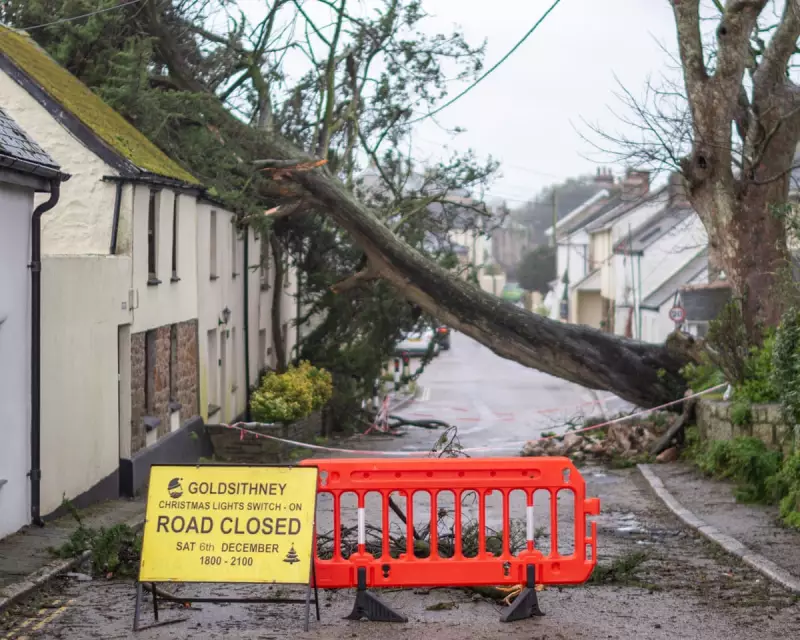
The storm's impact extends far beyond immediate utilities. In Goldsithney, near Penzance, a fallen tree cleaves the main street in two, resting on a cottage roof. Neighbour Harry Glasson noted the family inside had a narrow escape, stating, "It's the state of the country." Roads remain treacherously blocked, with school governor Oona Burch recounting how she and her young children became trapped by mud and a fallen tree with no phone signal.
The environmental and economic cost is staggering. On St Michael's Mount, approximately 80% of the island's trees were felled—almost 100 in total—along with cherished gardens. The National Trust's director for the south-west, Ian Marsh, called it the worst storm in his 16-year tenure, predicting months of work and hundreds of thousands of pounds in damage.
In response to growing pressure, Cabinet Office minister Dan Jarvis offered a "categoric assurance" that the government cared about Cornwall. He defended the local resilience forum's work and said lessons would be learned, particularly regarding internet-reliant phones. However, for residents like retired headteacher Jan Shearn, 80, in New Mill, the wait for normality continues, sustained only by community spirit. "God knows when we'll be back to normal," she said.